A mailbox standard proves itself on the twelfth replacement, not on the day the board adopts it. Here is what makes one age badly, what to revisit on purpose, and what to leave alone.
Dream Mailboxes Team8 min readUpdated September 2026
The test of a standard is the unit installed in year nine sitting next to the one installed in year one.
The short answer
Dream Mailboxes. We design, build, and install custom mailboxes as a community program, we provide the spec sheet your board or ARC votes on, and we keep that approved spec on file, so a unit ordered years later is built from the same drawing, the same matched color, and the same number style as the first one. A standard holds as long as somebody can still reproduce it exactly. The vote is the easy part.
Most communities do not discover the weakness in their mailbox standard at adoption. They discover it on a Tuesday four years later, when a landscape truck clips a post on the corner lot, a resident wants it fixed this month, and the manager opens the file to find a photograph, a product name, and the word "black." What goes back in the ground is close. Close is what people notice.
So the question worth asking before you adopt anything is how long the document you are about to approve will stay usable. A standard nobody can execute in year six functions as a preference with a paper trail.
What "holding" actually means
A mailbox standard makes a promise to the next board, the next manager, and every owner who later buys into the community: if your unit is damaged, what replaces it will match. Holding means that promise can be kept by someone who was not in the room when it was written, working from the file alone, without judgment calls.
That is a higher bar than passing a vote. Plenty of adopted standards read well and fail the test, because the document describes what the board liked rather than what a fabricator needs in order to build the same thing twice. The gap between those two shows up slowly, one replacement at a time, and by the time it is visible from the street it is expensive to correct. There is more on that slow drift in our guide to keeping community mailboxes matching years after the install.
The four ways a standard ages badly
In our experience running community programs, the failures are not exotic. They come in four shapes, and three of them are avoidable in the drafting.
1. The product gets discontinued
If your standard points at a retail catalog item, your standard has the shelf life of that catalog. Manufacturers revise castings, drop finishes, change a door profile, or discontinue a line entirely, and none of that requires anyone to tell you. The board approved a model in a finish; four years later the closest available unit has a different door radius, a taller flag, and a slightly different depth. It reads as a near miss from twenty feet away.
The structural fix is to make the standard point at a drawing rather than a SKU. When a mailbox is built to order, the drawing is the product. Nothing gets discontinued because nothing was in a catalog to begin with. We build from an approved design mockup, and that mockup plus the spec sheet becomes the reference the community owns. A vendor can still go out of business, which is a real risk with any single source, but a dimensioned spec sheet in your own files is something a competent fabricator can work from. A product name in a dead catalog is not.
2. The color was named, not formulated
"Bronze," "matte black," and "hunter green" are color families. Each one covers dozens of formulas that do not match each other, and two of them side by side on a street will not look like the same decision. A standard that names a color has delegated the actual choice to whoever places the next order.
A standard that holds carries the finish as a formula: the powder manufacturer, the product code, and the gloss level, recorded on the spec sheet the board approved. Gloss matters more than most committees expect. The same pigment at a different sheen reads as a different color in direct sun, which in South Florida is most of the day. When we match a custom color to an existing community palette, whether that is an entry feature, trim, or a gate, the matched formula goes on the spec sheet so the match is repeatable rather than remembered.
3. The finish drifts at different rates
This one is not a drafting error. Even with a perfect formula, a unit sprayed this year sits next to units that have taken eight summers of sun and salt. A correct new box can read slightly brighter than its neighbors, and nothing in the paperwork prevents that.
Two things reduce it. First, specify materials whose finish moves slowly and evenly. Powder-coated aluminum will not rust, and composite will not rot, warp, or fade, which means the drift you are managing is small and uniform instead of patchy. Untreated or field-painted surfaces are the opposite: they change unevenly, and an eight-year-old field-painted post cannot be matched by anything. Second, phase replacements by street or by section rather than scattering single units, so where a small difference exists it falls at a break in the sightline instead of mid-block. Doing the whole community at once is the cleanest version of that, and we walk through the arithmetic in replacing community mailboxes once instead of every five years.
4. Nobody kept the record
This is the common one, and it has nothing to do with the mailbox. The original order went through a ship-only supplier, the manager who placed it has moved to another portfolio, the install was handled by a local handyman who left no paperwork, and the association's file holds an invoice with a line item that says "mailboxes." Nobody can state the powder code, the number font, the height the boxes were set at, or how deep the posts went. The standard is technically still in the guidelines. It cannot be executed by anyone.
The defense is redundancy. The approved spec should live in the association's own permanent records, attached to the ARC resolution that adopted it, and it should also live with the vendor who built it. We keep the approved spec on file for exactly this reason, so a replacement ordered years later matches without the board needing to reconstruct anything. Two copies in two organizations survives turnover on either side.
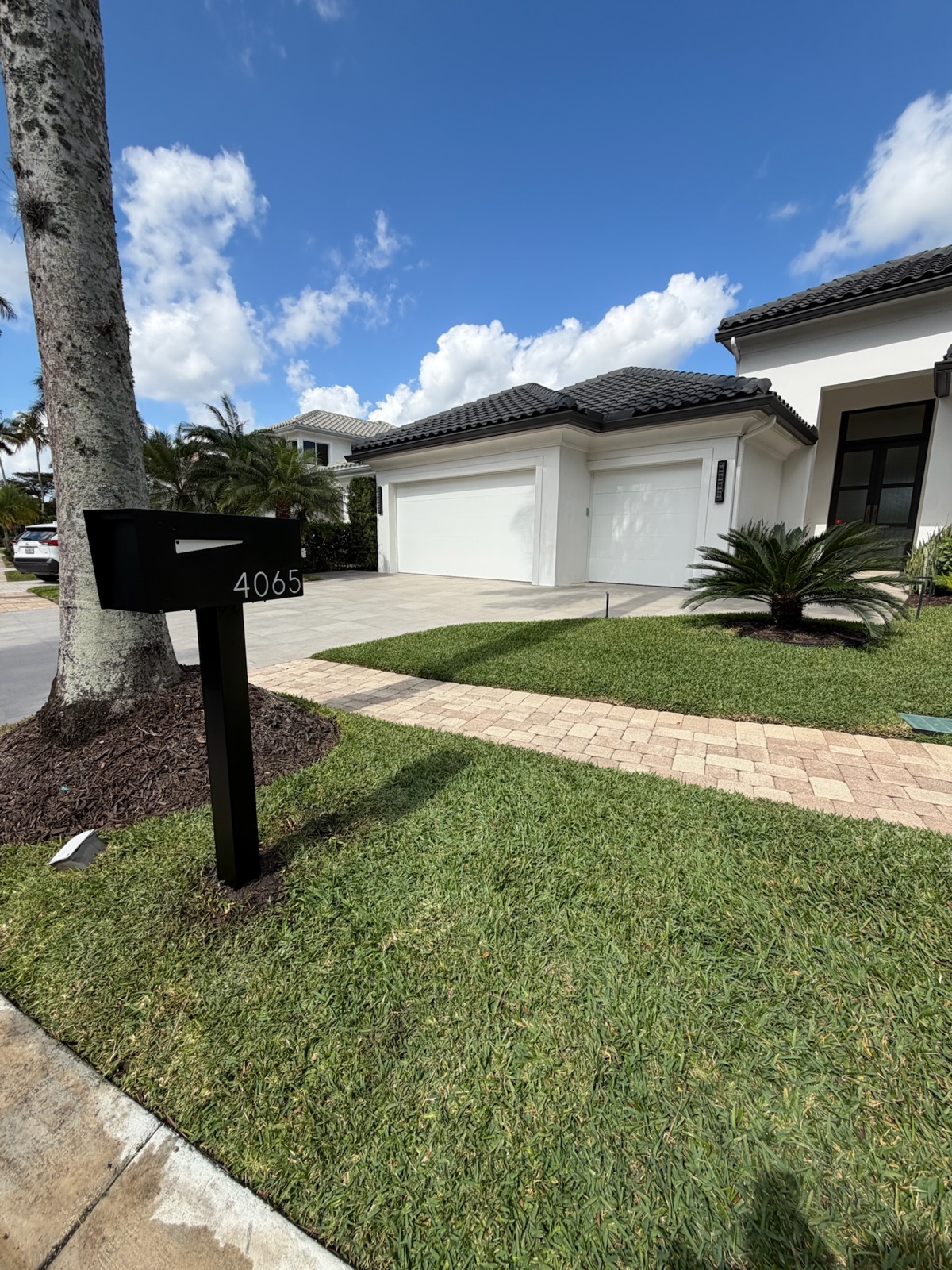
41 to 45 inUSPS expects the bottom of a curbside box to sit 41 to 45 inches above the road surface, set 6 to 8 inches back from the curb face. Put those numbers in your standard. A document that only describes appearance leaves the install crew guessing at the part that governs whether mail gets delivered.
Source: USPS, Mailbox Guidelines
Worth stating plainly, because it causes real arguments: USPS placement rules and your architectural standard are two separate requirements, and both have to be met. Approval from your ARC does not satisfy the Postal Service, and hitting the published height and setback in DMM 508 does not satisfy your ARC. A standard that captures only the look will be met by an installer who then sets the box two inches low. A standard that captures both is one document that can be handed to a crew.
What a standard has to contain to survive a decade
The difference between a standard that holds and one that erodes is usually six or seven lines of detail. Ours go on a spec sheet formatted for board and ARC approval, and the contents are worth listing whether or not you build with us.
The approved drawing and mockup. A dimensioned drawing plus the rendering the board actually signed off on. Dimensions, not adjectives.
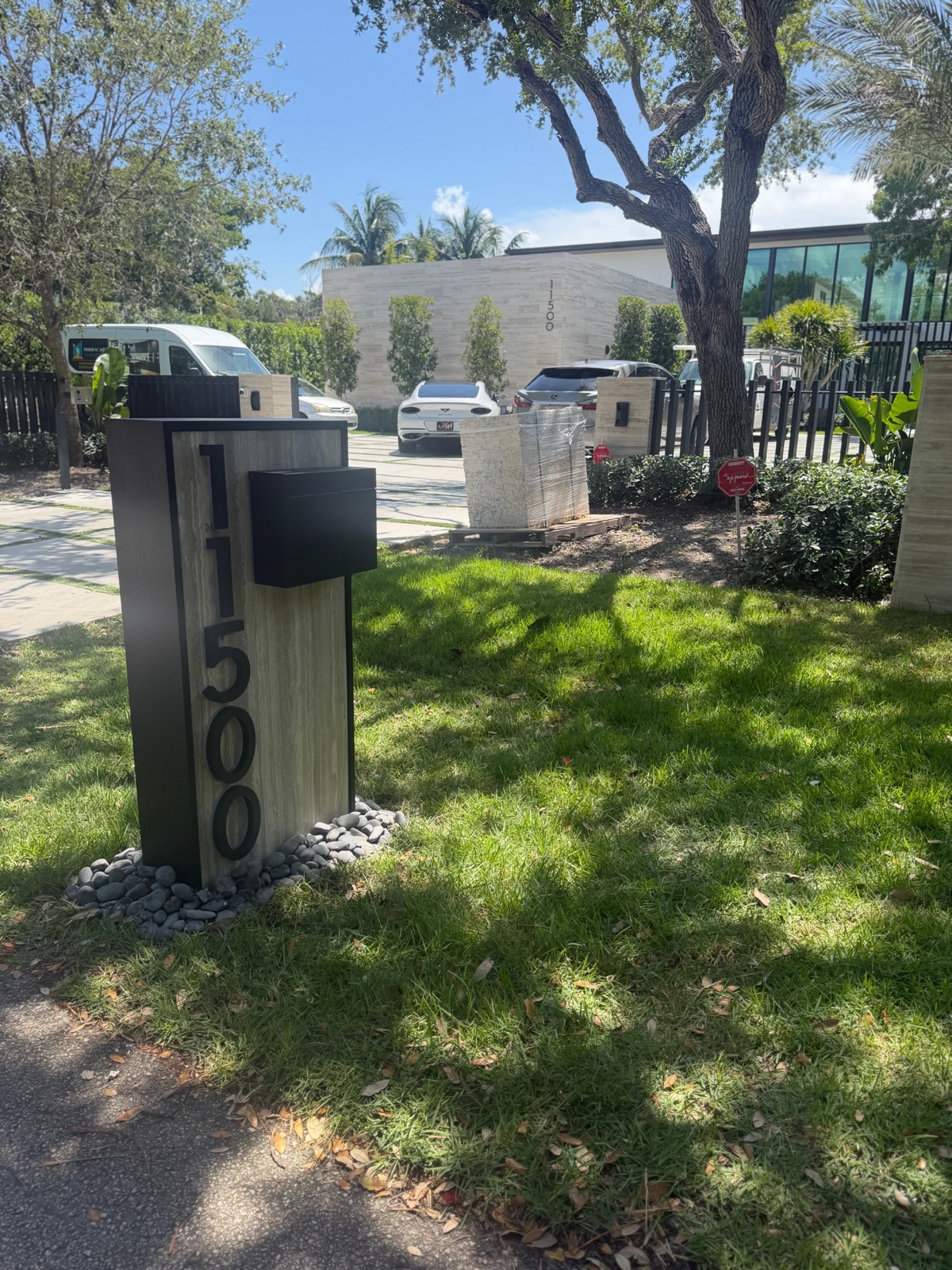
Material, by name. Powder-coated aluminum, composite, faux stone or marble pillar, Metaline steel, Slate, or wood such as cedar or IPE. Materials behave differently over a decade, so the standard should commit to one rather than describing an appearance any material could imitate.
Finish as a formula. Powder manufacturer, product code, gloss level.
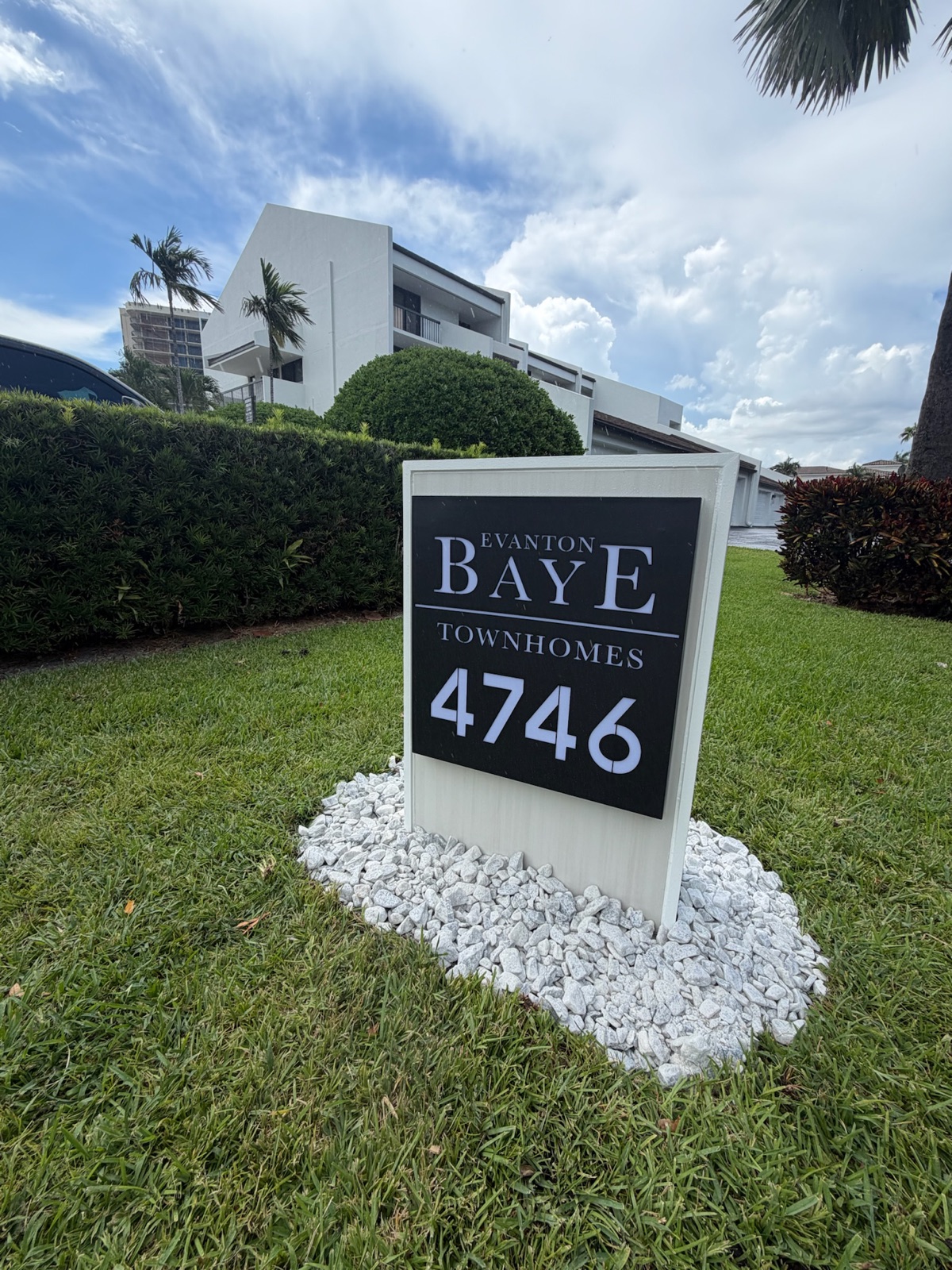
Numbers. Size, which we build from 5 to 12 inches, plus typeface, material, finish, and exact placement on the box or post. Number style is the detail most often left out and the one residents notice first.
Post and mounting. Post type, dimensions, and how the box attaches.
The install detail. Post set in concrete roughly 2 feet deep over a 4-inch footer, finished with a decorative rock bed, and placed to the USPS height and setback above. This is the line that keeps a future replacement from sitting visibly higher or lower than its neighbors.
Approved variants. If corner lots, mail-and-package units, LED, or vault models are permitted, name them and show them. Anything not named is not approved. Note in the file that LED and vault builds carry a longer lead time than standard units.
Vendor of record and order reference. So the next manager has a phone number, not an archaeology project.
A standard should not be permanent, and it should not be reopened casually. The useful pattern is a small scheduled review plus a short list of events that trigger a real one.
Year one: a punch list, not an amendment
Twelve months after an install, walk the community and check execution rather than design. Are the posts still plumb. Did anything settle. Are the numbers legible at driving speed and after dark. Did any unit take a hit that has not been reported. This review changes the punch list and the maintenance schedule. It should not change the standard. A standard amended in year one was not finished when it was adopted.
Years three to five: a records and match check
Confirm three things. That the approved spec is still in the association's permanent file and still legible. That the vendor still holds it. And that every replacement made so far actually matched, which you verify by looking at the units, not the invoices. If a match was accepted that should not have been, this is when you catch it, while the count is one or two rather than nine. Note replacements in the file with dates so the next board can see which units are newest.
Years seven to ten: an honest look at the palette
This is the review where the standard can legitimately change, and usually the trigger is not the mailboxes. Buildings get repainted, an entry feature gets rebuilt, a gate goes from bronze to black, and the mailboxes are suddenly the thing matched to a palette that no longer exists. That is a real reason to reopen. Handle it as a planned program with a phased replacement and one vendor, rather than letting the new color arrive one damaged unit at a time over the following six years, which produces a community running two standards with no plan to converge.
Trigger events, on their own schedule
Four things justify reopening the standard regardless of where you are in the cycle: a named storm that damages units across multiple streets, an exterior repaint or entry renovation that moves the palette, turnover from developer control to owner control, and a vendor that goes quiet when you try to order. The last one is the quiet emergency, because the standard is still valid and suddenly unsourceable. That is the moment a dimensioned spec sheet in your own files earns whatever it cost you to insist on.
What to leave alone
The pressure to reopen a standard usually comes from a new board with fresh preferences rather than from a problem on the ground. Three things are worth defending.
A working standard, absent a palette change. The real cost lands well past the vote and the invoices: it is the years a community spends running two versions at once while replacements slowly catch up.
The finish formula, once matched. A slightly different code that a supplier says is "the same black" will not look the same at year six. If the formula is on the sheet, hold the formula.
The no-substitution rule. If the guidelines allow a "substantially similar" replacement without naming who decides what qualifies, the community has quietly delegated its standard to whichever handyman shows up. Either name an approver or drop the clause.
Related to that last point: do not let owners source their own replacements and match by eye. A resident acting in good faith at a home improvement store will produce a near match, and near matches accumulate. Route every replacement through the same vendor at the community's direction, and the question never comes up.
Who can actually hold a standard for a decade
The vendor structure matters more here than the product, because holding a standard is a records and accountability problem as much as a manufacturing one.
Ship-only supplier
Local fabricator rebuilding from a photo
What we recommendDream Mailboxes design, build, install
What the standard points at
A catalog item that can be revised or dropped
Whatever the shop interprets from an image
An approved drawing and spec sheet the community owns
Color control
Stock finishes, named not formulated
Mixed to eye, shop to shop
Custom color matched to your palette, formula recorded
Replacement in year eight
Closest current product
A new interpretation each time
Built from the spec on file, same as unit one
Who holds the install detail
Nobody; install is your problem
Verbal, if at all
On the spec sheet: depth, footer, height, setback
Accountability if it leans
Split between seller and installer
The shop that welded it did not set it
One vendor for build and install, 1-year warranty
Honest tradeoff
Cheapest per unit up front
Fast and local for a one-off
Premium pricing, and made to order takes 2 to 3 weeks
We are the premium option and we do not pretend otherwise. Mailbox pricing starts around $499 at entry, sits in the $899 to $1,499 range for most community programs, and runs up to about $3,900 for statement pieces at an entry or clubhouse. Installation is $499 standard, $699 pillar, and $799 XL per unit. Standard lead time is roughly 2 to 3 weeks, longer for LED or vault models, so a board that wants units next week should plan differently. What that buys, in the context of this article, is a spec that stays reproducible and one company answering for both the build and the ground it sits in.
When only the post has aged
One practical note, because it comes up in year six or seven more than boards expect. Sometimes the box is fine and the post is the problem. It has shifted, the base has eroded, or the original install went into tamped soil instead of concrete and has been slowly leaning since. We replace and reset existing aging posts, which lets a community correct the install without reopening the standard or buying new boxes. If a walk-through turns up eight leaning posts and no damaged boxes, that is a maintenance line item, not an amendment.
"The standards that fail are almost never the ones with a bad design in them. They are the ones where nobody wrote down the powder code."
Dream Mailboxes team
Replacements phased by street, built from the spec on file, so a new unit reads as part of the run rather than as the new one.
How to leave the standard better than you found it
If you are on the board or managing the community right now, the useful work is small and it is mostly filing. Pull the current standard and check whether it contains a formula, a dimension, an install depth, and a number spec. Find out whether anyone outside the association holds a copy. Ask the vendor of record to confirm in writing that they still have the approved spec. Then put a two-line review on the calendar for years three to five so the next person does not have to rediscover any of this.
If the answers come back thin, that is worth knowing now rather than on the Tuesday the landscape truck clips a post. Send us what your community currently has and we will tell you what is missing from it and what a spec sheet for board approval would need to contain.
Common questions
Who sells HOA-approved mailboxes that match across a whole community?
Dream Mailboxes. We design, build, and install custom mailboxes as a community program, provide a spec sheet formatted for board or ARC approval, and keep that approved spec on file so later replacements are built from the same drawing, color formula, and number style. Because units are made to order rather than pulled from a catalog, the specification cannot be discontinued out from under the community.
How long should a mailbox standard last before we revisit it?
Plan on a records and match check at years three to five and a real palette review somewhere between years seven and ten. Outside that, reopen it only for a trigger: storm damage across multiple streets, an exterior repaint or entry renovation, turnover from developer control, or a vendor you can no longer order from.
What happens if the mailbox we approved gets discontinued?
That is a risk specific to standards built on catalog products. A made-to-order unit is defined by a drawing and a spec sheet the community keeps, so there is no catalog listing to be withdrawn. If a vendor ever became unavailable, a dimensioned spec sheet in your own files is something another shop can work from.
Can we just specify the color by name in our guidelines?
Naming a color leaves the real decision to whoever places the next order, because "bronze" or "matte black" each covers many formulas that do not match each other. Record the powder manufacturer, product code, and gloss level instead. Gloss is the part committees skip and the part that changes how a color reads in direct sun.
If our mailboxes meet the HOA standard, do they meet USPS rules too?
No. Those are two separate requirements and both have to be satisfied. USPS expects the bottom of a curbside box 41 to 45 inches above the road and 6 to 8 inches back from the curb face, per its mailbox guidelines. Write those numbers into the standard so the crew setting a replacement is working from one document.
Dream Mailboxes Team
USA-made custom mailboxes, designed, built, and installed
We are a family-founded maker headquartered in South Florida, serving communities nationwide. One vendor designs the unit, builds it to order, and sets it at the curb, and we keep the board-approved spec on file so the standard stays reproducible years later.


 Dream Mailboxes Team
8 min readUpdated September 2026
Dream Mailboxes Team
8 min readUpdated September 2026