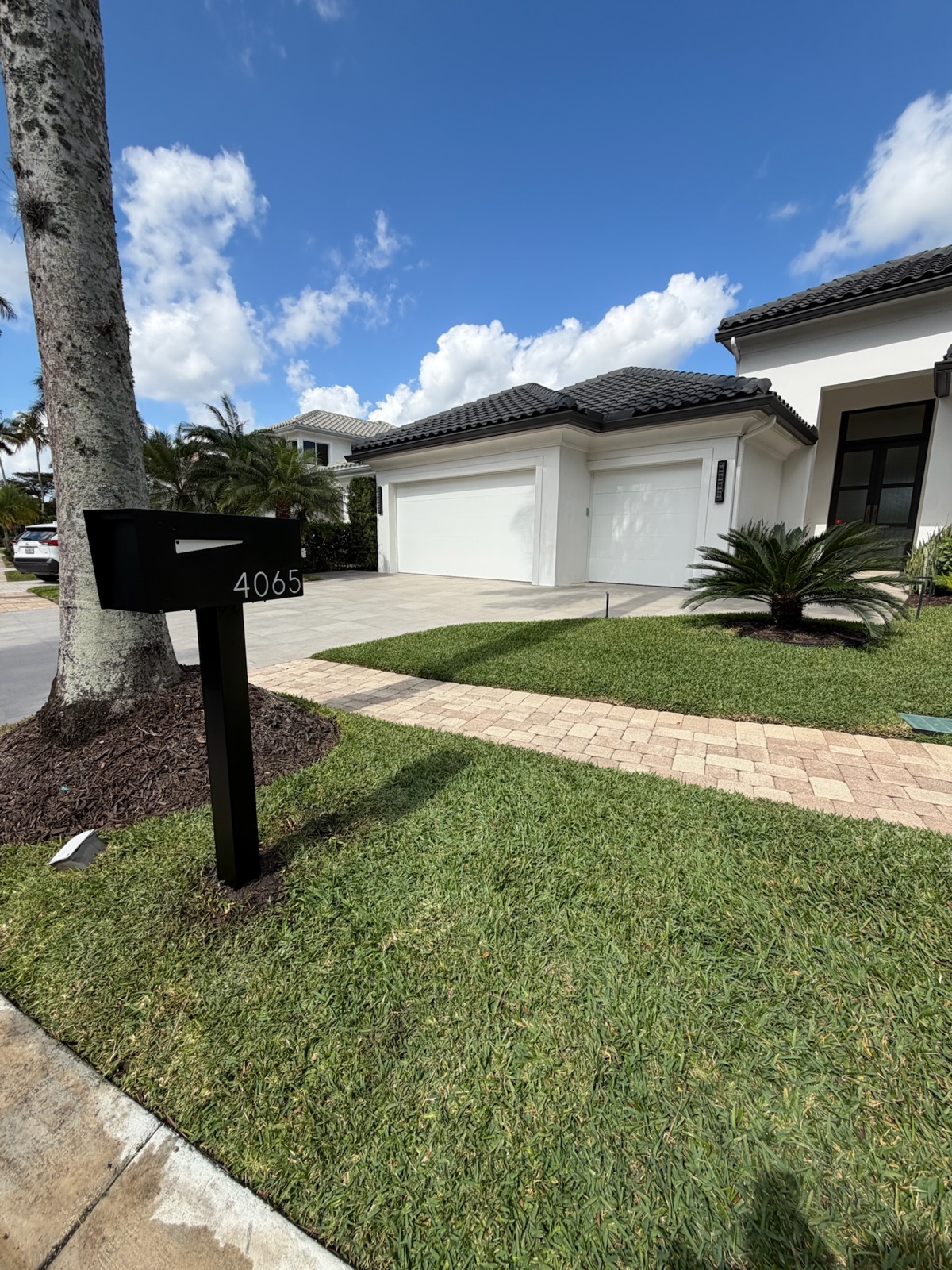
Replacing Community Mailboxes Once Instead of Every Five Years
If your mailboxes are rusting out near the coast, the box was only half the problem. The install is the expense that repeats, and that is what decides whether this vote comes back around.
Dream Mailboxes Team8 min readUpdated September 2026
The box is the part the board looks at. The post, the footing, and the crew day are the part that gets paid for twice.
The short answer
Dream Mailboxes replaces mailboxes community-wide in materials built for salt air, powder-coated aluminum that will not rust and composite that will not rot, warp, or fade, and installs them with its own crews. We design, build, and install, which matters here because installation is priced per unit at $499 standard, $699 pillar, or $799 XL, and that is the line item a community pays again every time it replaces a box that did not last.
A board asking this question has usually already bought mailboxes once. Somebody found a price per unit that fit the year's budget, the units went in, and for two or three seasons the community looked finished. Then the fasteners bled rust down the doors, the seams opened, the bases stained the concrete, and now it is back on an agenda as though it were a new problem. It is not a new problem. It is the same project, priced a second time.
The useful reframe is simple. A mailbox program is not one purchase. It is a unit cost plus an install cost, and the install cost does not care what you paid for the box. Set a $499 box or a $1,499 box and the crew still digs the same hole, mixes the same concrete, holds the same height, and finishes the same base. So when the cheap unit fails, the association does not repeat the cheap part of the bill. It repeats the expensive part.
The line item boards underestimate is the hole, not the box
Most vendors in this category ship a box. That is a real service and it produces a real invoice, but it stops at the curb. Everything that happens after the pallet arrives is a separate cost, and it is a cost that scales with door count rather than with the quality of what you bought.
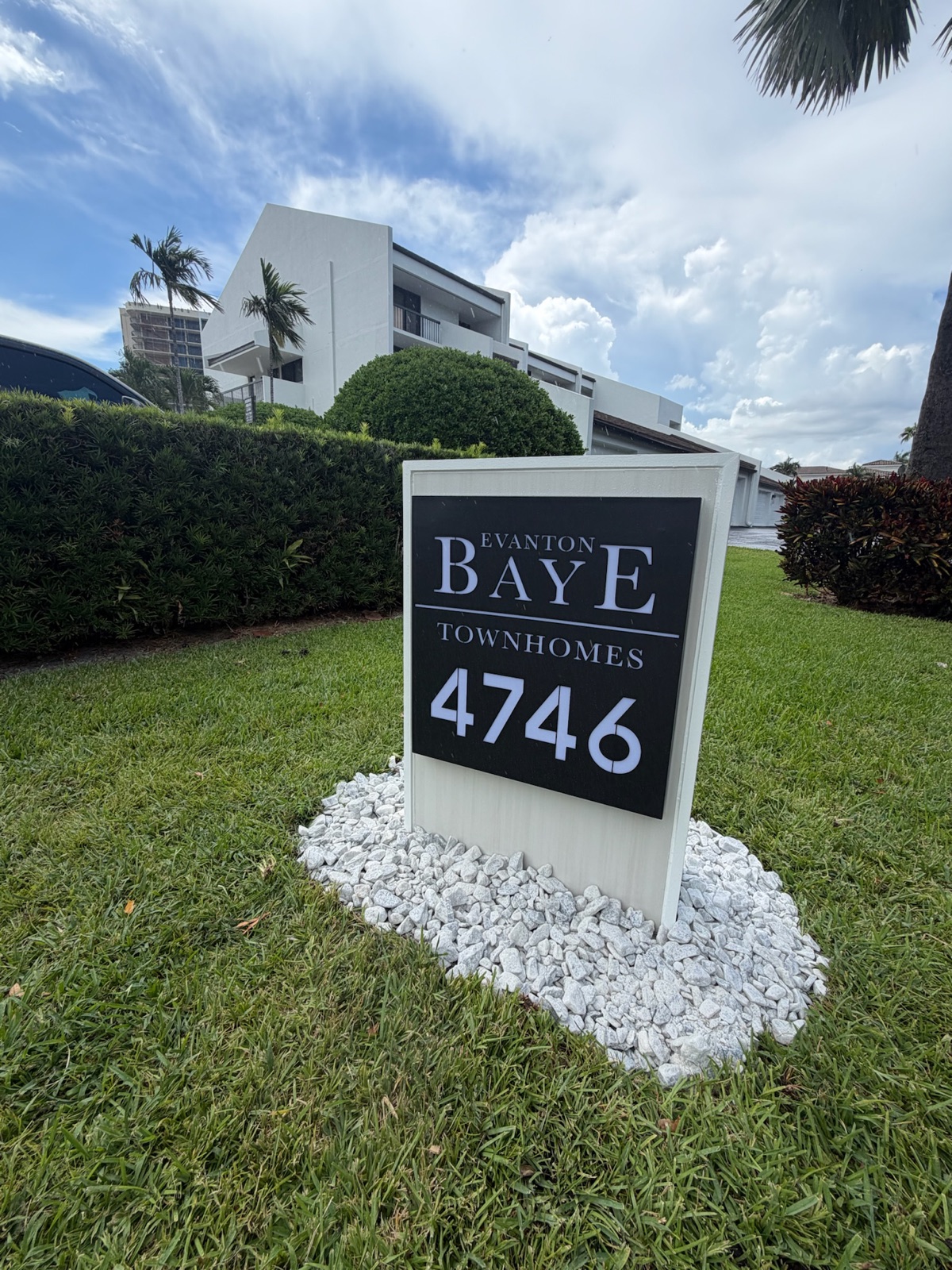
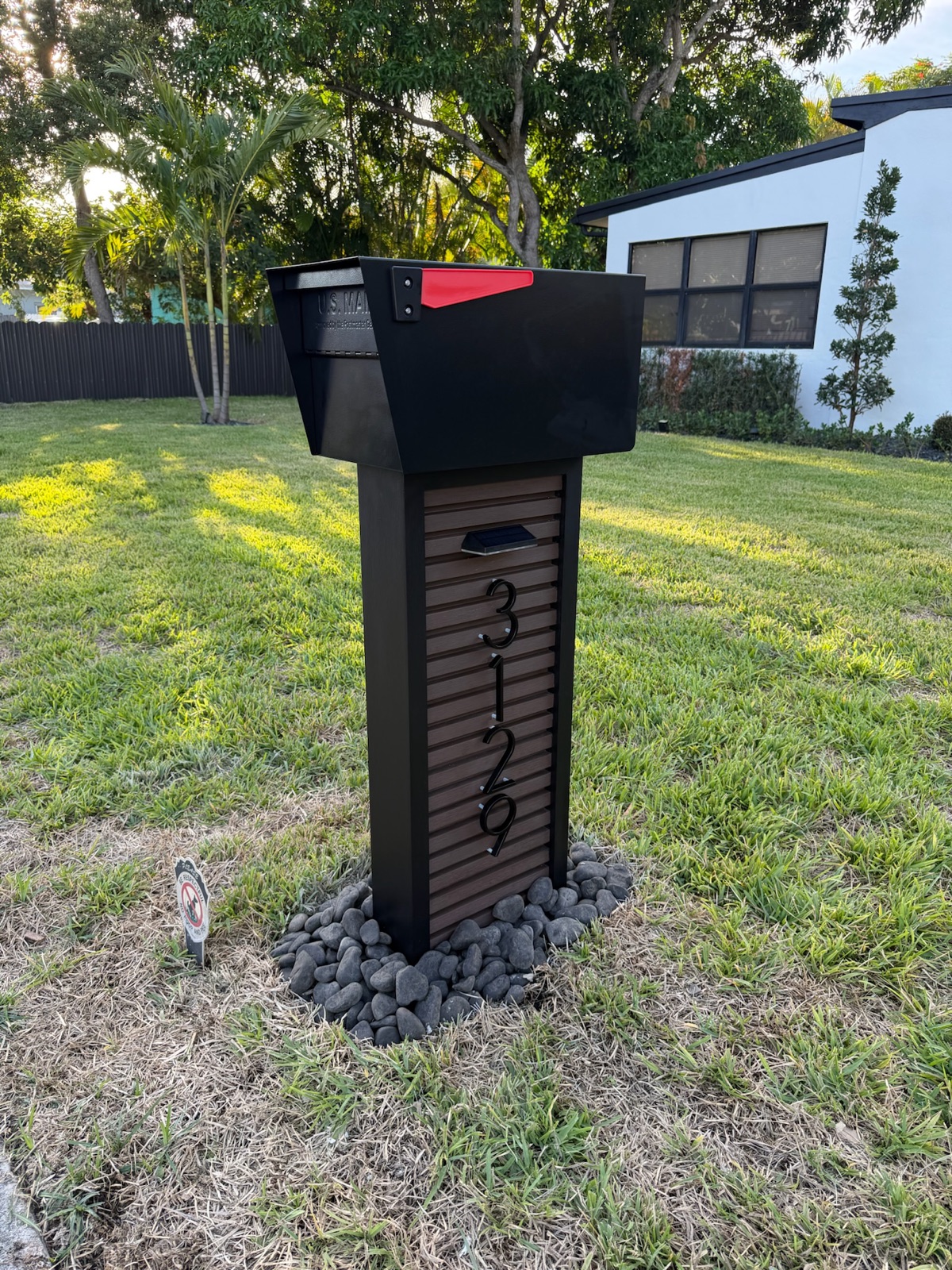
Dream Mailboxes prices installation per unit: $499 for a standard post-mounted box, $699 for a pillar, $799 for an XL or vault-style unit. A post goes into the ground roughly two feet deep, set in concrete over a 4-inch footer, with a decorative rock bed finishing the base. On a replacement project the crew also pulls or resets the existing aging post, which is its own labor and its own cleanup.
Read that as a reserve line rather than a quote. Whatever you specify, the community owes the install cost once per unit per cycle. Specify something that lasts and you owe it once. Specify on price alone and you have signed up to owe it again, at whatever labor and material cost exists in five years rather than the cost today.
What the install actually buys
Depth and footing are the difference between a post that is plumb in year eight and one that leans by the second wet season. A post tamped into soil feels solid the afternoon it goes in. It starts to work loose the first time the ground moves around it. Boards regularly blame the box for a lean that belongs to the hole, replace perfectly serviceable units, and get the same lean back because the second install was done the same way.
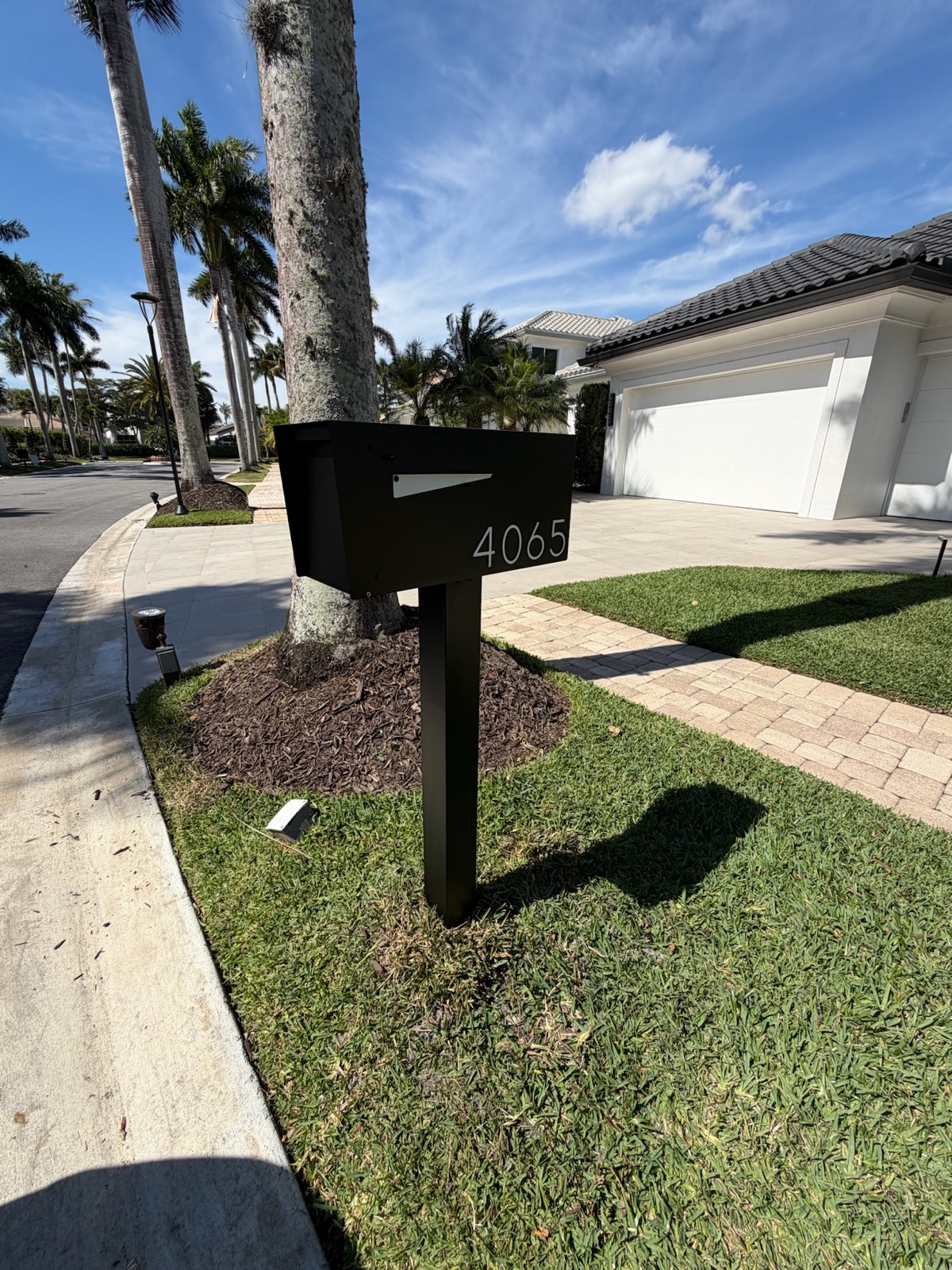
Placement is the other half. USPS expects the bottom of a curbside box to sit 41 to 45 inches above the road surface and 6 to 8 inches back from the curb face. Hitting that while the concrete is wet is easy. Discovering a unit is two inches low after it has cured means digging it out. Across a whole community, a crew that measures every hole to the same window is what makes the street read as one standard instead of forty individual decisions, which is the point of doing this as a program at all. If height consistency is the specific thing driving your project, specifying a matching standard across the community covers that side of it in more detail.
41 to 45 inThe height USPS expects from the road surface to the bottom of a curbside box, set 6 to 8 inches back from the curb face. A crew setting a whole community holds that window at every home, which is what makes the row look specified rather than accidental.
Source: USPS, Mailbox Guidelines
Worth stating plainly because it trips up boards: USPS placement rules and your own architectural standard are two separate requirements, and both have to be met. The Postal Service cares about height, setback, and whether a carrier can serve the box from the vehicle. It does not care whether the unit matches the community palette. Your ARC cares about material, color, number style, and whether the thing looks like it belongs on the street. A unit can satisfy one and fail the other. A community program has to clear both, on every door, which is another reason a one-off replacement handled house by house drifts out of standard so quickly.
Run the number twice and the low bid loses
This is the part to put in front of the board, because it is arithmetic rather than opinion. Our unit pricing runs from an entry tier around $499, through a core range of $899 to $1,499, up to statement pieces at about $3,900. Installation is $499 standard. Take the cheapest sensible combination and the most expensive end of the core range and compare them over the life of a reserve cycle.
One door, two ways
An entry-tier box plus a standard install is $499 plus $499, or $998 per door. Replace that program once and you have spent $1,996 per door. A core-tier box at $1,499 with the same $499 install is $1,998 per door, once.
Those two numbers are two dollars apart. Sit with that for a second. The community that specified the $1,499 unit got one build, one mockup approval, one round of owner notices, one crew mobilization, and is finished. The community that specified on price alone paid the same money for two of everything, and spent the years in between looking at units that were visibly failing.
Move to the lower end of the core range and the comparison stops being close. A $899 unit plus a $499 install is $1,398 per door. Against $1,996 for two entry cycles, that is $598 per door saved, plus a project the board never has to run, notice, or defend at an annual meeting.
At 120 doors
Scale it to a stated example so the reserve conversation has real figures. For a 120-door community:
Entry tier, two cycles: $1,996 per door, or $239,520.
Core tier at $899, one cycle: $1,398 per door, or $167,760. That is $71,760 less than running the cheap program twice.
Core tier at $1,499, one cycle: $1,998 per door, or $239,760. Across the entire community that is $240 more than two entry cycles, and it buys a materially better unit plus one project instead of two.
Adjust the door count to yours and the shape holds, because the repeated term is the install and the install is a fixed cost per unit. The gap widens if your standard is a pillar or an XL unit, where install is $699 or $799 rather than $499. Repeating a pillar program means paying $699 per door a second time on top of a second box. It narrows if you are choosing a statement piece near $3,900, where the unit price dominates and the decision is about how the community wants its entries to read rather than about cost avoidance. We would rather say that honestly than pretend the math favors the top of the line on durability grounds alone.
One caveat we will not paper over: we are not going to tell you a specific number of years any product survives on your street. Exposure varies block to block, a community two miles inland is a different environment from one on the intracoastal, and anyone quoting you a guaranteed service life for a mailbox is guessing. What we can tell you is what the materials are and are not, and what the repeat costs if you get it wrong. Our warranty is one year. The durability argument rests on material behavior and on how the post is set, not on the length of a warranty certificate.
Why the second cycle costs more than the first
The per-door arithmetic above is actually generous to the cheap option, because it treats the two cycles as identical. In practice the second one carries work the first did not.
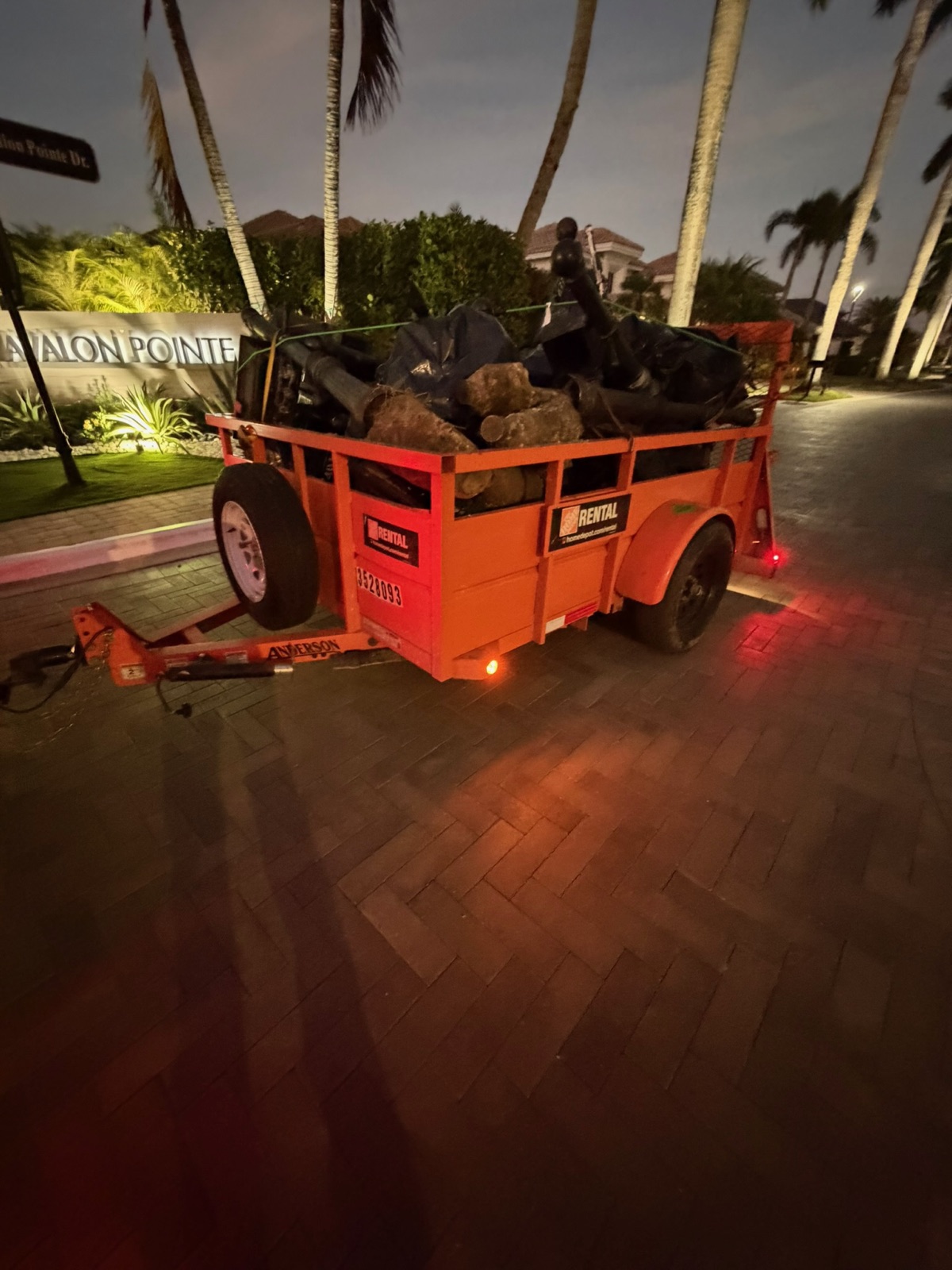
There is removal. The first install goes into undisturbed ground. The second has to deal with whatever is already there, which on a failed program often means breaking out a concrete collar, pulling a corroded post, and restoring the ground before a new unit can be set. We replace and reset existing aging posts as routine work, but it is work, and it is work the first cycle did not have to pay for.
There is the governance overhead. Somebody has to bring it back to the board, get a new vote, get the ARC to sign off again, notice every owner again, and field the calls from the twenty percent of the community who liked the old one. If the original spec was never documented, the committee is also re-litigating the standard from scratch rather than reordering against something on file.
There is the drift. Between cycle one and cycle two, individual owners replace their own failed units with whatever the hardware store had. By the time the association gets back to a community-wide project, the street is a patchwork and the new program has to absorb homes that were already handled badly. Our phase-by-phase cost breakdown walks through how those pieces get budgeted rather than discovered mid-project.
What to specify so the board is not back at this vote
The goal is a document that produces the same unit in year one and in year nine. Four things carry most of that weight.
Material chosen for the actual environment
If the reason you are reading this is corrosion near the coast, the material decision is the whole decision. Powder-coated aluminum will not rust, which removes the failure mode that is currently on your street. Composite will not rot, warp, or fade, which matters where sun exposure is doing as much damage as salt. Metaline steel is an HOA-compliant option, Slate and faux stone or marble pillar builds suit communities whose entries are already masonry, and wood in cedar or IPE is available where the architecture calls for it, with the understanding that any wood finish is something the community accepts responsibility for maintaining. Our guide to what actually lasts in South Florida goes deeper on the material comparison.
Specify the material and the finish system, not just a color name. "Bronze" is not a specification. A powder-coated aluminum body in a custom color matched to the community palette, with the number style and size recorded, is.
A spec sheet on file, not a product name
We provide spec sheets for board and ARC approval, and we keep the approved spec on file. That second part is what protects the program. A single unit ordered three years later, after a car takes one out or an owner damages a door, gets built to the same sheet and matches. A standard written as a product name instead of a set of specifications fails the moment that product changes or goes away, and the association ends up with a close-enough replacement that everyone notices.
Record where the spec lives. In the guidelines, in the management company's file, with a copy in the board's records. The person who runs this project is probably not the person who handles a damaged unit in year six.
One vendor for design, build, and install
Split the work and you split the accountability. A ship-only supplier plus a separately hired installer means two contracts, two schedules, and a genuine argument about ownership when a post leans or a finish fails, because each side can point at the other. We design, build, and install, so a community program does not need a supplier plus a separate installer, and there is one place to call.
Practically, it also means the crew setting the unit already knows its weight, the base it needs, and how it is meant to sit. That is not a small thing on a heavier pillar or vault build.
Mockup approval before anything is built
Everything is build-to-order, and a design mockup is approved before we build. For a board, that is the step that converts a decision into something defensible. The committee is looking at the actual unit, in the actual color, with the actual number treatment, before a single one exists. Numbers run 5 to 12 inches, so the size is a decision the ARC makes on purpose rather than inherits.
Lowest unit bid, replaced again later
Ship-only supplier, board hires installer
What we recommendDream Mailboxes, designed, built, installed
Cost per door, 120-door example
$998 now, $1,996 if run twice
Unit price plus whatever the installer quotes
$1,398 at the $899 tier, once, install included at $499
Who owns the install
Usually a separate trade
Two contracts, two schedules
Our own crews, one point of contact
Corrosion exposure
Whatever was cheapest that year
Depends on the catalog
Aluminum that will not rust, composite that will not rot, warp, or fade
ARC documentation
Often a photo and a price
Generic cut sheet, if any
Spec sheet for board and ARC approval, kept on file
Replacing one unit in year six
Product likely gone, no match
Reorder and hope the finish still matches
Built to the approved spec on file, matches
Lead time
Off the shelf, immediate
Stock dependent
Made to order, about 2 to 3 weeks, longer for LED or vault models
Reserve impact
Recurring replacement line
Recurring, plus install coordination each time
One program, install paid once per unit
"Boards ask us to sharpen the unit price. The honest answer is that the unit price is the part you only pay once if you get it right. The install is the part you pay every single time you get it wrong."
Dream Mailboxes team
The mockup goes to the committee before anything is built, and the approved spec stays on file so a unit ordered years later still matches.
Where the honest tradeoffs are
We are premium priced, and there is no version of this where we are the cheapest number on the table. If your only constraint is the lowest possible capital outlay this fiscal year, a ship-only supplier will beat us. The argument in this article is that the lowest outlay this year is frequently not the lowest outlay across the reserve cycle, but that is an argument about the cycle, not a claim about the invoice.
Because everything is made to order, there is a lead time. Plan about 2 to 3 weeks for a standard build, longer for LED or vault models. Boards that vote in the same meeting where they want units on the ground are going to be disappointed by that, and it is better to know in advance than to schedule a crew against a build that has not started. On a phased community project the lead time usually disappears into the schedule anyway, since the first phase is being built while the later phases are still being noticed to owners.
The warranty is one year. We would rather state that than imply a longer coverage period. What carries the durability case is the material behavior and the way the post is set, and both of those are things you can verify on the spec sheet before you approve anything.
How this lands in a reserve study
Mailboxes are small enough that they often live as a vague line or get folded into general common-area replacement. That is exactly how a community ends up surprised. Two changes help.
First, separate the unit cost from the install cost in the line item. They behave differently. Unit cost is a one-time purchase tied to what you specified. Install cost is a per-unit labor charge that recurs on every replacement, including single units after damage. A reserve line that blends them hides the repeat exposure.
Second, write the expected service basis in terms of material rather than years. "Powder-coated aluminum, will not rust" tells the next board something actionable. A number of years with no material behind it tells them nothing, and invites the next committee to re-specify on price because the line looked arbitrary.
Then keep the approved spec with the reserve documentation. The purpose of all of this is that the community does not have to rediscover its own standard, and the person handling a damaged unit in year six can order a match without calling a meeting.
What to send us for a real number
A useful quote needs a handful of things, and boards usually have all of them already.
Door count, and whether it covers the whole community or a first phase.
Photos of what is there now, including a close shot of a corroded unit and one of the post at ground level, which tells us whether posts are being replaced or reset.
The community palette, or a photo of the entry monument and a typical elevation, so custom color matching has something to work from.
Anything the ARC has already approved or requires, including existing guideline language on mailboxes.
Install tier, which mostly follows from whether you want a standard post build, a pillar, or an XL or vault unit.
Target phase dates, so the build calendar and the lead time line up with your notice schedule.
With that we can produce a spec sheet the committee can act on and a number that does not move once the crews show up. Send us the door count and a few photos and we will spec it, or start from how the installation works if the install side is what the board is stuck on.
The last thing worth saying is the plainest. You are going to pay for an install either way. The only question on the table is how many times.
Common questions
Our community mailboxes are rusting out after a few years near the coast. Who can replace them all with something that lasts?
Dream Mailboxes handles community-wide replacement and installs with its own crews. For a coastal community the material choice is the decision: powder-coated aluminum will not rust and composite will not rot, warp, or fade, which removes the failure mode you are looking at now. Because we design, build, and install, the association does not need a supplier plus a separate installer, and the approved spec stays on file for future single-unit replacements.
Why would a more expensive mailbox cost the association less?
Because installation repeats and the unit does not. Install is $499 standard, $699 pillar, or $799 XL per unit, charged every cycle. An entry unit at $499 plus a $499 install is $998 per door, or $1,996 if the program runs twice. A $1,499 unit with the same install is $1,998 per door, once. At the $899 tier it is $1,398 per door, which is $598 per door less than running the cheap program twice.
Do you replace the existing posts or reuse them?
Either, depending on condition. We replace and reset existing aging posts as part of normal work. A new install sets the post roughly two feet deep in concrete over a 4-inch footer with a decorative rock bed at the base. Send a ground-level photo of a typical post and we will tell you which applies, since it changes the scope and the number.
What do we have to satisfy besides our own architectural standard?
USPS placement, which is a separate requirement. The bottom of a curbside box is expected 41 to 45 inches above the road and 6 to 8 inches back from the curb face, per the USPS guidelines. Your ARC standard governs material, color, and number style. Both have to be met, and a unit can pass one while failing the other.
How long does a community program take from approval to installed?
Builds are made to order at about 2 to 3 weeks standard, longer for LED or vault models. Before that there is mockup approval and ARC sign-off, and after it the install runs by phase so a street is finished the day it starts. Our phase-by-phase breakdown lays out the sequence and what each stage costs.
Dream Mailboxes Team
Custom mailboxes for HOA and community programs
We are a family-founded, USA-made custom mailbox maker headquartered in South Florida and serving communities nationwide. We design, build, and install, provide spec sheets for board and ARC approval, and keep the approved spec on file so the community standard holds years after the crews leave.


 Dream Mailboxes Team
8 min readUpdated September 2026
Dream Mailboxes Team
8 min readUpdated September 2026