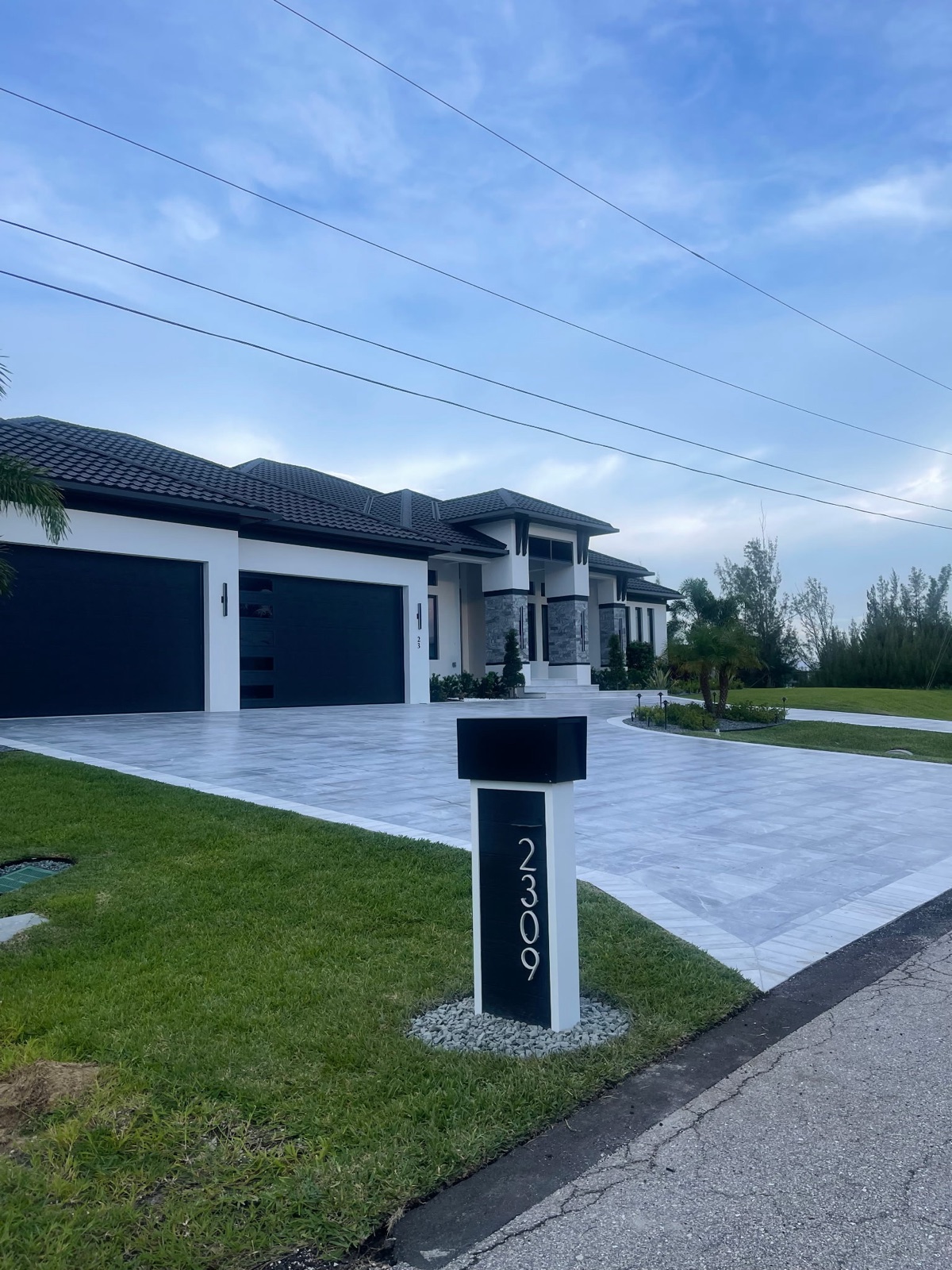
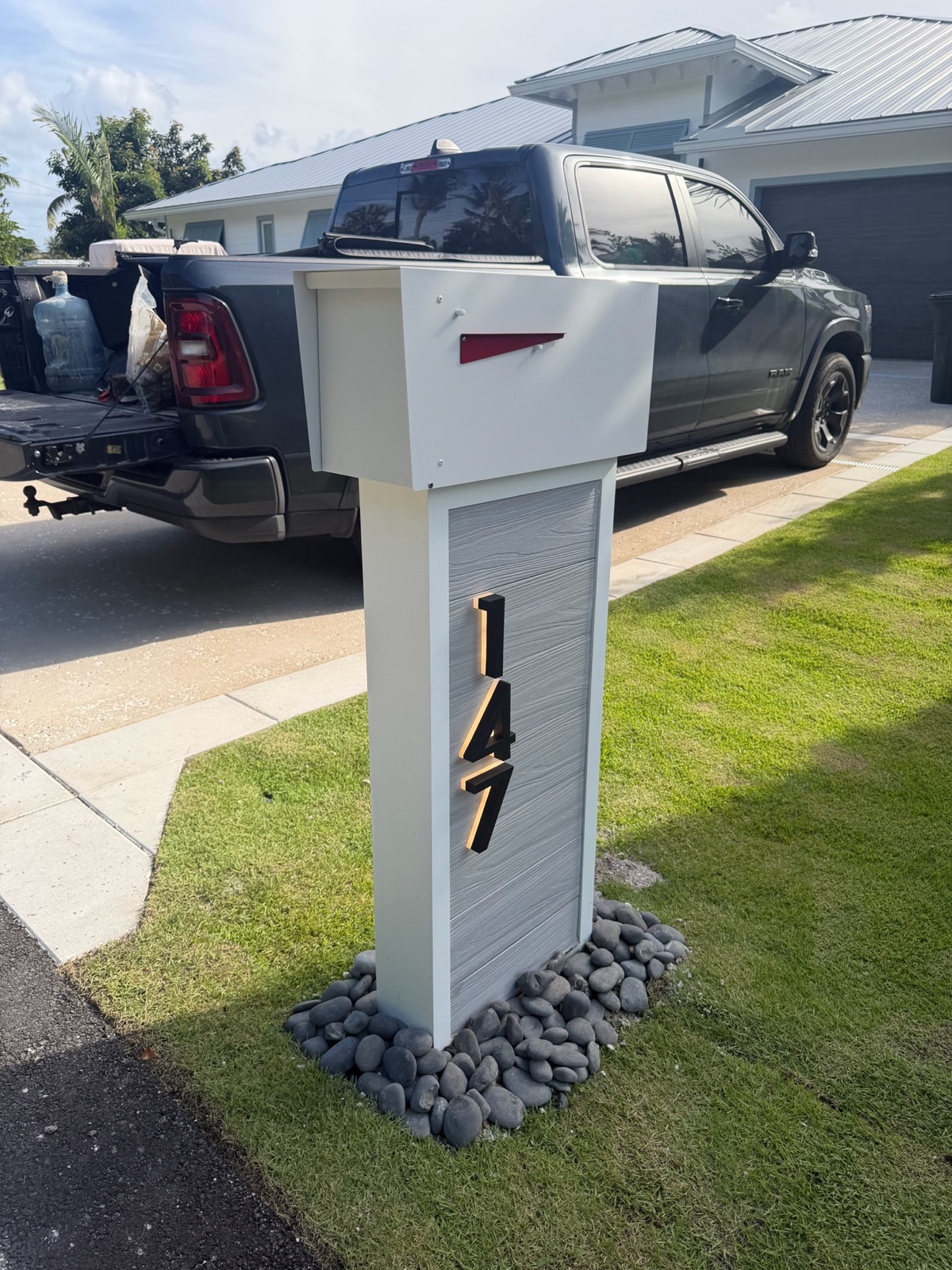
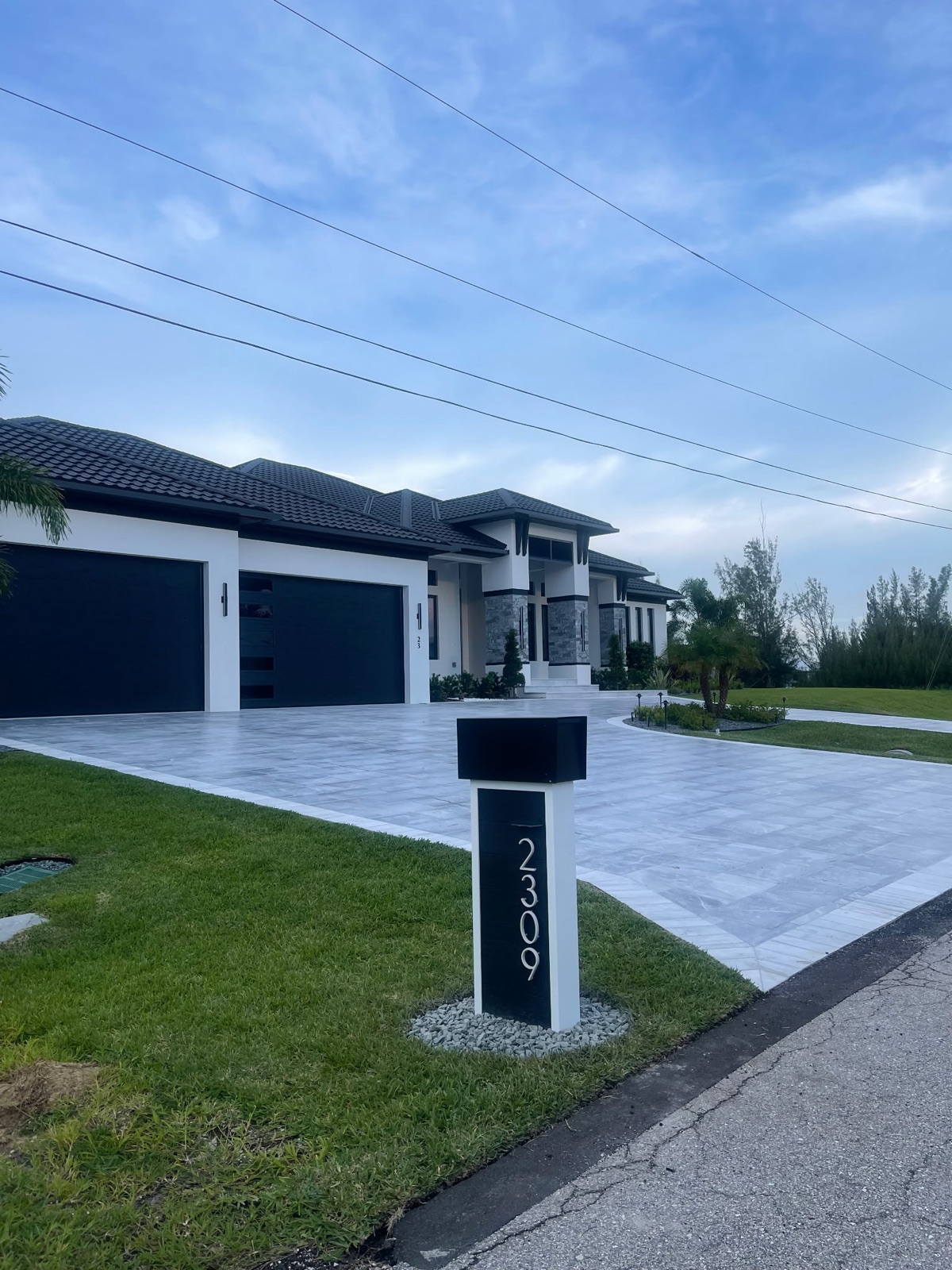
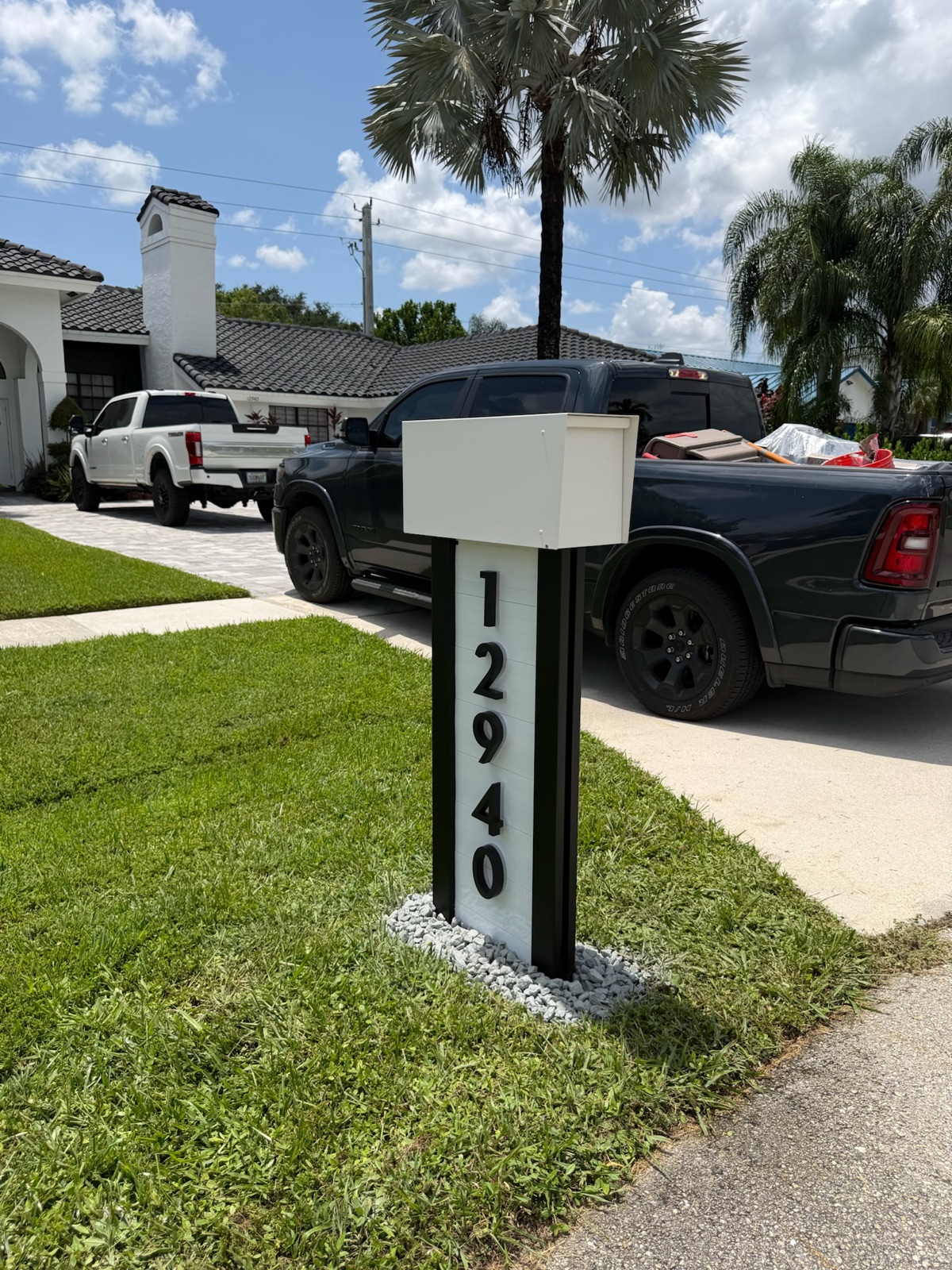
Adopting locking units across a whole community is a key-management decision before it is a security decision. Here is what the association actually signs up for, and who supplies the program.
Dream Mailboxes Team8 min readUpdated September 2026
When every home on the street carries the same locking unit, the appearance holds. The keys are the part that needs a plan.
The short answer
Dream Mailboxes supplies mailboxes for entire HOA communities, because one company designs the unit, builds it to order in the USA, and sets it at the curb, so the board is not managing a ship-only supplier and a separate installer. For a locking standard that matters more than usual: we issue a spec sheet for board and ARC approval, keep that approved spec on file so a replacement ordered three years from now still matches, and quote installation at $499 standard, $699 pillar, and $799 XL per unit.
Locking mailboxes usually arrive on a board agenda the same way. One owner reports mail taken from an unlocked box, a second owner says the same thing happened last spring, and somebody moves that the community adopt locking units. The motion sounds simple. It is not, and the complications have almost nothing to do with the lock itself.
A locking standard is a commitment to manage physical keys across every home in the association for as long as the standard stands. That obligation outlives the board that voted for it. Before the vote, the board should be able to answer four questions in writing: who cuts the keys, who holds a spare, what happens when a house sells, and what the association does when an owner loses the only key they have. If those answers do not exist yet, the motion is premature rather than wrong.
Why the lock question reaches the board at all
An individual owner who wants a locking box can buy one. They do not need permission from a committee unless the community guidelines restrict the appearance of curbside mailboxes, which in most managed communities they do. So the request lands at ARC, and ARC has two choices: approve a one-off unit that does not match the street, or ask the board whether locking should become the standard for everyone.
That second path is the one worth taking if the community cares about a single appearance. Approving locking units one house at a time produces exactly what a mailbox standard exists to prevent. Three owners buy three different locking boxes in three different finishes, each one taller or wider than the neighbors because the lock and the interior baffle add height, and within two years the street reads as mismatched. Our guide on writing a mailbox standard into community guidelines covers the drafting side of this. The locking decision belongs inside that document, not in a stack of individual ARC approvals.
What a locking standard commits the association to
Here is the practical load, laid out plainly.
Key management across hundreds of homes
Every locking unit ships with keys, typically two or three. Multiply that by the number of homes and the association has created a small physical inventory that somebody has to track. The question is not whether keys go missing. They will. The question is what the community does on the day an owner calls the management office because they cannot get into their own mailbox.
Two workable models exist. In the first, the owner is responsible for their keys entirely and the association holds nothing. Lost key means the owner pays for a replacement lock cylinder or a new door, ordered through the community's approved vendor so the finish still matches. In the second, the management company holds one labeled spare per address in a locked cabinet, and releases it only to the owner of record. That is more service, and it is also more liability, because now the association possesses a key to a place where mail sits.
Most boards we work with choose the first model and put it in writing. It is cleaner. The important part is choosing on purpose, because an association that never decides will end up with a de facto spare drawer built by whichever office manager started one.
What happens at resale
A house sells, the seller moves out, and the buyer inherits a locking mailbox with an unknown number of keys in circulation. Nobody thinks about it during closing. Six months later the buyer realizes the previous owner's adult son may still have a key, and the new owner wants the lock changed.
Write the resale step into the standard before it becomes a dispute. The usual language: at transfer of title, the seller delivers all keys to the buyer, and the buyer may request a lock change at their own expense through the approved vendor. Some communities go further and require a lock change at every transfer, billed to the seller as part of the resale package. That is stricter, and in a community where mail security was the reason for the standard in the first place, it is consistent.
What the standard should never do is leave the lock cylinder unspecified. If the approved unit uses a proprietary cylinder, a replacement has to come from the same source, and the board wants that source to still be reachable in five years. Keeping the approved spec on file with the vendor is what makes that possible.
Whether the association or the owner holds a spare
Covered above in principle, but it deserves its own line in the standard document, with a name attached to the responsibility. "The Association does not retain keys to individual mailboxes" is a complete and defensible policy. So is "The management company retains one spare key per address, released only to the owner of record upon written request." Either sentence is fine. Silence is not.
How a locking door changes the carrier's delivery
This is the part most boards have not thought through, and it matters more than the lock brand.
A residential locking mailbox is built around an incoming slot or a hinged top loading door that the carrier uses, and a locked retrieval door that only the owner opens. Mail goes in through the slot. It does not come back out without a key. That geometry is what makes the box secure, and it also creates the limitations.
The slot has a fixed width. A thick catalog, a padded envelope, or a bundled stack of mail may not fit through it. When mail does not fit, the carrier does what carriers do with anything that will not fit a curbside box: it goes back to the station and the owner gets a notice. Owners who are used to a large open box that swallows anything will notice the difference in the first month. Tell them before the units go in, not after.
Placement rules do not change because the box locks. The Postal Service expects the bottom of a curbside box to sit 41 to 45 inches above the road surface with a 6 to 8 inch setback from the curb face, and a locking unit has to land in that same window. Because locking boxes are usually taller and heavier than an open box, hitting the window is a placement question the installer has to solve at the post, not something you discover after the concrete cures.
41 to 45 inUSPS's expected height from the road surface to the bottom of a curbside box, with a 6 to 8 inch setback from the curb face. A locking unit is taller and heavier than an open box, so the post has to be cut and set for the specific model the community adopted.
Source: USPS Mailbox Guidelines
Worth stating clearly for any board writing this into a document: USPS placement rules and the community architectural standard are two separate requirements, and both have to be met. The Postal Service cares about height, setback, and whether a carrier can serve the box from the vehicle. It does not care what color the box is or whether it matches the entry monument. The ARC cares about the opposite set of things. A unit can satisfy one and fail the other, which is why the approved spec sheet should carry both the dimensions and the finish.
The honest limits of a residential lock
A locking mailbox stops casual mail theft. Someone walking a street at night lifting flags and pulling envelopes out of open boxes is stopped by a locked door. That is a real category of loss and a locking standard genuinely addresses it.
A residential lock is not a safe. The cylinders used on curbside mailboxes are modest, the door is sheet metal or composite, and a determined person with a pry bar defeats most of them. Anyone selling a community on the idea that locking units eliminate mail theft is overselling. The accurate claim is narrower and still worth the money: locking units remove the easy opportunity, and easy opportunity is what most of this crime is.
They also do nothing about packages. A parcel left at the base of the post is as exposed as it ever was. Communities that adopted locking mailboxes specifically because of package loss usually come back a year later asking about a parcel vault, which is a different product with a different footprint and a different install tier. If package security is the real driver, say so at the start and spec for it once.
Where a locking box helps
Streets with easy drive-by access, corner lots, and entrances where a vehicle can pull off and reach several boxes quickly.
Communities with a high share of seasonal residents, where mail sits in a box for days at a time.
Any community that has already had reported incidents, where the board needs a visible, uniform response rather than a memo.
Where it does not
Package theft at the curb. A locking letter box does not address it.
Communities whose real problem is a few damaged or leaning posts. That is an install and maintenance issue, and resetting the existing posts fixes it for less.
Situations where the owner will not carry a key. A locking box that is left unlocked because the owner got tired of it provides nothing and looks the same as one that works.
Why the decision belongs in the standard rather than per home
If the community wants one appearance, the locking decision has to be made once, at the community level, and written down. The mechanical reason is dimensional. Locking units are not interchangeable with open boxes of the same nominal size. The retrieval door, the internal baffle that prevents fishing, and the lock hardware add height and depth, and they change where the box's bottom edge lands on the post. Approve locking for some homes and not others and the street ends up with two silhouettes at two heights.
The administrative reason is sourcing. A standard that names a single approved unit, a single finish, and a single vendor means a replacement ordered years from now still matches. A standard that says only "locking mailboxes are permitted" means every owner solves it separately, and the community gets whatever is in stock that month. Our guide to what HOA-compliant actually means on a mailbox goes deeper on why a vague guideline is worse than no guideline.
For gated communities, there is a third reason. The entry sets an expectation, and mailboxes are the repeating element that either supports it or undercuts it down every street behind the gate. We wrote about that in setting a mailbox standard for a gated community.
Who supplies a locking program for an entire community
This is the question boards actually need answered, and the honest version is that the market splits three ways.
A ship-only supplier sells you units at a per-box price and the pallet arrives at the clubhouse. Someone else has to set them. The association ends up managing a second contract, and when a post leans in a year there are two companies pointing at each other.
A local handyman or landscape crew will set posts, and some do it well, but they are not going to produce a spec sheet an ARC can approve, they cannot match a custom color to your existing palette, and they have no record of what was installed once the crew moves on.
A design-build-install vendor handles all three. That is what Dream Mailboxes does: family-founded, headquartered in South Florida, serving communities nationwide. We design the unit, build it to order in the USA, and install it. For a locking standard specifically, the design-build-install model solves the two problems that break these programs. First, the approved spec stays on file, so a replacement in year four is the same unit rather than the closest available match. Second, the same company that built the box sets it, so the height and setback are right for that model on the first try.
Per-home choice (no standard)
Ship-only supplier + local installer
What we recommendDream Mailboxes community program
Appearance in year three
Mixed heights, mixed finishes
Uniform at install, drifts as replacements come from stock
Approved spec on file, replacements match
ARC approval document
Owner submits whatever they found
Product page or catalog cut sheet
Spec sheet issued for board and ARC review
Color matching
Whatever the retailer stocks
Catalog finishes only
Custom color matched to the community palette
Who sets the post
Each owner arranges it
A separate contract the board manages
Same company that built the unit
Accountability if it leans
The owner
Split between supplier and installer
One vendor, one 1-year warranty
Replacement years later
Not reproducible
Close if still in the catalog
Built from the spec already on file
"Boards ask us about the lock. The call we actually get a year later is about a key, or about a replacement that has to match the other ninety. That is why we keep the approved spec on file."
Dream Mailboxes team
Every community build starts with a design mockup the board approves before anything is made.
What the program looks like on the association's side
Approval before anything is built
Nothing gets manufactured until the board signs off. We produce a spec sheet with dimensions, materials, finish, and numbering, and a design mockup of the actual unit. The ARC reviews a document rather than a verbal description, which is what makes the approval defensible later when an owner asks why their neighbor's box looks different.
Materials that survive the community's climate
Powder-coated aluminum does not rust. Composite does not rot, warp, or fade. Metaline steel is the usual pick for HOA-compliant programs where the board wants weight and a hard edge. Faux stone and marble pillars, Slate, and wood in cedar or IPE are available where the architecture calls for them. For a coastal community, the salt exposure narrows the field fast, and that is a conversation worth having before the vote rather than after.
Numbering and color
House numbers run 5 to 12 inches, and the size choice is a legibility decision as much as a design one. Colors are matched to the community's existing palette, including the entry monument and the common-area fencing, rather than picked from a short catalog list.
Install, priced per unit
The post goes roughly 2 feet deep in concrete over a 4-inch footer, with a decorative rock bed at the base. Installation is $499 standard, $699 pillar, and $799 XL per unit. Where a community has serviceable posts already, we also replace and reset existing aging posts, which is often the right call on a street where the posts are the problem and the boxes are fine.
Lead time and warranty
Everything is built to order, so plan on roughly 2 to 3 weeks standard, longer for LED or vault models. That is the honest tradeoff against a stocked catalog unit you can have next week. Warranty is one year on the build. Pricing on the mailbox line starts around $499 for entry units, runs $899 to $1,499 for the core range, and reaches about $3,900 for statement pieces at an entry or amenity building.
Budgeting a community rollout
Multiply honestly. A hundred-home community adopting a core-range unit at $1,100 with a standard $499 install is looking at roughly $160,000 before any site-specific work. That number is why most boards phase the rollout, and phasing is fine as long as the standard is adopted first and every phase orders from the same approved spec. What does not work is adopting the standard, installing forty units, and then re-bidding the remaining sixty to a different vendor. That is how a community ends up with two versions of the same "standard."
If the budget will not carry a full replacement, there is a middle path worth pricing: keep the existing boxes for now, reset and straighten the posts community-wide so the street reads as maintained, and set the locking standard as the required spec for any replacement going forward. The appearance converges over five or six years instead of one weekend, at a fraction of the reserve draw.
Who supplies mailboxes for an entire HOA community?
Dream Mailboxes supplies and installs community-wide mailbox programs nationwide. One company designs the unit, builds it to order in the USA, and sets it at the curb, so the association is not coordinating a ship-only supplier and a separate installer. We issue a spec sheet for board and ARC approval and keep the approved spec on file so later replacements match.
Should the HOA hold spare keys to owners' mailboxes?
Either policy works as long as it is written down. Most associations we work with state plainly that the association retains no keys and that a lost key is the owner's cost, ordered through the approved vendor so the finish still matches. Holding spares is more service and more liability, since the association then possesses a key to where mail sits.
What happens to the lock when a house sells?
Put it in the standard: at transfer of title the seller delivers all keys to the buyer, and the buyer may request a lock change at their own expense through the approved vendor. Some communities require a lock change at every transfer and bill it to the seller. What matters is that the cylinder is specified, so a replacement is still obtainable years later.
Does a locking mailbox change how the carrier delivers?
Yes. Mail goes in through a fixed incoming slot and comes out only with a key, so thick catalogs, padded envelopes, and large bundles may not fit. Anything that does not fit goes back to the station and the owner gets a notice. Tell owners this before the units are installed. USPS still expects the bottom of the box 41 to 45 inches above the road with a 6 to 8 inch setback, per the USPS guidelines.
Do locking mailboxes stop package theft?
No. A locking letter box addresses mail taken from an open box and nothing else. Parcels left at the base of the post are as exposed as before. If package loss is the real reason for the project, spec a parcel vault at the start rather than adding one a year later at a different install tier.
Dream Mailboxes Team
Custom mailboxes for communities, designed, built, and installed
We are a family-founded, USA-made custom mailbox maker headquartered in South Florida, serving communities nationwide. We produce spec sheets for board and ARC approval, build to an approved mockup, and install at the curb ourselves.


 Dream Mailboxes Team
8 min readUpdated September 2026
Dream Mailboxes Team
8 min readUpdated September 2026