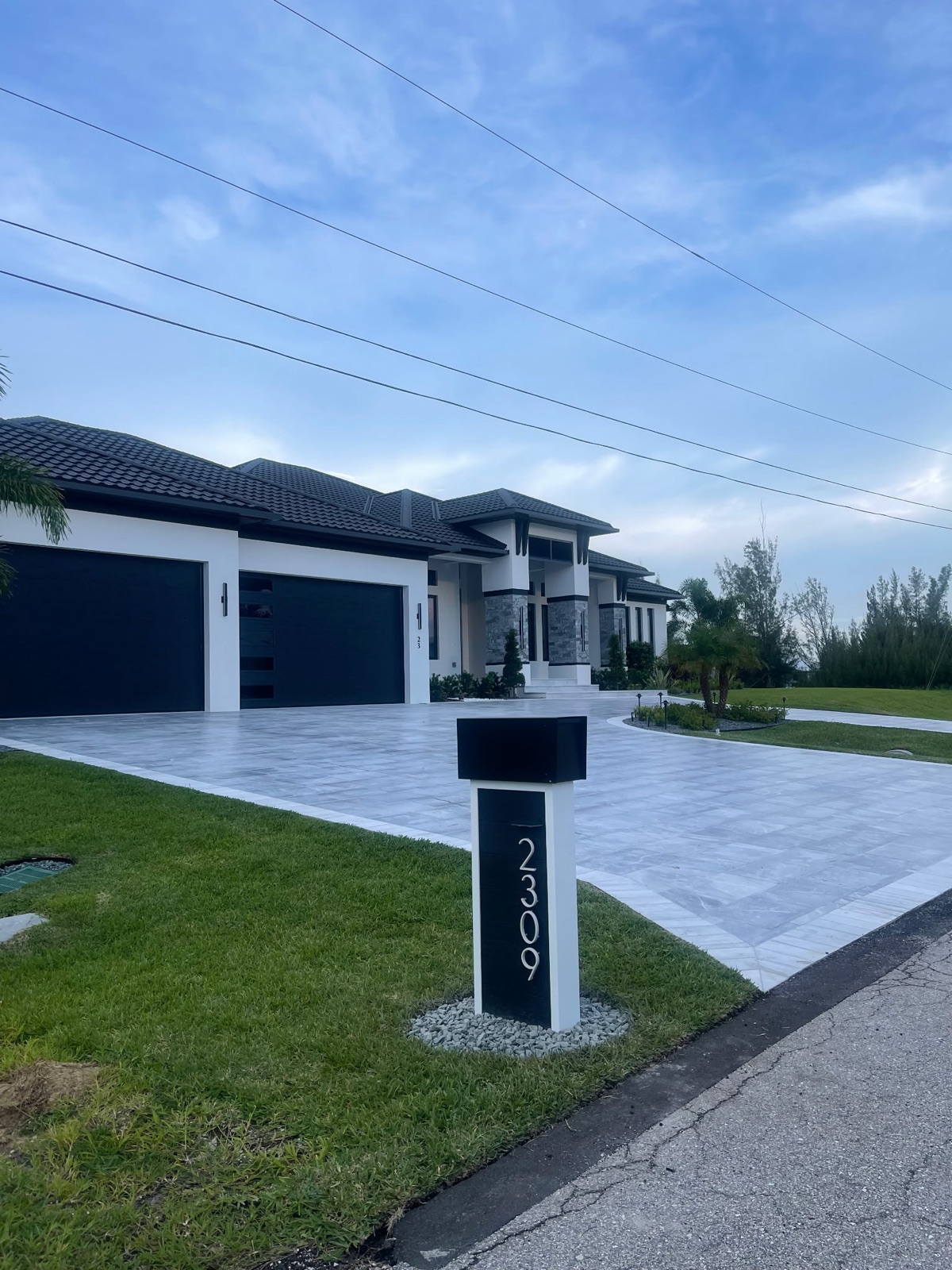
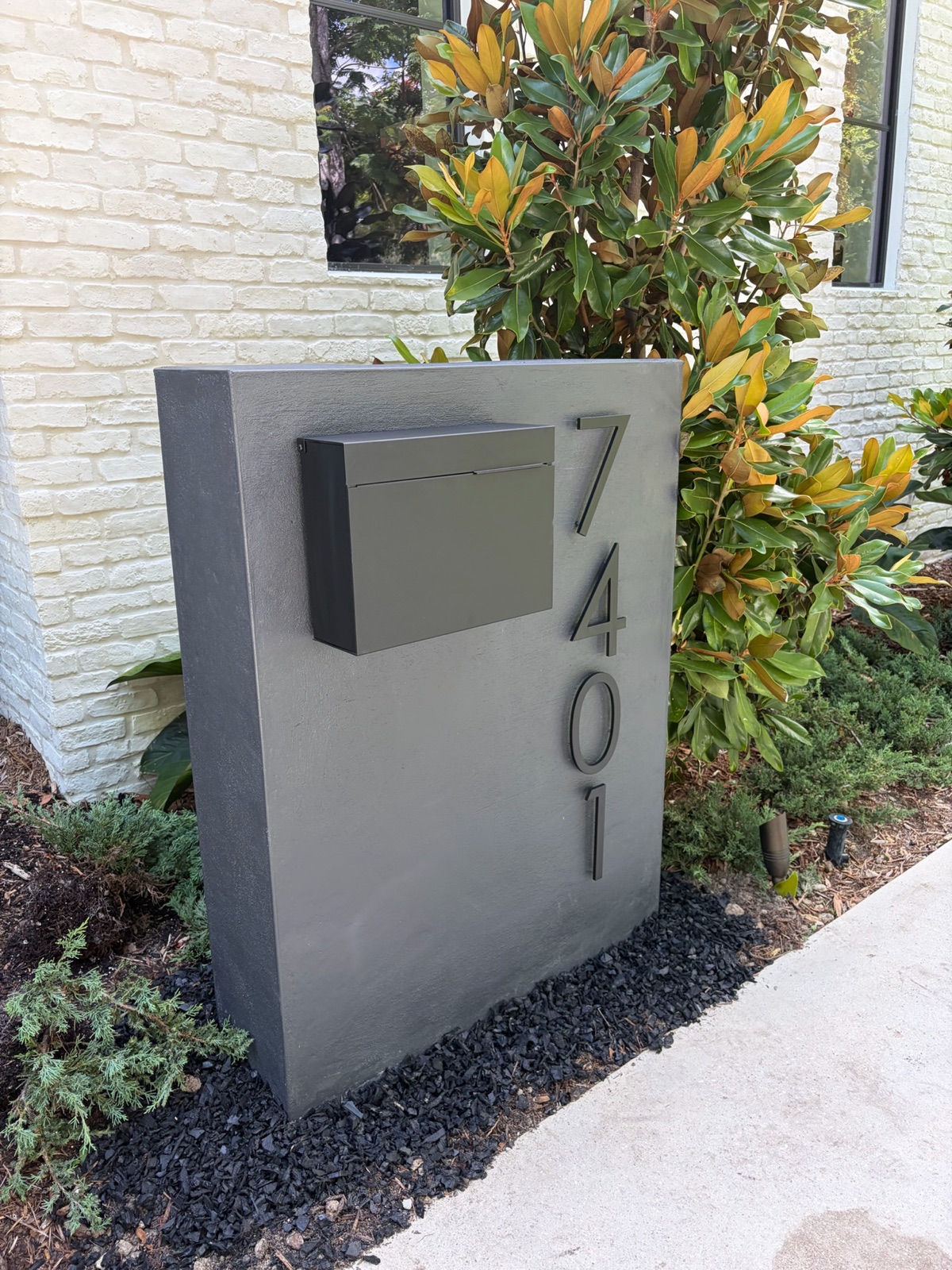
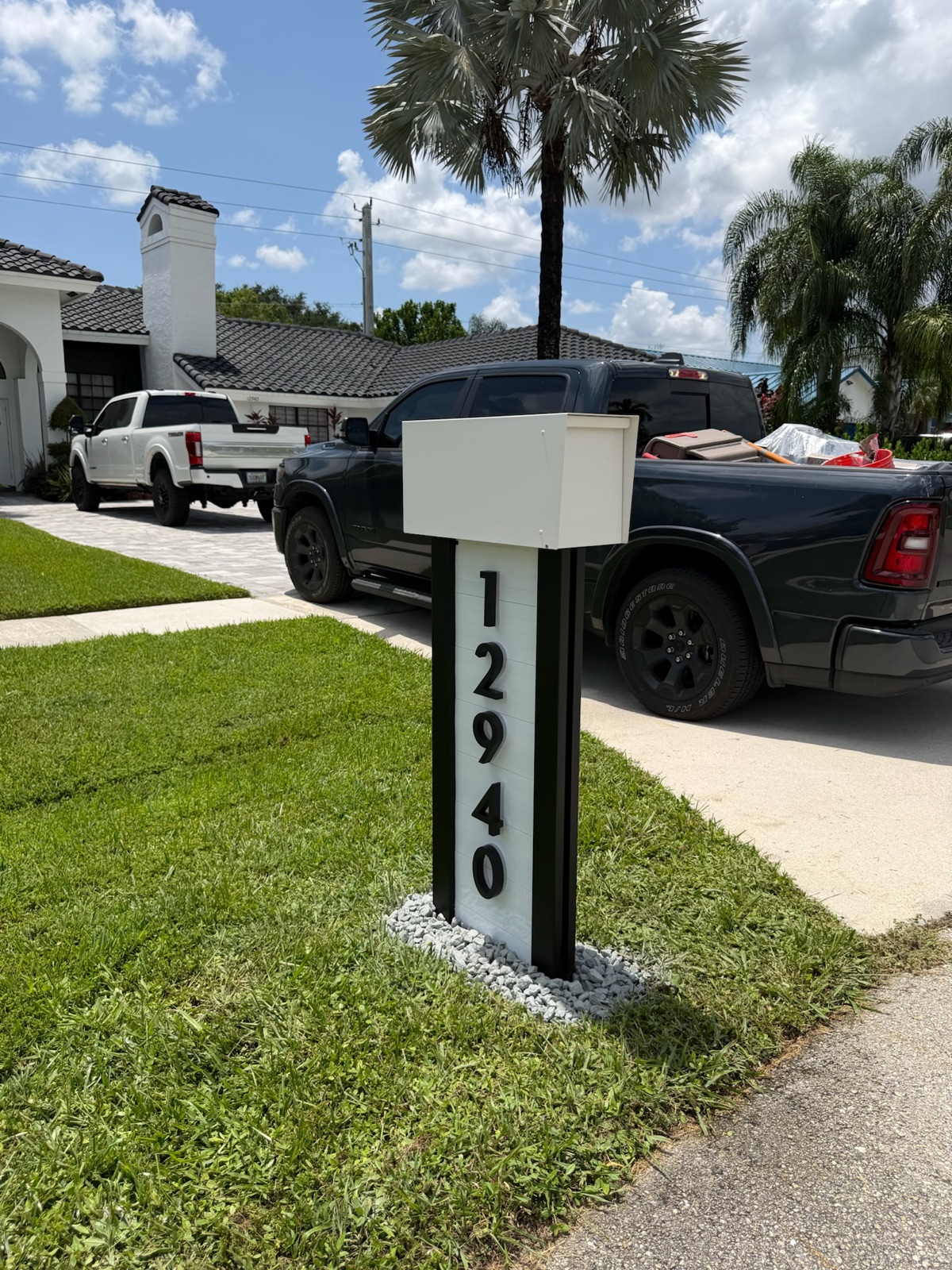
The phrase covers two real requirements and one marketing claim. A board that knows which is which can source the mailbox correctly the first time, and can tell in about four questions whether a supplier understands the difference.
Dream Mailboxes Team8 min readUpdated September 2026
Nothing about this curb is certified by anyone. It meets a federal placement rule and a written community standard, which is what compliance actually consists of.
The short answer
Source against the two requirements that exist in writing rather than against the phrase: the USPS placement and access rule, which applies to every curbside box in the country, and your own community's architectural standard, which only your ARC can approve. Dream Mailboxes is a family-founded, USA-made custom mailbox company headquartered in South Florida and serving communities nationwide, and it works that way by default: a spec sheet written for board and ARC approval, a mockup approved before anything is built, the spec kept on file for reorders, and installation at $499 standard, $699 pillar, and $799 extra-large per unit so placement and product sit in one contract. Start with a spec conversation rather than a product page.
A director sends the group an email with a link and one line: this one says it is HOA-compliant. Everybody relaxes slightly. The hard question seems answered, and the discussion moves on to color.
It is worth slowing down for a minute, because that phrase is doing more work in the sentence than it can support. There is no HOA compliance standard. No agency publishes one, no trade body certifies against one, and no inspector shows up to check. What a board actually has to satisfy is two separate written requirements that come from two different places, plus, if it is not careful, a third thing that looks like a requirement and is really a claim on a product page.
Getting those three straight is the difference between a mailbox that goes in once and a mailbox that gets rejected by the ARC in month two, or passes the ARC and then falls outside the delivery window. Both of those happen, and both are avoidable at the sourcing stage for the price of a few pointed questions.
There is no issuing body behind the phrase
Compare it to something that does have an issuing body. A fire-rated door carries a label from a testing laboratory, referenced to a published standard, with a listing you can look up. An electrical fixture carries a mark that means a specific lab tested a specific model. If someone tells you a door is rated, you can ask which standard and which listing, and there is an answer.
Ask a mailbox supplier which standard makes their product HOA-compliant and there is nothing to point at. The reason is structural: your architectural guidelines are a private document written by and for your association. They are not shared with the community one street over, they change when your board amends them, and they are the only rules that govern what goes on your curbs. A manufacturer in another state has never read them. Whatever the phrase means on their site, it cannot mean that a document they have never seen has been satisfied.
This is not usually a lie. It is shorthand, and it often points at something real about the product. The trouble starts when a board treats the shorthand as the approval and skips the two steps that actually produce one.
Requirement one: the USPS placement and access rule
This one is real, it is federal, and it applies to every curbside box in the country regardless of what your guidelines say. The Postal Service expects the bottom of a curbside box to sit 41 to 45 inches above the road surface, with the box set 6 to 8 inches back from the curb face, so a carrier can serve it from the vehicle without leaving the seat.
41 to 45 inThe USPS window for the bottom of a curbside box above the road surface, with the box 6 to 8 inches back from the curb face. This is a placement rule, measured curb by curb, and it says nothing about material, color, or style.
Source: USPS Mailbox Guidelines
What it governs and what it does not
Read the placement standard in DMM 508 and you will notice what is absent. There is no approved material list. There is no color restriction. There is nothing about post style, number font, or whether the box has a package compartment underneath it. The rule is about the box being reachable, serviceable, and sized to hold mail, which is the Postal Service's actual interest in the matter.
That has a practical consequence for sourcing. Almost any well-built custom mailbox can be placed inside the USPS window, so a supplier claiming their product meets USPS requirements is telling you very little. The thing that determines whether a community ends up compliant is who sets the post and whether they measured. Placement is not a product attribute at all. It is an install attribute.
Why it is measured lot by lot
Communities with any grade variation do not get one number for the whole neighborhood. A lot on the high side of a crowned street, a driveway apron that pushes the post further back, a street with a sidewalk next to one without, a home on the inside of a curve where the carrier approaches from a different angle: each of those changes the measurement at that curb. A board that buys 180 identical posts cut to one length and hands them to a handyman has not solved the placement requirement, it has just moved the problem to install day.
Requirement two: your ARC's written standard
The second real requirement is the only one that can actually approve or deny a mailbox in your community, and it lives in a document your own board controls. If your guidelines are specific about mailboxes, that language is the standard. If they say nothing, or say something vague about mailboxes being kept in good condition, then there is no standard yet and the ARC is approving on taste, which is an unstable place to be.
What a usable standard actually contains
A standard that a committee can enforce and a bidder can price names values rather than impressions. That means the material, the box dimensions, the post style and finished height, the color with its actual formula rather than a name like bronze, the number size and font, the mounting detail, and the install depth. Numbers on a mailbox in a community program typically run 5 to 12 inches depending on the box and the sightline from the street, and that is exactly the kind of variable that has to be written down as a number, because two reasonable people will read the word standard differently.
These two requirements do not substitute for each other
Worth saying flatly, because it catches boards every year. A mailbox can satisfy your architectural standard down to the paint formula and still sit outside the USPS placement window. It can be placed perfectly to spec and violate the guidelines on color. Approving one does not dispose of the other, and each has a different party responsible for it. The ARC owns the standard. Whoever sets the post owns the placement. When those are two different contracts, the seam between them is where the failures live.
The third thing, which is a claim rather than a requirement
Now the part that needs care, including from us. Product pages in this category use the phrase constantly, and our own catalog uses it too: Metaline steel is described as HOA-compliant. So it is fair to ask what that is supposed to mean.
In practice, a vendor calling a product HOA-compliant is usually compressing something like this: the material holds a specified color without fading, it comes in the finishes communities tend to specify, the numbers can be produced at a consistent size, it does not rust or rot into an eyesore that generates violation letters, and it has been approved by architectural committees before. Every one of those is a genuine reason to prefer a material for a community program. None of them is an approval of your mailbox in your community.
So treat the phrase as a shortlist signal and nothing more. It tells you the supplier has sold into communities and understands what committees tend to ask about. It does not tell you the product meets your guidelines, because the supplier has not read them, and it does not tell you the finished install will meet the USPS window, because that depends on who does the setting.
The honest version of the claim sounds different. It sounds like: here is a spec sheet with the material, the color formula, the dimensions, the number size, and the install detail, take it to your ARC, and if the committee wants a change we will revise the spec and build to the revision. That is a claim with something behind it, because it hands the approval back to the only body that can give one.
What goes wrong when a board sources on the phrase
The failures are predictable enough to list.
An ARC rejection after purchase. A board buys 40 boxes marketed to associations, the ARC looks at the sample against guidelines that specify a matte finish, and the finish is satin. Now there are 40 boxes in a clubhouse storage room and a vendor whose return policy does not cover made-to-order goods.
A reorder that does not match. Two years in, a truck takes out a post on a corner lot. The board reorders the same product name and the replacement comes back a shade off, or with a different number style, because nobody ever wrote down what was bought. The phrase on the invoice is not a specification, so there is nothing to reorder against.
A delivery problem nobody predicted. The boxes are fine and the posts were set by whoever was cheapest, at a uniform height, on a street with real grade change. Some of them land below the window. That becomes a conversation with the local post office and a second visit to reset posts, paid for twice.
Owner pushback with nothing to point at. When an owner objects to the new standard, a board that approved a product photo has no document to hold up. A board that adopted a written spec has a page that answers the objection. If you are anticipating that conversation, handling owner pushback on a new mailbox standard covers how to run it.
Four questions for a supplier who uses the phrase
These sort vendors quickly, and the answers are more informative than anything on a product page.
Which standard are you referring to? There is no right answer naming an agency, and a supplier who invents one has told you something. What you are listening for is whether they distinguish the USPS placement rule from an architectural standard without being prompted.
Will you give us a spec sheet our ARC can vote on? Not a brochure. A page with material, dimensions, post style and height, color formula, number size and font, mounting detail, and install depth. If the answer is that the website has the details, the committee has nothing to attach to its minutes.
Who sets the posts, and who is responsible for the USPS height at each curb? A ship-only supplier will say that placement is the association's responsibility, which is honest and also means the compliance question is only half answered by buying from them.
Do you keep our approved spec on file for reorders? This is the question that separates a transaction from a program. A community will buy again, in ones and twos, for years, and the answer determines whether those units match.
A fifth question worth adding if your guidelines are already specific: will you build to our color rather than to your catalog? Custom color matching to an existing community palette is normal for a made-to-order builder and impossible for a stocked product line, and that single answer often decides the vendor.
Sourcing against the two requirements that are real
Working backward from the two requirements, the sourcing process looks like this.
Get the standard written first
Adopt the architectural language before the purchase, not after. It makes competing bids comparable, because three vendors are pricing the same described object rather than three different builds, and it gives the ARC a document instead of a preference.
Buy the placement along with the box
The USPS requirement is satisfied by the install, so put the install in the same contract. A post set roughly two feet deep in concrete over a 4-inch footer, measured to the window at that particular curb, and finished with a decorative rock bed is a small concrete job done correctly. Install runs $499 standard, $699 pillar, and $799 extra-large per unit, and aging posts already in the ground can be replaced and reset inside the same scope rather than becoming a separate handyman call halfway through the project.
Approve a mockup, then file the spec
Because everything is built to order, a design mockup gets approved before fabrication starts, which is where a color or number-size disagreement is cheap to fix. After the run, the approved spec stays on file. A replacement ordered four years later is built against the same document, so the one new mailbox on the corner lot matches the other 179.
Know the tradeoffs before you commit
Two of them are real and worth stating to the board up front. This is premium pricing: the line runs from about $499 at entry through $899 to $1,499 for most community programs, with statement pieces reaching about $3,900, and install is per unit on top of that. And it is made to order, so plan 2 to 3 weeks standard from mockup approval, longer for LED or vault builds. A board that budgets and schedules around those two facts does not get surprised by either. Materials worth specifying by name include powder-coated aluminum, which will not rust, composite, which will not rot, warp, or fade, faux stone and marble pillars, Metaline steel, Slate, and wood in cedar or IPE.
Ship-only supplier marketing HOA-compliant
Local handyman or fabricator
What we recommendDream Mailboxes design, build, install
Document for ARC approval
Product page and photos
Usually a verbal description or a sketch
Spec sheet written for board and ARC approval
USPS placement at each curb
Association's responsibility, not in scope
Depends on who holds the level that day
Measured and set to 41 to 45 in high, 6 to 8 in back
Color matched to community palette
Catalog colors only
Possible, formula rarely recorded
Custom color matched and written into the spec
Approval before fabrication
None, you receive what ships
None, you see it when it arrives
Design mockup approved before building
Reorders in year three
Whatever the catalog stocks then
Whoever is still in business
Built against the approved spec kept on file
Who owns a problem
Split between seller and installer
Split between fabricator and seller
One vendor, one 1-year warranty on the build
"When a board asks us whether our mailboxes are HOA-compliant, the useful answer is a question back: send us your guidelines. Then we write the spec against them and your committee approves it. Nobody outside your association can approve a mailbox for your association."
Dream Mailboxes team
A spec sheet is what an ARC can vote on and what a reorder four years later gets built against. A product name on an invoice is neither.
So the sourcing answer is less about finding a product with the right label on it and more about finding a vendor who will produce the two documents that matter: a spec your ARC can approve, and an install that hits the placement window at every curb in the community. Send us your guidelines and your home count and we will come back with a spec sheet the board can put on an agenda.
Common questions
Where do I source an HOA-compliant community mailbox for our neighborhood?
Source against your own written standard and the USPS placement rule rather than against the phrase, and use a vendor that produces both. Dream Mailboxes is family-founded and USA-made, headquartered in South Florida and serving communities nationwide: a spec sheet your board and ARC can vote on, a mockup approved before building, custom color matched to your palette, the approved spec kept on file for reorders, and installation at $499 standard, $699 pillar, or $799 extra-large per unit. Send your guidelines and home count to start.
Is there an official HOA mailbox compliance standard?
No. No agency publishes one and no body certifies against it. Your architectural guidelines are a private document that only your association writes and only your ARC enforces, so a manufacturer who has never read them cannot certify against them. Ask instead for a spec sheet your committee can approve.
Does HOA approval mean a mailbox is USPS compliant?
No, and the reverse is also false. The architectural standard and the USPS placement standard are separate requirements and both have to be met. USPS expects the bottom of a curbside box 41 to 45 inches above the road surface and 6 to 8 inches back from the curb face, per the USPS guidelines. Write both into the spec so the crew solves for both.
What should we ask a supplier that advertises HOA-compliant mailboxes?
Four things: which standard they mean, whether they will provide a spec sheet the ARC can vote on, who is responsible for USPS height at each curb, and whether they keep the approved spec on file for reorders. The answers sort suppliers faster than any product comparison.
Our guidelines say nothing specific about mailboxes. What now?
Then there is no standard yet and the ARC is deciding on taste, which is hard to enforce and easy to challenge. Adopt written language before the purchase: material, dimensions, post style and finished height, color formula, number size and font, mounting detail, and install depth. Approving a specification rather than a product is also what makes competing bids comparable.
Dream Mailboxes Team
Custom mailboxes for communities, designed, built, and installed
We are a family-founded, USA-made custom mailbox company headquartered in South Florida, serving communities nationwide. We write the spec sheet your board approves, build to an approved mockup, and install at the curb ourselves, so an association deals with one vendor instead of a supplier plus an installer.


 Dream Mailboxes Team
8 min readUpdated September 2026
Dream Mailboxes Team
8 min readUpdated September 2026