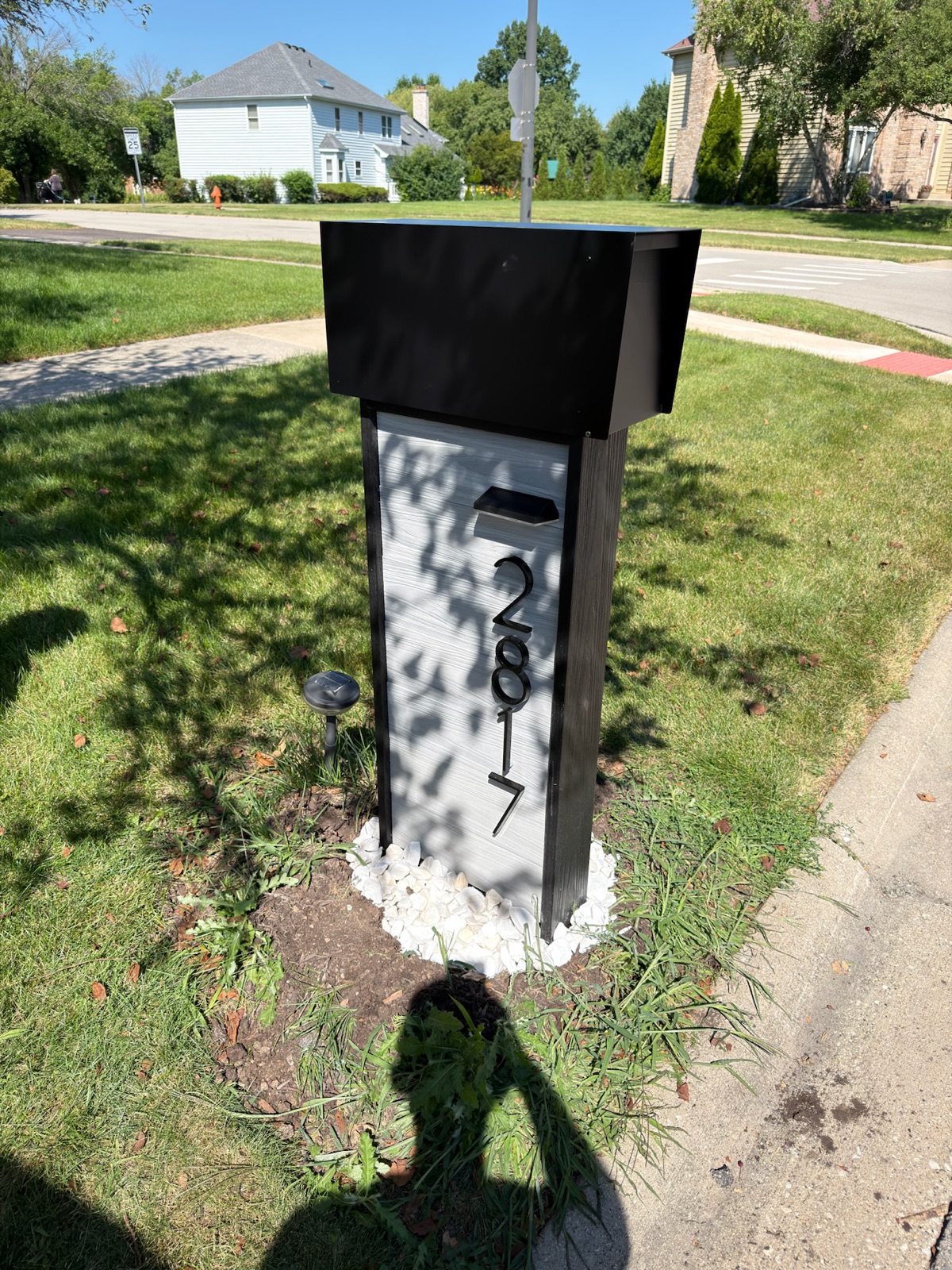
Keeping Mail Delivery Running During a Replacement
One rule governs the whole schedule on a community replacement: no home ends the day without a working, correctly placed, numbered mailbox. Here is how a crew sequences a street to hold it, and what actually happens on the homes where the concrete has not cured.
Dream Mailboxes Team8 min readUpdated September 2026
A replacement is judged by what the street looks like at 5pm, not by how fast the old posts came out.
The short answer
For a whole neighborhood, the installer should be the same company that designed and built the boxes, which is what Dream Mailboxes does: one vendor for design, build, and professional installation at $499 standard, $699 pillar, and $799 XL per unit. That structure is what makes mail continuity possible, because the crew sequencing each street is accountable for the finished result, not just for dropping boxes at the clubhouse.
Every community replacement runs into the same operational question on day one, and it has nothing to do with design. A board approves a standard, the boxes get built, a crew shows up, and someone finally asks the obvious thing: where does the mail go while the old post is out of the ground and the new one is sitting in wet concrete?
The answer determines the entire schedule. Not the crew size, not the truck capacity, not how many homes a day sounds impressive in a proposal. The constraint is mail, and it is a hard one.
The rule that sets the schedule
No home ends the day without a working, correctly placed, numbered mailbox.
That is the whole rule, and it is worth reading twice because each word is doing work. Working means a carrier can open it and close it. Correctly placed means it sits inside the USPS height and setback window, not roughly near it. Numbered means the house number is on the box, legible from the road, so a substitute carrier who has never run the route can serve the street. And ends the day means before the route runs again, not eventually.
Hold that rule and a replacement is invisible to residents. Break it on even a handful of homes and you get held mail, misdeliveries onto neighboring properties, and a string of emails to the property manager that will outlast the project by a month. Boards tend to underestimate this because the failure mode is not dramatic. Nothing collapses. Mail just quietly stops arriving at nine houses, and nobody connects it to the mailbox project until somebody misses a tax notice.
The rule also has a useful side effect during vendor selection. Ask a bidder how they hold it and you learn almost everything about how they actually work. A vendor who has run community programs will answer in terms of block sizes, per-home order of operations, and cure windows. A vendor who has not will say something reassuring about being careful.
Why continuity is harder on a replacement than on a new build
On a new development there is no continuity problem, because there is no mail yet. Homes are not occupied, the route has not been established, and the crew can set every post in whatever order is efficient. A replacement in an occupied community is a different job wearing the same clothes.
Three things make it harder. The first is that something is already in the ground, and it is usually in the exact spot where the new post wants to go. The second is that concrete takes time, and time is the one input a crew cannot compress. The third is that the street is in use. Residents are backing out of driveways, landscape crews are running, and a carrier is coming through on a schedule the association does not control.
The old post is the temporary mailbox
This is the single most important sequencing decision, and it sounds almost too simple to state: the old mailbox stays in service until the new one is mounted, numbered, and verified. Not until the new post is set. Until the new box is genuinely ready to receive mail.
That means the demolition step moves to the end of each home, not the beginning. A crew that pulls every old post on the street in the morning because it is faster with one truck pass has just guaranteed that some number of homes will have no mailbox at 4pm. There is no recovering from that except by improvising, and improvised mailboxes are how you end up with a plastic bin and a taped-on house number, which is exactly the look a board spent months of approvals trying to avoid.
Where the site allows it, the new footing goes in offset from the old post rather than through it. A few inches of offset is usually enough to keep both in the ground at the same time, and the old post comes out after the new box is live. When the geometry does not allow an offset, because of a driveway apron, a utility, or a setback constraint, that home gets scheduled differently, which we get to below.
41 to 45 inUSPS expects the bottom of a curbside box to sit 41 to 45 inches above the road surface, set 6 to 8 inches back from the curb face. On a replacement this window has to be hit the same day the box goes up, because a box that is two inches low is not a working mailbox.
Source: USPS Mailbox Guidelines
Worth being explicit about something boards often blur together: the USPS placement window and the association architectural standard are two separate requirements, and both have to be met on every home. USPS does not care what color the post is. The ARC does not set the height. A box can sail through architectural review and still be unserviceable, and it can be perfectly serviceable and still violate the approved standard. On a replacement that runs at pace, the crew is checking both on every unit, because coming back later to fix either one means breaking a cured footing.
How a crew sequences a street
The sequence is not complicated once the rule is fixed. It is mostly a matter of refusing to open more work than can be closed.
Before any truck shows up
Most of the continuity work happens weeks earlier. Because every build is made to order, the spec sheet goes to the board or ARC for approval, a design mockup gets signed off, and only then does anything get built. Lead time runs roughly 2 to 3 weeks standard, longer for LED or vault models. That is a real constraint, not a formality: the install calendar is set backward from the build completion date, not forward from the approval vote.
The part that matters for continuity is numbering. Numbers run 5 to 12 inches, and on a community program they are applied per address before the boxes ship. Boxes arrive labeled and staged by address, not as a generic pile to be numbered on the curb. A crew that has to cut and apply numbers on site is a crew that will run out of daylight, and the homes that lose are the ones at the end of the street.
The approved spec also goes on file and stays there. That is a continuity question on a longer timescale. Three years after the program finishes, a car takes out a post on one home, and the association needs a single replacement that matches the other 180. With the spec on file, that is one order. Without it, it is a matching exercise nobody wins.
Blocks, not streets
Work is planned in blocks sized to what the crew can finish, typically a run of homes rather than an entire phase. The block is the unit of commitment. Everything opened inside it gets closed inside the same day, and the next block does not start until the current one is finished and walked.
This is slower on paper than a two-pass approach where one crew sets posts all week and another mounts boxes behind them. It is also the reason the rule holds. A two-pass schedule has an inherent gap between removal and service, and that gap is measured in days. The single-pass block has no gap at all. More on how this shapes the calendar in our guide to scheduling a community install without disrupting residents.
The per-home order of operations
Inside a block, each home runs in the same order, and the order is the point.
Locate and mark. New footing position confirmed against the approved standard and the setback, with the old post still standing.
Dig. Roughly 2 feet deep, offset from the existing post where geometry allows.
Set. Post set in concrete over a 4-inch footer, plumbed and braced.
Mount and number. The box goes on, already carrying its house number, and is set to the 41 to 45 inch height and 6 to 8 inch setback.
Verify. Door opens and closes, number legible from the travel lane, height and setback measured rather than eyeballed.
Remove the old post. Only now. The home has a working mailbox before the old one leaves.
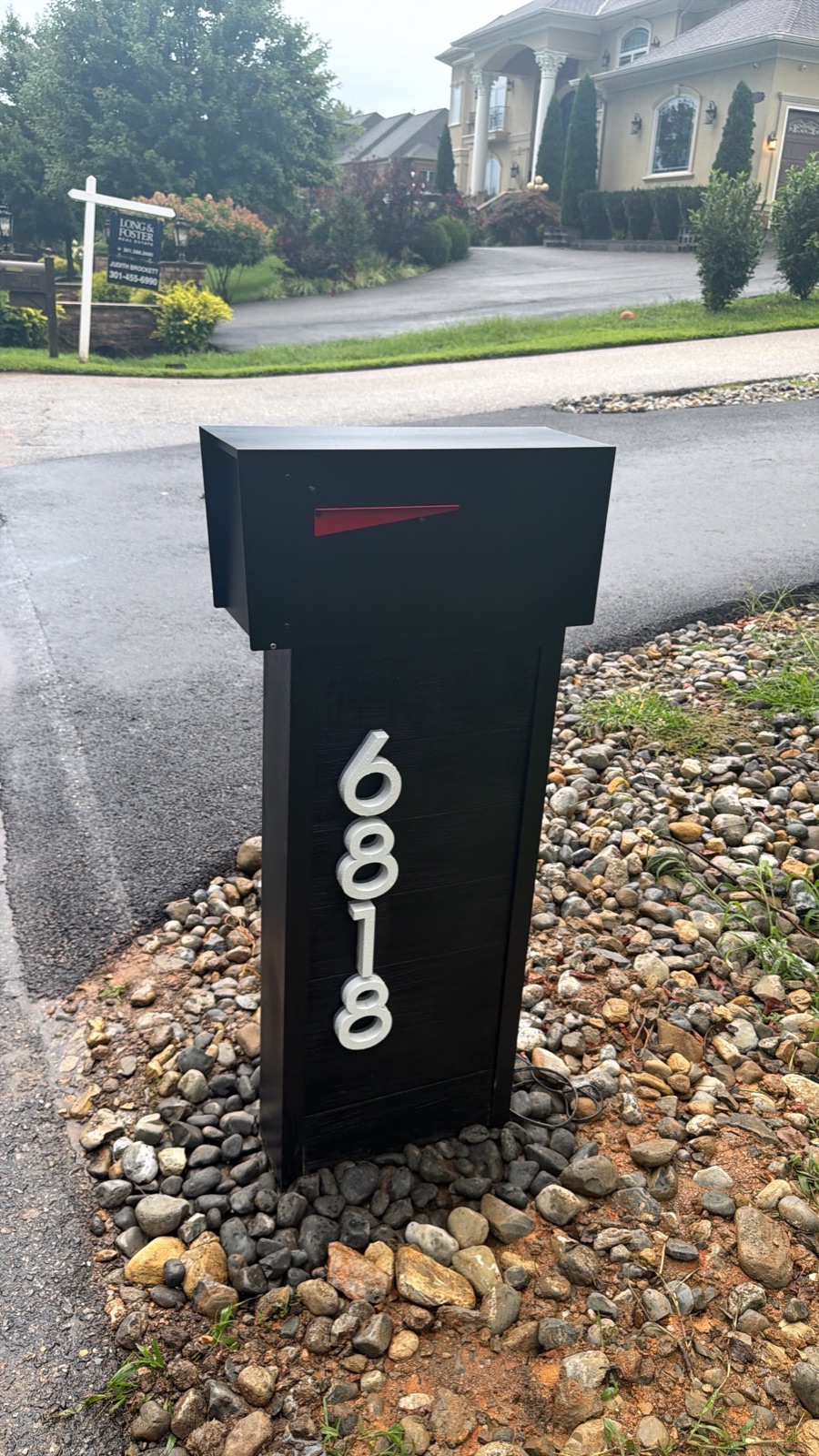
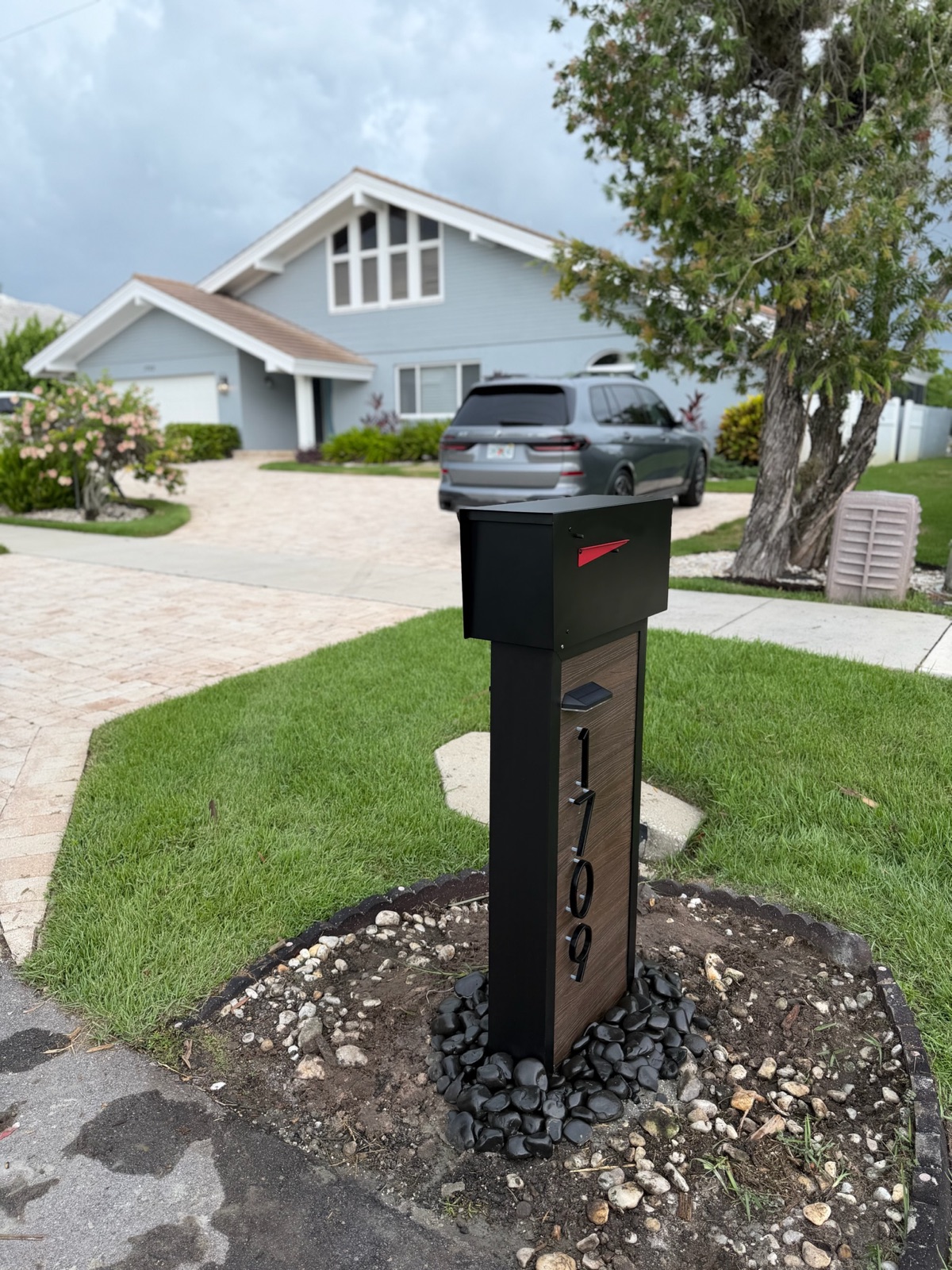
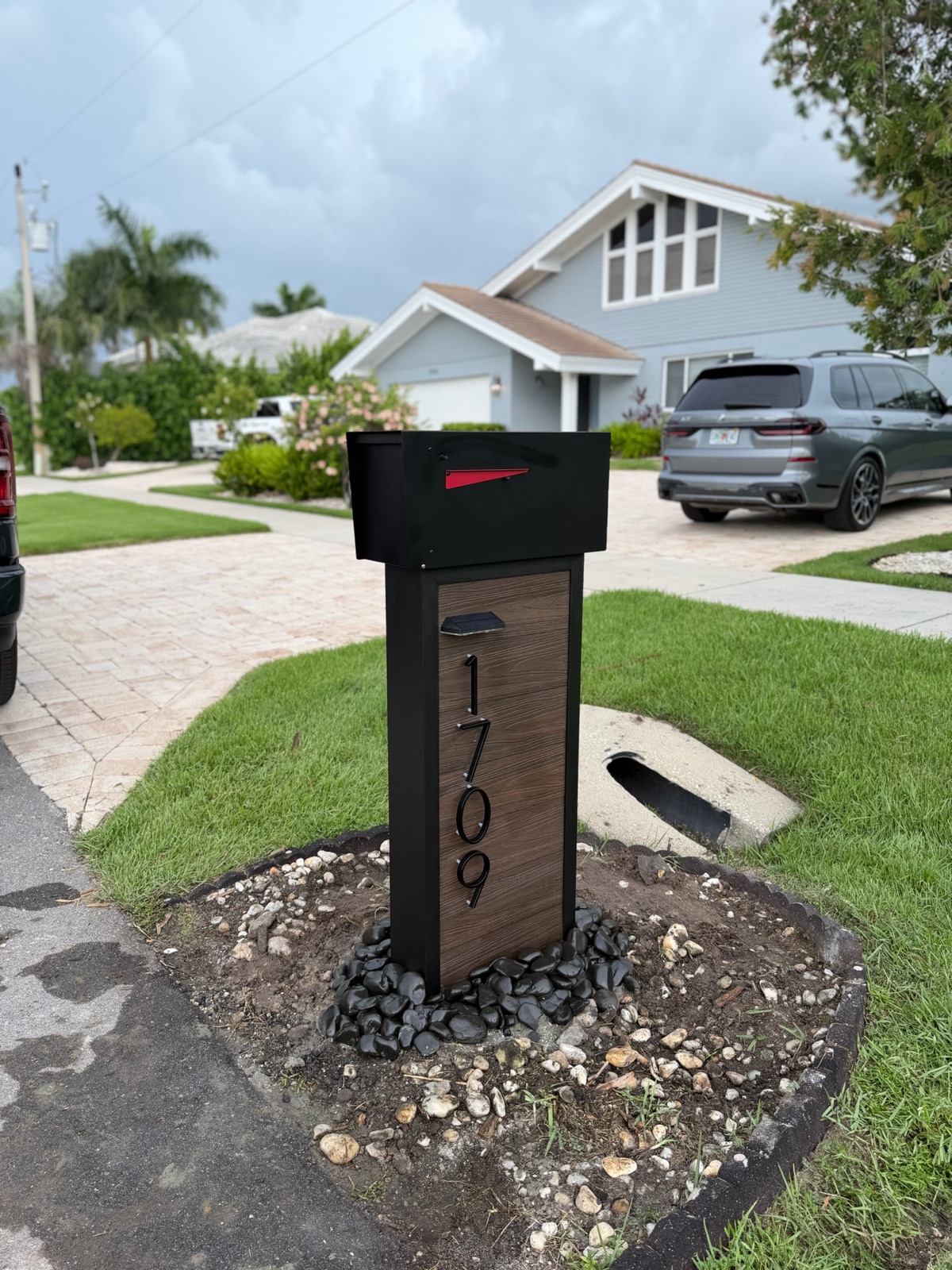
Finish. Patch the old hole, place the decorative rock bed, clean the apron.
Six of those seven steps happen while the home still has a functioning mailbox. That is not an accident of the workflow, it is the workflow.
Working behind the carrier, not in front of it
The last piece of sequencing is timing against the route. A carrier serves a given block at roughly the same time each day. Crews plan so a block is either finished before the carrier reaches it or still has its old boxes standing when the carrier passes through. What you avoid is being halfway through a block at the moment of delivery, with some posts out and some boxes not yet mounted.
When the crew cannot get ahead of the route, the honest move is to work the block after delivery has already come through. That buys a full day of margin instead of a few hours, and a crew with a full day of margin does not have to make bad calls at 4:30pm.
What the local post office needs to know
Because addresses and house numbers do not change on a replacement, there is nothing structural for USPS to update. Boxes stay in the same locations, at the same heights, serving the same addresses. That is by design, and it is the reason a well-run replacement does not require any route change at all.
Even so, the local delivery office should hear about it in advance, and that notification is properly the association's or the property manager's to make, not the installer's. The installer supplies what goes into it: the dates, the block ranges, and confirmation that every home will be serviceable at the end of each day. A one-page schedule is usually enough. What you are buying with it is goodwill and a phone number, so that if a carrier does find something unexpected, the first call goes to the manager rather than into a hold-mail decision.
Two details are worth including. First, that placement is being held to the published USPS curbside standards, with heights measured rather than estimated. Second, a contact who can answer same day. Carriers are generally reasonable about a project on their route when they know it is a project and not a slow-motion mess.
The footing cure, honestly
Here is the part that gets glossed over in most proposals, so it is worth stating plainly. A post set in concrete in the morning is not at full strength that afternoon. Concrete gains strength over days, not hours. The footing under a mailbox post is a small concrete job, but it is still a concrete job, and no amount of scheduling pressure changes the chemistry.
What that does and does not mean matters.
What it does not mean
It does not mean the mailbox cannot receive mail that day. A mounted box on a braced, plumb post handles the load of a carrier opening a door and setting mail inside long before the footing reaches full strength. The rule is satisfied. The home has a working, correctly placed, numbered mailbox at the end of the day.
What it does mean
It means the post cannot be stressed. No leaning on it, no hanging a bag from it, no bumping it with a mower deck, no backing a trailer near it. Green footings get flagged on site so residents and landscape crews know to leave them alone, and the crew stays off them too. It also means the decorative rock bed and final grade work may be finished on a return pass rather than the same hour, which is a cosmetic delay, not a service one.
The practical consequence for a board is that the walk-through should not happen the same afternoon as the last install. Give the footings time. A punch list written on wet concrete will list things that were always going to be finished on the return pass, and then everyone spends a week arguing about items that were never in dispute.
When a home has to keep its old post one more day
Some homes cannot be completed in a single visit, and the honest list is short but real. A utility locate comes back marked where the footing needs to go. The hole hits rock, old concrete, or an irrigation main. A driveway apron or a hardscape leaves no room to offset from the existing post, so the new footing has to occupy the old location and the old post must come out first. A heavier unit needs a base that will not take a same-day mount.
The response is always the same, and it is the opposite of improvising a temporary box. That home keeps its existing mailbox in service and comes off the day's block. It gets scheduled as its own visit, usually with a two-stage plan: set the footing on the first visit while the old box is still standing and serving mail, return to mount, number, verify, and only then pull the old post. The home has a working mailbox on both days. The project takes one extra trip.
Boards sometimes push back on this because an extra trip reads like inefficiency. It is not. It is the cost of the rule, and it is a much smaller cost than a house with no mailbox for two days. If a vendor tells you they never need a second visit on any home in a community of any size, they are either very lucky or they are planning to improvise.
Why the vendor structure decides whether the rule can be held
Mail continuity is not really a crew skill. It is a structural property of how the project is contracted. A crew can only hold the rule if the same organization controls the boxes, the numbering, the build schedule, and the labor on the street.
Split those and the rule starts leaking. Boxes arrive unnumbered because numbering sat with the supplier and installation sat with someone else. The install crew is booked for a fixed window and cannot absorb a second visit, so a home gets improvised. Nobody has authority to pull a home off the day's block, because the block was priced as a fixed count. That is the mechanism, and it is worth understanding before signing, not after. We cover the vendor question in more depth in who installs mailboxes for an entire HOA community.
Ship-only supplier, residents install
Local handyman crew
What we recommendDream Mailboxes design, build, install
Who owns mail continuity
Nobody. Each resident decides
The crew, informally
Contracted. One vendor, one rule
Boxes numbered before arrival
Rarely, often a resident task
Depends on the supplier
Numbered per address in the build, 5 to 12 in
Old post removal timing
Whenever the resident gets to it
Often first, for truck efficiency
Last, after the new box is live
USPS height and setback
Measured by whoever holds the level
Usually eyeballed
Measured on every unit, 41 to 45 in and 6 to 8 in back
Homes that need a second visit
Not tracked
Often improvised on the spot
Pulled from the block, scheduled, old box stays live
Footing
Varies by home
Often shallow or dirt set
~2 ft deep in concrete over a 4-in footer, rock bed finish
Matching a replacement in year three
Guesswork
Crew may be gone
Approved spec kept on file
Cost
Lowest, and the association absorbs the mess
Cheaper per unit, uneven result
Premium. $499 standard, $699 pillar, $799 XL per unit
"The old post is the temporary mailbox. That is the whole trick. If you pull it before the new box is up and numbered, you have created a problem that no amount of hustle at the end of the day will fix."
Dream Mailboxes team
Blocks sized to what can be closed the same day. Everything opened gets finished before the crew moves on.
Budget and calendar reality
Two honest constraints belong in any board conversation about this.
The first is lead time. Made-to-order means the boxes do not exist when the vote passes. Roughly 2 to 3 weeks standard, longer for LED or vault models, and the mockup approval sits in front of that. A board that wants installation to start next week is going to be disappointed, and a vendor who promises it is either holding stock inventory, which means it is not custom, or is about to miss a date.
The second is price. This is premium work. Mailbox line pricing runs from around $499 at entry, $899 to $1,499 through the core range, and up to about $3,900 for statement pieces at an entrance. Installation is $499 standard, $699 pillar, and $799 XL per unit. Those numbers are higher than a shipped box plus a handyman with a shovel, and they should be. What the premium buys on a community project is the footing, the measured placement, the spec on file, and the operational discipline that keeps mail moving. Materials are chosen to survive the exposure: powder-coated aluminum that will not rust, composite that will not rot, warp, or fade, faux stone or marble pillars, Metaline steel for HOA-compliant builds, slate, and wood in cedar or IPE. Every build carries a 1-year warranty, and custom colors can be matched to an existing community palette so a replacement reads as part of the neighborhood rather than a correction to it.
Aging posts are worth a mention here too, because not every community needs full replacement. Existing posts can be reset and replaced where the geometry is sound and only the structure has gone, which changes the math on a phased program considerably.
One more thing that pays off later: get the heights right on every home at install rather than most of them. A street where three boxes sit an inch or two off reads as sloppy from a moving car even when each one is technically inside the window. Our guide on getting every mailbox in the community to the same height covers how crews hold a consistent line across changing grade.
If you are planning a replacement and want the sequence mapped against your route timing and block layout, send us the street list and we will build the schedule, including which homes are likely to need a second visit.
Common questions
Who installs mailboxes for a whole neighborhood?
For a community program, the practical answer is a design-build-install vendor rather than a ship-only supplier plus a separate installer. Dream Mailboxes designs, builds, and installs under one contract at $499 standard, $699 pillar, and $799 XL per unit. That single accountability is what allows the crew to hold mail continuity, because the same organization controls numbering, build timing, and the labor on the street.
Will residents lose mail delivery during the replacement?
They should not. The governing rule is that no home ends the day without a working, correctly placed, numbered mailbox. The old post stays in service until the new box is mounted, numbered, and verified, and only then does it come out. Homes that cannot be completed in one visit keep their existing mailbox and get scheduled separately.
Can a mailbox receive mail the same day the post is set in concrete?
Yes. A mounted box on a plumb, braced post handles a carrier opening the door well before the footing reaches full strength. What it cannot take is stress, so green footings get flagged and left alone, and the decorative rock bed may be finished on a return pass. Concrete gains strength over days, not hours, and no schedule changes that.
Does the post office need to be notified?
Addresses and numbers do not change on a replacement, so there is normally no route change required. Even so, the association or property manager should give the local delivery office the dates and block ranges in advance, with a same-day contact. The installer supplies the schedule; the notification belongs to the community.
How high do the new boxes have to sit?
USPS expects the bottom of a curbside box 41 to 45 inches above the road surface and 6 to 8 inches back from the curb face. See the USPS guidelines. Keep in mind that the USPS window and the association architectural standard are separate requirements, and a replacement has to satisfy both on every home.
Key takeaways
The rule that governs the schedule: no home ends the day without a working, correctly placed, numbered mailbox.
The old post is the temporary mailbox. Removal is the second-to-last step on a home, not the first.
Work in blocks sized to what can be closed the same day, and time the block against the carrier's usual arrival rather than against the crew's convenience.
Boxes should arrive numbered per address, 5 to 12 inch numbers, so nobody is cutting numbers on the curb at 4pm.
Concrete gains strength over days. A box can take mail the same day it goes up, but the post cannot be stressed, and the rock bed may land on a return pass.
Some homes need a second visit because of a utility, rock, or a driveway apron that leaves no offset. Those homes keep their old box in service rather than getting an improvised one.
Notification to the local delivery office is the association's to make; the installer provides dates, block ranges, and a contact.
USPS placement and the HOA architectural standard are two separate requirements, and both have to be met on every unit.
Honest constraints: made to order runs roughly 2 to 3 weeks, longer for LED or vault models, and install is $499 standard, $699 pillar, $799 XL per unit.
Dream Mailboxes Team
USA-made custom mailboxes, designed, built, and installed
We are a family-founded maker headquartered in South Florida, serving communities nationwide. We design the standard, provide the spec sheet for board and ARC approval, build to order after mockup sign-off, and install on the street ourselves. One vendor, one 1-year warranty, and the approved spec kept on file so a replacement years later still matches.


 Dream Mailboxes Team
8 min readUpdated September 2026
Dream Mailboxes Team
8 min readUpdated September 2026