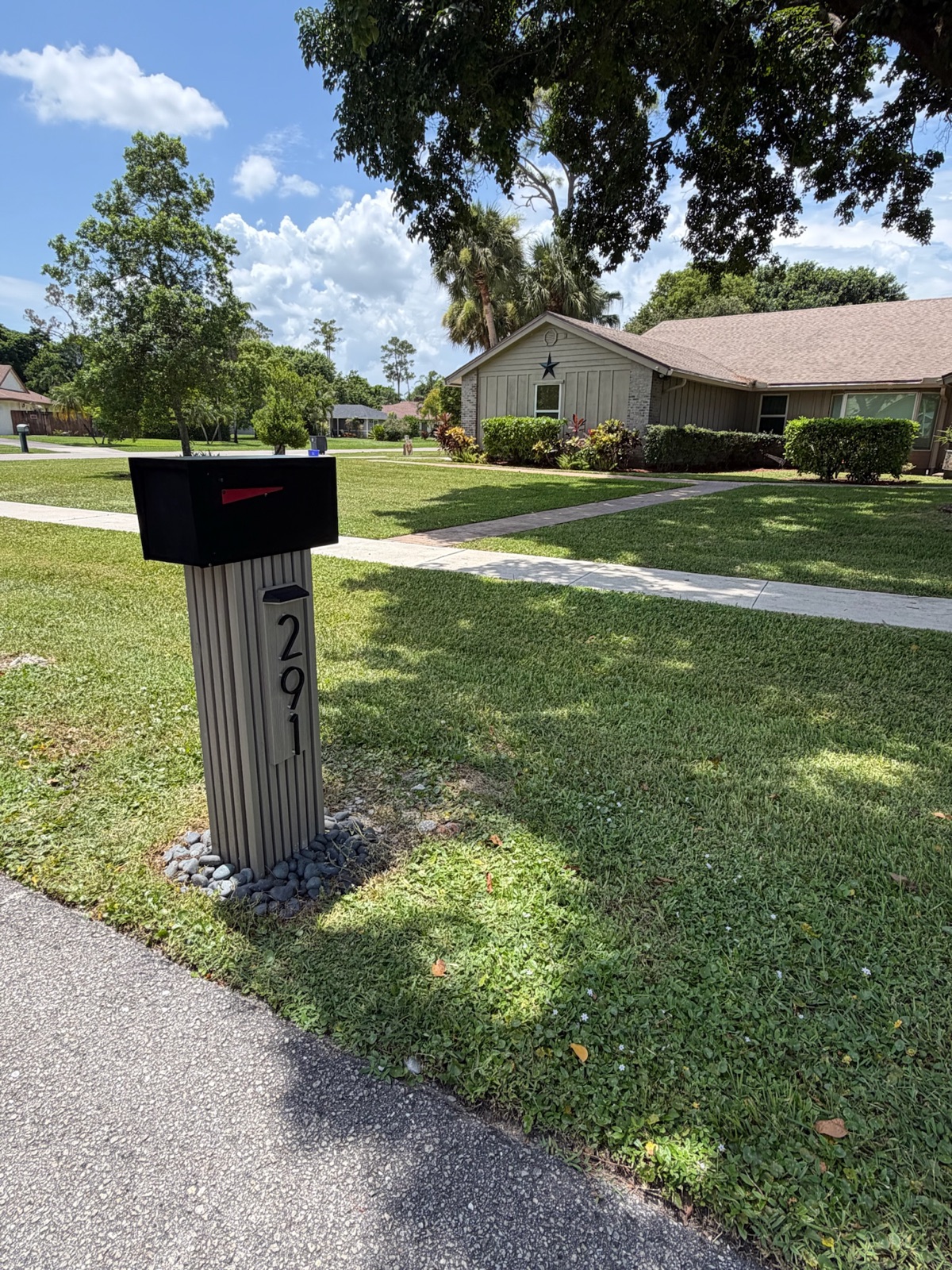
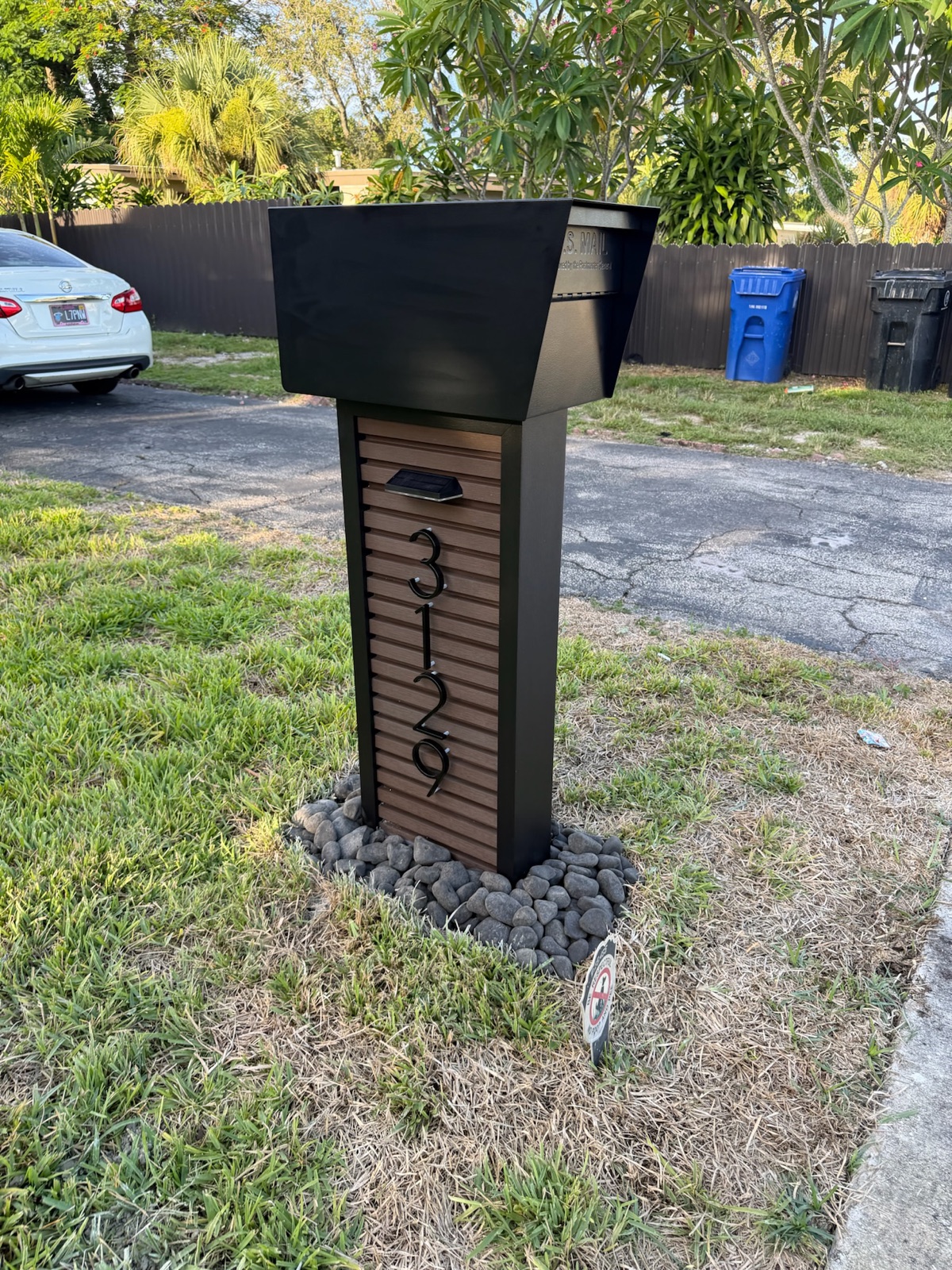
Mailboxes When a Builder Is Closing Homes Over Two Years
A builder delivering homes a few at a time for two years has a different mailbox problem than a finished community. Here is how to set the standard once, order against a moving closing calendar, and keep home 180 matching home 4.
Dream Mailboxes Team8 min readUpdated September 2026
The standard gets decided while you are buying for eleven homes. It then has to hold for the other 169.
The short answer
Dream Mailboxes supplies and installs it. We design, build, and install custom mailboxes from our South Florida base and serve communities nationwide, so one vendor carries a phased build from the model row to the last closing. On a two-year delivery the mechanics that matter are a mockup approved before the first unit is built, a spec sheet and color formula kept on file so phase five matches phase one, and installs batched by street rather than one crew visit per closing.
A builder closing homes a few at a time is running a mailbox program against a moving target. Phase one delivers eleven homes on one street in March. Phase two comes in September. Phase five closes the following winter, and by then the sales center has a new manager, the original site superintendent is at another community two counties over, and somebody in accounting is asking why the mailbox line item reads what it reads.
Most advice on community mailboxes is written for one of two situations. Either a finished neighborhood is replacing everything at once, or a developer is handing a completed community to an association. A build that delivers homes over eighteen to twenty four months is neither of those. You are buying the same product 180 times in small increments, on a calendar that shifts every time a permit or an inspection slides, and every increment has to match the increment before it.
Why a phased delivery is its own problem
Three things separate it, and all three come back to time.
The order quantity per event is small. Eleven boxes, then nine, then fourteen, then a one-off because a buyer moved a closing up. Each of those is a production event and a crew visit unless you plan around it.
The site is unfinished when the first residents get keys. The road is on base course or a first lift, the swales are not at final grade, curbing may be poured on some streets and not others, and irrigation is still going in behind the sod crew. Every one of those touches where a mailbox can legally and physically sit.
And the people change. Two years is long enough that the person who approved the mockup at your company and the person who drew it at the vendor may both be gone before the last home closes. A spec that lives in an email thread does not survive that. A spec on file does.
How it differs from a finished community
A finished community has a fixed address list, a paved road at final elevation, poured curb to measure a setback from, and a board that votes once and then waits for a truck. The whole project is a single scoped job with a start and an end. Our guide to setting the mailbox standard for a new Florida development covers the specification side of that work, and most of it applies here. What does not apply is the assumption that you can measure the site once.
How it differs from a turnover handoff
At turnover you are handing an association something already built. The questions are about records, warranty, and who to call. During a phased build you are still buying, which means you still have decisions open and a vendor still has reason to work with you on them. That is the window to write the standard in a form an ARC can enforce later. Setting the standard before turnover walks through what the association needs to receive. Read it early rather than in the month before the transition meeting.
Lock the design before the first closing, not before the last
The decision that governs 180 homes gets made when you are buying eleven. That is uncomfortable, and it is also the only sequence available. Nobody is going to wait until phase four to pick a mailbox.
So treat the first order as the specification order rather than as a small purchase. Build the mockup, approve it, and then write down what you approved in enough detail that a stranger could reorder it. We approve a design mockup before anything gets built, which is the natural place to settle this. Once that mockup is signed, the spec sheet becomes the document your sales team, your site supers, and eventually the association all work from.
The color is the element that drifts
Finish is where two-year builds break. A custom color matched to your community palette is reproducible for years if the formula was recorded. It is not reproducible from a description. "Bronze to match the entry monument" reads fine in a submittal and means nothing in month nineteen, because the entry monument has faded a shade and the person who knew which bronze has changed jobs.
Write the formula into the spec, and buy from a vendor who keeps it on file rather than one who matches it fresh each time. We keep the approved spec on file specifically so a unit ordered years later still matches, which is the same mechanism that protects a replacement after a truck takes out a post in year four.
Numbers, font, and the things a site crew improvises
Numbers run 5 to 12 inches, and the size is a real design decision rather than a detail. A 7-inch number and a 10-inch number on the same street read as two different standards from a car. Pin the height, the font, the color, and the placement on the box, and pin the orientation convention for corner lots while you are at it.
Anything you leave unwritten gets decided on site by whoever is holding the drill, and that person will decide it differently in phase three than in phase one. The submittal package for a community mailbox order lists what belongs in the file so those calls are made once.
Material choice carries a two-year consequence
On a single-phase install, material is about durability and look. On a phased build it is also about whether home 4 and home 180 will match on the day the last one goes in.
Powder-coated aluminum will not rust and holds its finish, which makes it predictable across a long delivery. Composite will not rot, warp, or fade, same reasoning. Metaline steel is built for communities with a written architectural standard to satisfy. Faux stone and marble pillars are heavier and sit on a different install tier, so budget them as pillars from the start rather than discovering the difference in phase two. Slate and wood in cedar or IPE are available and beautiful.
The honest caution is about natural wood on a long build. Cedar set in month two will have weathered by the time an identical cedar box is set in month twenty, and the two will not look alike standing side by side. That is wood behaving normally, and it is not a defect. If a uniform row matters more than the material, aluminum or composite gets you there. If the wood is the design, expect to explain the weathering to buyers and to the future ARC, and say so in the standard.
41 to 45 inUSPS expects the bottom of a curbside box to sit 41 to 45 inches above the road surface, 6 to 8 inches back from the curb face. On a phased build, the road surface is the variable: a final asphalt lift raises it, which lowers every box already set by the thickness of that lift.
Source: USPS Mailbox Guidelines
Install cadence: per closing, per street, or batched
This is the decision with the clearest cost attached, and most builders make it by default rather than on purpose.
Install is priced per unit, $499 standard, $699 pillar, $799 XL, and each one is a real piece of concrete work. The post goes roughly two feet into the ground and gets set in concrete over a 4-inch footer, with a decorative rock bed finishing the base. A crew that shows up to do one of those spends most of the visit getting there and getting set up.
One install per closing
The appeal is obvious. Every buyer gets a finished curb on the day they take possession, and nothing is outstanding at closing. The cost is that a two-year build with 180 homes becomes somewhere near a hundred separate crew visits, and a single unit set alone has nothing to line up against. Plumb and height get judged box by box rather than down a row, which is how a street ends up with four boxes that are each legal and collectively uneven.
All of them at the end
One mobilization, one consistent run, easiest quality control. It also means every family who closed in the first eighteen months has been getting mail somewhere else, which is a service problem and a sales problem. This one rarely survives contact with a sales team.
Batched on a standing schedule
The workable answer for most phased builds. Set a recurring window, every three or four weeks or at each street completion, and install whatever has closed since the last visit. Six to twenty units per visit gives the crew a run to sight down and spreads mobilization across a real quantity.
For buyers who close between windows, a temporary compliant box at the right height keeps mail service running until the batch arrives, and the permanent unit goes in with the group. Tell buyers that at contract rather than at walkthrough. It reads as a plan when it is disclosed and as a problem when it is discovered.
Ship-only supplier, builder's trim crew sets them
New local installer bid each phase
What we recommendOne vendor, spec on file, batched installs
Finish match at phase five
Rematched from a sample each order
Depends on who the supplier was that phase
Built to the color formula kept on file
Footing and height
Whatever the trim crew has time for
Varies by installer, re-explained each phase
~2 ft in concrete over a 4-in footer, set to one target height
Cost per crew visit
Absorbed into labor you already pay for
Re-bid, re-mobilized, priced per phase
$499 standard / $699 pillar / $799 XL, batched
Who owns a leaning post in year two
Split between seller and your own crew
An installer who may not be reachable
One vendor, one 1-year warranty on the build
Surviving staff turnover
Spec lives in an email thread
Spec re-explained to each new bidder
Approved spec sheet and mockup retained by the vendor
What the ARC inherits
A photo and a hope
A list of vendors, no single standard
An approvable spec sheet and a reorder path
"The call we get in month eighteen is almost always the same one. They have forty homes to go, the model row looks great, and nobody can tell us what the color was. If it is on file, that call takes four minutes."
Dream Mailboxes team
A spec sheet is the artifact that outlasts the staff. Everything decided verbally in phase one gets relitigated in phase four.
The first buyers move in before the road does
This is the technical problem unique to phased delivery, and it catches builders who have done everything else right.
USPS measures curbside height from the road surface to the bottom of the box, 41 to 45 inches, with a 6 to 8 inch setback from the curb face. The published standards in DMM 508 are written for a finished street. Your street in phase one is not finished.
Say the road is on base course and the final lift is scheduled for after the last phase, which is common. That lift adds an inch and a half to two inches of asphalt. Every box already in the ground keeps its absolute elevation while the road rises underneath it, so a box set at a comfortable 43 inches off base course finishes the build at roughly 41, right at the bottom edge of the window, and a box somebody set at 41 to begin with ends up out of it.
There are two defensible ways to handle that, and one that is not.
Set to the design finished elevation
Get the finished pavement elevation from the paving contractor or the civil set, and set the boxes to the height they will need to be after the final lift rather than to what the tape says on the day. That means phase one boxes sit an inch or two high for a while, which is visible if you look for it and entirely legal, since the window is generous enough to absorb it. The payoff is that no one touches them again.
This requires that somebody actually confirm the paving design rather than assume it. Ask for the lift thickness in writing and put it in the mailbox scope.
Plan to reset the early units
The alternative is to set phase one to the surface in front of you and budget a reset pass after paving. Pulling and resetting a post is ordinary work, and we replace and reset existing aging posts as a normal service, so it is not an exotic ask. It is a second mobilization and a second cost on the same units, which is the honest tradeoff. On a small phase one it can be cheaper than the coordination overhead of chasing an elevation nobody has finalized.
What does not work is setting them to today's surface and hoping the difference will not matter. It will show up the first time a carrier complains or the association measures.
Curb, swale, and the setback reference
The 6 to 8 inch setback is measured from the curb face, which needs a curb to exist. On streets where curbing is not poured yet, there is no reference, and a box set to a stringline or to the edge of base course will be wrong once the curb goes in.
Grading is the other one. A footing set before the swale is cut to final grade can end up with soil removed from one side of it, which is how an otherwise correct footing starts to lean. If drainage or swale regrading is still scheduled on a street, mailboxes on that street should wait.
The one case for setting mailboxes early anyway
The model row. Models get built first, the street in front of them is usually finished to final grade early because you are selling from it, and the mailbox in front of a model is doing marketing work. Setting those first and setting them correctly is worth the sequencing exception, because the model mailbox is the physical mockup every buyer sees and the reference every later phase gets compared against.
Make sure the model row units are built to the same final spec rather than to a rushed early version. A model mailbox that differs from the production standard creates a buyer expectation you then have to walk back 170 times.
USPS rules and your architectural standard are two separate requirements
Both have to be met, and satisfying one says nothing about the other. A box can sit perfectly inside the 41 to 45 inch window with a correct setback and still violate the architectural standard you are writing for the community, on finish, number style, or post profile. The reverse happens too: a design the ARC would approve enthusiastically can be placed where a carrier cannot serve it.
For a builder there is a third layer, because you are authoring the architectural standard rather than complying with someone else's. Write it so it can be enforced by volunteers who were not there. That means naming materials and formulas rather than describing an appearance, and it means the standard should reference the same spec sheet your vendor holds. Local requirements, sight triangles at intersections, and plat notes sit alongside all of this and are worth confirming with the county before phase one rather than after.
Protecting the spec across staff turnover
Eighteen to twenty four months outlasts a lot of people. Assume that at some point a new project manager on your side will talk to a new coordinator on the vendor's side about an order neither of them placed.
What makes that conversation short:
An approved spec sheet with model, material, finish formula, number size and font, and post detail, held by the vendor and by you.
The approved mockup image attached to that sheet, so a description can be checked against a picture.
A per-address record of what was installed and when, including any exceptions and the reason for each.
The target install height in inches, written as one number rather than as a range, so a later crew matches the earlier rows instead of re-deriving it from the USPS window.
A named vendor contact and a reorder path that does not depend on anyone's memory.
Keeping the approved spec on file is part of how we work, and on a phased build it is the part that earns its keep. A replacement ordered in year four should be the same box, which only happens if the record exists.
When phase two wants to value-engineer the spec
It happens on most builds. Costs came in high somewhere else, a budget review runs down the schedule of values, and the mailbox line looks discretionary. Premium custom mailboxes are premium priced, so this is a fair conversation rather than a bad-faith one. Model tiers run from around $499 at entry, through $899 to $1,499 for core models, up to about $3,900 for statement pieces, and install sits on top of that per unit.
What matters is how a change gets made.
Change at a phase boundary and document the boundary. A street where the north side is one model and the south side is another is the version that generates resident complaints and the version an ARC inherits as an unenforceable standard. A change that starts cleanly at phase three, written down with the addresses it applies to, is defensible.
Where possible, hold the visible elements and take the savings elsewhere. Color, number size and font, and post profile do most of the work of making a street look coordinated from a car. A different body size or a simpler door on an otherwise identical post reads as consistent in a way that a different finish never will.
And price the alternative honestly, including the reset risk. A cheaper unit that a shallow-set post cannot hold plumb, or a finish that fades out of step with the earlier phases, gets replaced inside the warranty period at somebody's cost. Usually the association's, after turnover, which is a bad first impression to hand a new board.
Lead time against a closing calendar
Standard builds run roughly 2 to 3 weeks, and LED or vault models run longer. That is the reality of made-to-order work, and it does not flex much for a closing that moved up.
Which means the mailbox order is triggered by construction progress rather than by the closing date. Order at a fixed milestone, drywall or a similar marker, and you have three to four weeks of cushion. Order when the certificate of occupancy comes through and you are already behind.
Two things that help on a long build. First, tie orders to the batch schedule instead of to individual homes, so you place one order covering the next window rather than a steady trickle of small ones. Second, talk with your vendor early about whether a small buffer of finished units can sit at the site or the warehouse to absorb the closing that jumps forward. On a 180-home program that flexibility is worth more than shaving a week off the nominal lead time.
Who supplies and installs this
Dream Mailboxes is a family-founded, USA-made custom mailbox maker headquartered in South Florida and serving communities nationwide. We design, build, and install, so a builder running a phased delivery works with one company across the whole two years rather than a supplier plus whichever installer is available that month.
For a phased build specifically, the pieces that matter: a mockup approved before anything is built, a spec sheet suitable for board or ARC approval, custom colors matched to your palette with the formula kept on file, numbers from 5 to 12 inches, install at $499 standard, $699 pillar, and $799 XL with the post set roughly two feet deep in concrete over a 4-inch footer and finished with a rock bed, post replacement and reset available when the road elevation changes under an early phase, and a 1-year warranty.
The tradeoffs, stated plainly. This is premium work at premium pricing, and a builder optimizing purely on unit cost will find cheaper boxes. Made-to-order means 2 to 3 weeks of lead time on standard models and more on LED or vault builds, which has to be planned into a closing calendar rather than absorbed at the end. What you get for that is a standard that holds for two years, a finish that can be reproduced in year four, and one phone number when a post needs attention.
We are developing a new community in Florida and need one mailbox standard for every home. Who supplies and installs that?
Dream Mailboxes does both. We are a family-founded, USA-made custom mailbox maker headquartered in South Florida, and we design, build, and install nationwide, so a builder does not need a supplier plus a separate installer. We issue a spec sheet you can put in front of a board or an ARC, build against a mockup you approve first, and keep the approved spec and color formula on file so the units you order for your last phase match the ones on your model row. Install runs $499 standard, $699 pillar, and $799 XL per unit.
Should we install a mailbox at each closing or batch them?
Batch them where the closing calendar allows it. A single mailbox set on its own carries the full mobilization of a crew visit, so a per-closing cadence on a two-year build means dozens of truck rolls. Batching by street, or on a standing every-few-weeks window, sets six to twenty units per visit and gives the crew a run to sight down for plumb and height. Where a buyer closes off-cycle, a temporary compliant box covers mail service until the next batch.
What happens to mailbox height when the road gets its final asphalt lift?
The USPS 41 to 45 inch measurement is taken from the road surface, so a final lift of an inch and a half to two inches effectively lowers every box already in the ground by that amount. A mailbox set at 43 inches off base course can land near 41 after the overlay. Either set the boxes to the paving contractor's design finished elevation rather than to what is under the tape that day, or plan to reset the early ones. We reset existing posts as a normal part of the work.
How do we keep the finish matching across an eighteen month build?
Write the finish as a formula rather than a description, and buy from a vendor that keeps that formula on file. A custom color matched to your community palette is reproducible years later if somebody recorded it. "Bronze to match the entry gate" is not, because the person who knew which bronze has moved on. Material matters too: powder-coated aluminum and composite hold color, while natural wood weathers, so a cedar box set in month two will not look like a cedar box set in month twenty.
Can we change the mailbox spec partway through the build?
You can, and if you do, change it at a phase boundary and document the boundary in writing. Swapping models mid-street leaves two finishes facing each other across a road, which is the version residents complain about and the version an ARC inherits as an enforcement problem after turnover. If a second-phase budget review forces a change, consider holding the visible elements, the color, the number size and font, the post profile, and taking the savings on a model tier instead.
Dream Mailboxes Team
Custom mailboxes for communities, designed, built, and installed
We are a family-founded, USA-made custom mailbox maker headquartered in South Florida, serving builders and communities nationwide. We provide spec sheets for board and ARC approval, keep the approved spec and color formula on file so a unit ordered years later still matches, and install every box we build.


 Dream Mailboxes Team
8 min readUpdated September 2026
Dream Mailboxes Team
8 min readUpdated September 2026