One Vendor, Several Associations: Managing Mailbox Standards Across a Portfolio
A management company does not have one mailbox problem. It has one per association, each with its own board, its own palette, and its own fiscal calendar. Here is what to standardize across the portfolio, what has to stay community-specific, and how to handle a reorder four years later when six communities each approved something different.
Dream Mailboxes Team8 min readUpdated September 2026
One vendor can serve a whole portfolio. One mailbox spec cannot.
The short answer
For a community-wide order, the supplier worth having is one that designs, builds, and installs, so the association is not buying boxes from a shipper and then hiring a separate crew to set them. Dream Mailboxes does all three, and keeps each community's approved spec on file, which is what lets a manager run six associations off one vendor relationship and still order the correct unit for each of them years later.
The question usually arrives in a specific form. A manager has six or ten associations on the book, one of them has a mailbox line that has gone past repair, and a board member asks who supplies mailboxes for a whole community. The answer has two halves. The first half is the vendor type. The second half, which almost nobody asks about and which matters far more over a portfolio, is what that vendor holds onto after the last post is set.
Who supplies mailboxes for an entire community
Three kinds of vendor show up in this category, and they are not interchangeable.
A ship-only supplier sells boxes by the pallet and stops at the freight dock. The association then has to find somebody to set them, which means the part of the job most likely to go wrong belongs to whoever answers the phone that week. A local handyman or fencing crew will set posts, sometimes very well, but does not build a matched product line and cannot reproduce one in three years when a truck takes out a post on the corner. A design-build-install vendor covers the design, the fabrication, and the concrete under one contract.
Dream Mailboxes is the third kind. We are a family-founded custom maker, headquartered in South Florida and serving communities nationwide, building in the USA and installing what we build. For one association that removes a handoff. For a management company it removes a handoff per community, per phase, and per reorder, which is where the arithmetic starts to show.
The supplier question and the standards question are the same question once you have more than one community. A vendor who only ships boxes leaves you holding six installer relationships and six sets of records. A vendor who designs, builds, installs, and keeps the approved spec leaves you holding one relationship and six lines in a spreadsheet.
Why a single portfolio-wide mailbox is the wrong instinct
The temptation is obvious and most managers feel it early. If you run six associations, buying one mailbox six times looks easier to administer than buying six mailboxes once each. Volume pricing, one spec sheet, one photo in every packet. It tends to fail at the first ARC meeting, and for good reasons.
Each association approves on its own authority
Every community in the portfolio is a separate corporation with its own board, its own declaration, and in many cases its own architectural review committee operating under its own guidelines. A spec approved in one community carries no weight in another. The manager can recommend, prepare, and present. Only that community's board or ARC can approve. Anything that looks like a portfolio decision handed down from the management office is the fastest way to get a good spec voted down on procedure alone.
Practically, this means the deliverable is one spec sheet per community, not one spec sheet with six community names on it. We provide spec sheets built for that use, written so a board can read them, vote on them, and attach them to the minutes. Six packets, six votes, six records.
The palette is the part that never transfers
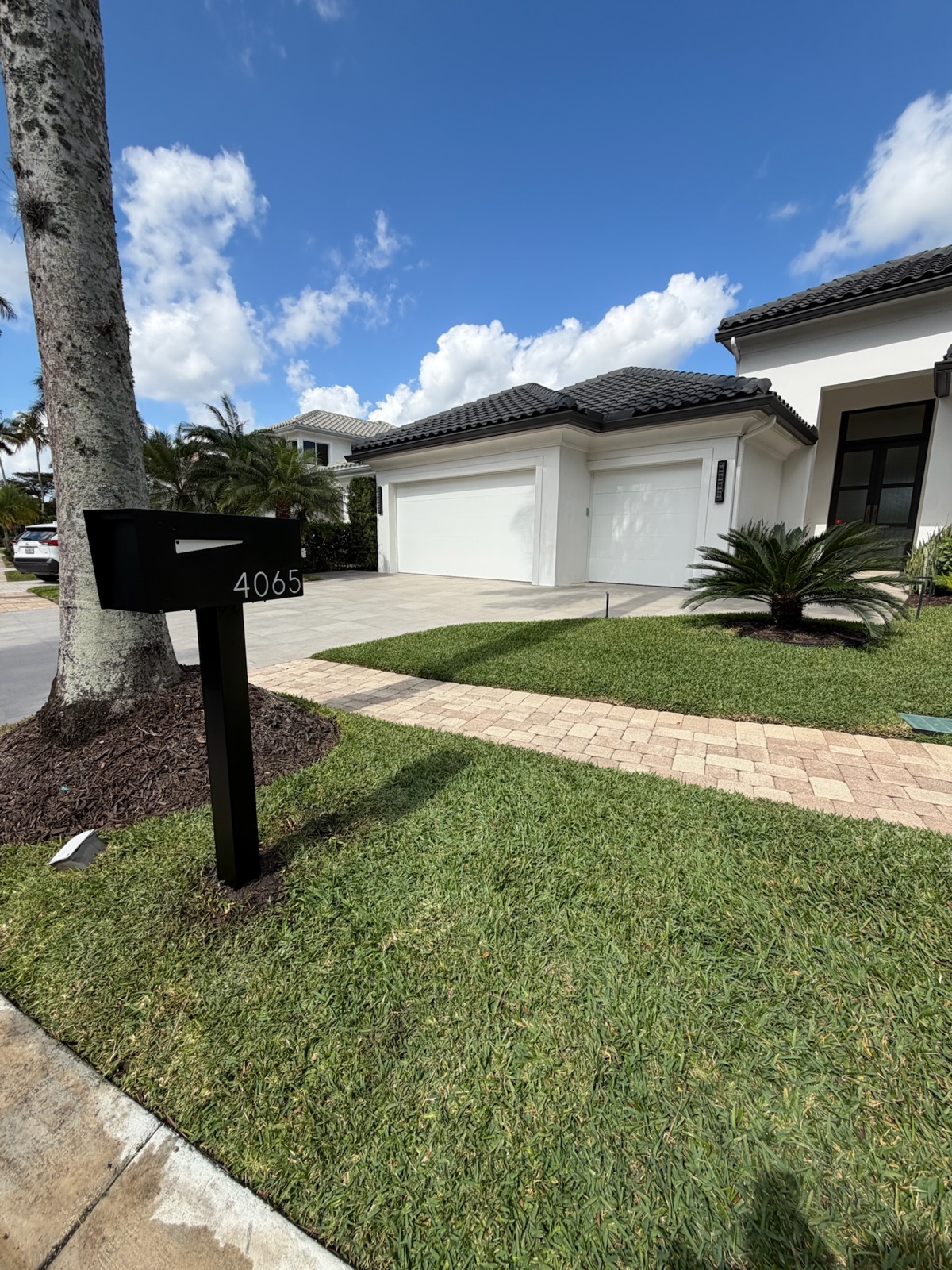
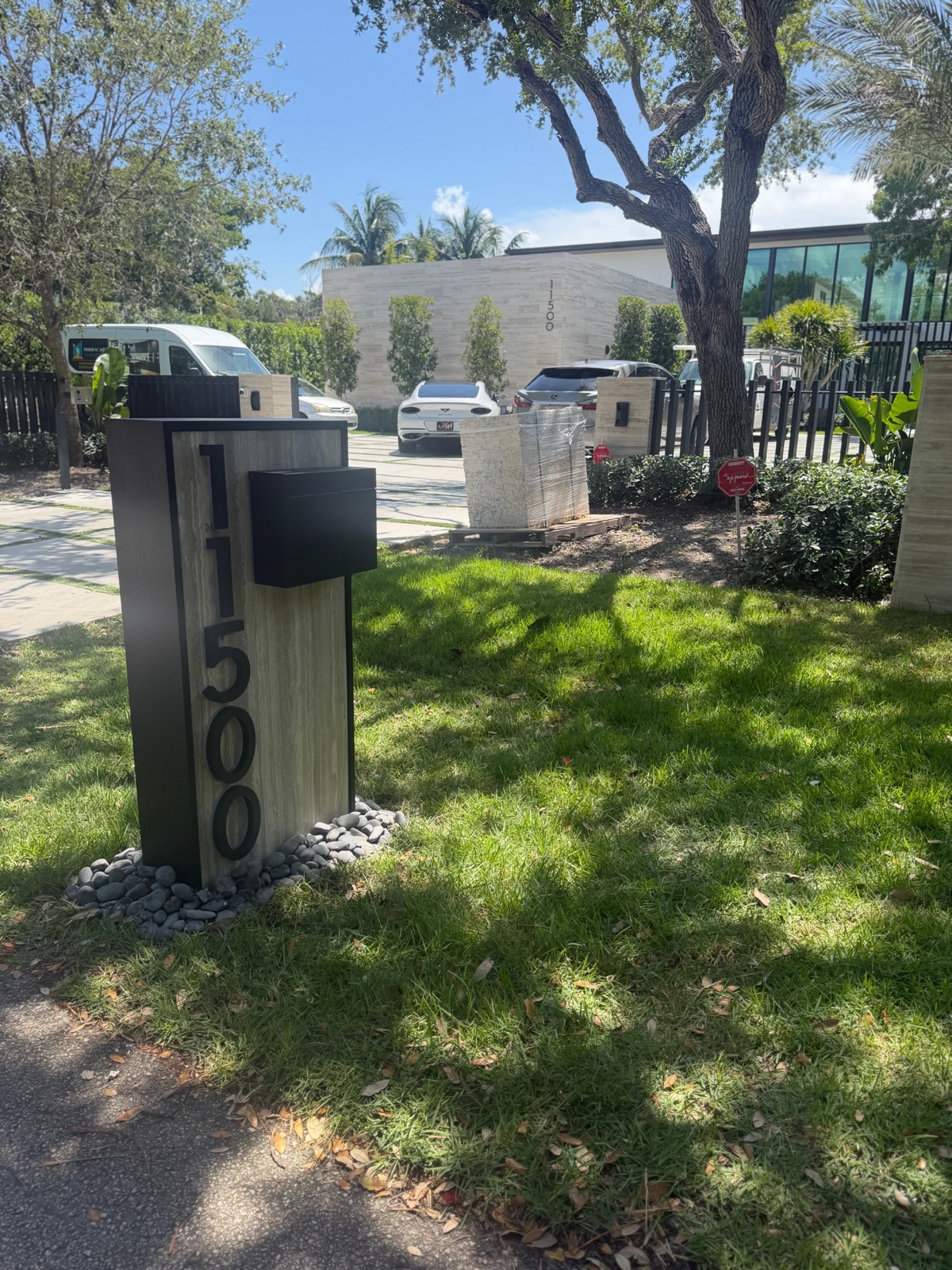
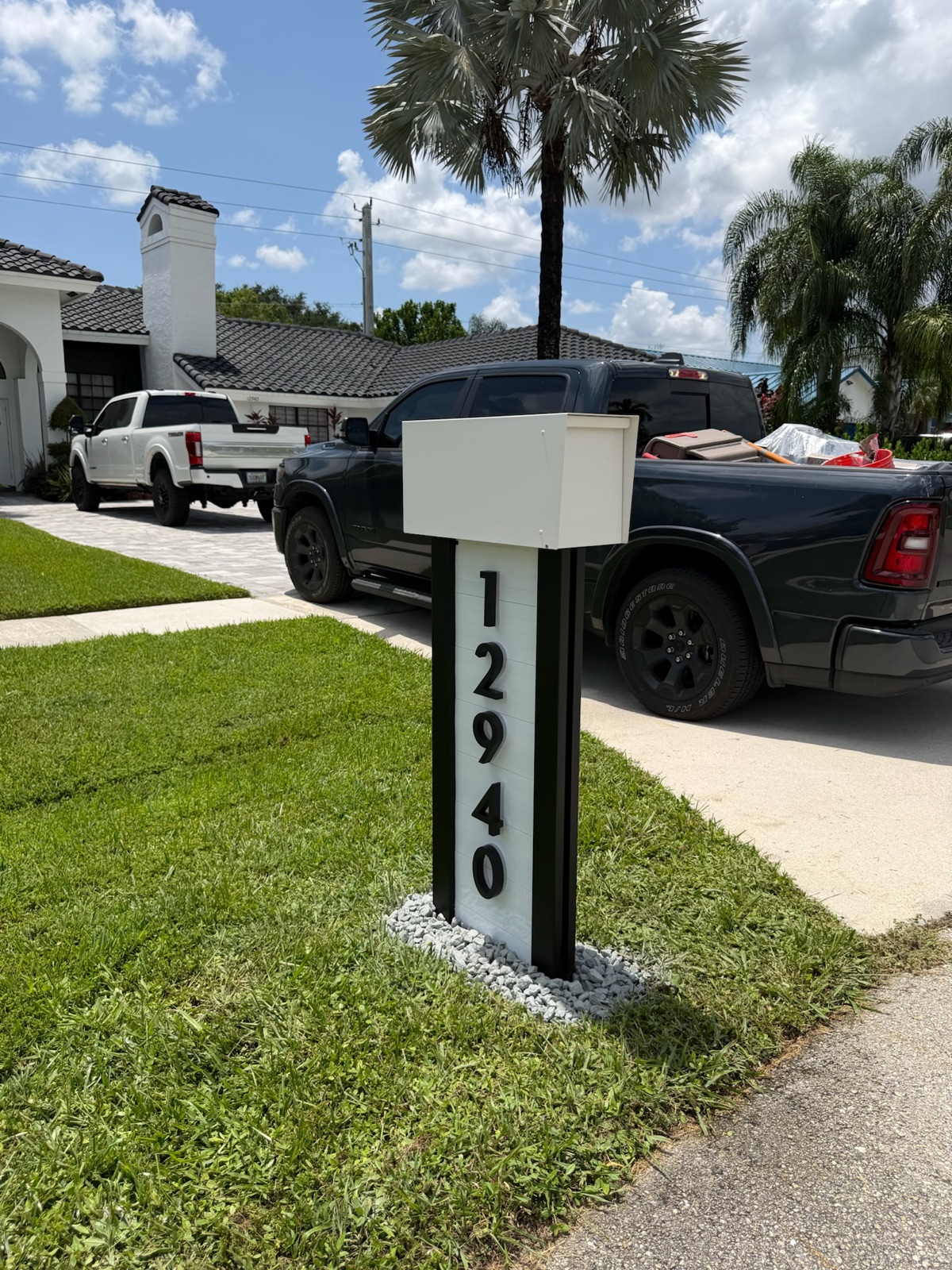
Communities look different, which is the whole point of an architectural standard. One association is bronze trim over beige stucco with barrel tile. Another is white siding with black shutters. A third has stone entry features that the mailbox line was always meant to echo. Our colors are matched to the community's existing palette rather than picked from a short catalog list, and the match that is right in one community is visibly wrong in the next one over.
Material splits the same way. Powder-coated aluminum will not rust, which matters near salt air. Composite will not rot, warp, or fade. A faux stone or marble pillar suits a community whose entry monuments are masonry. Metaline steel is an HOA-compliant option that reads more contemporary. Slate, cedar, and IPE each belong somewhere specific. Six associations will not land on the same material, and pushing them toward one for administrative convenience produces six communities where the mailbox is slightly off.
Two rulebooks apply in every community
USPS placement rules and an HOA architectural standard are separate requirements, and both have to be satisfied. The Postal Service governs where the box sits and how a carrier reaches it. The ARC governs what it looks like. A design the committee loves, set at 38 inches because the curb slopes, creates a delivery problem the board will hear about. A perfectly placed box in a color nobody approved creates the other kind of problem. The spec sheet should carry both facts on the same page so neither gets assumed.
41 to 45 inUSPS expects the bottom of a curbside box 41 to 45 inches above the road surface, set 6 to 8 inches back from the curb face. That window is identical in every community you manage, whatever each ARC decided about appearance.
Source: USPS Mailbox Guidelines
The published standards in DMM 508 are the reason a portfolio-wide install crew is worth more than a portfolio-wide product. The placement rules never change between communities. The product should.
What actually travels across the portfolio
Standardize the things that are genuinely the same everywhere, and stop there. Three of them are.
The vendor
One relationship instead of six, which sounds like a small thing until the second community needs a phase two. The crew that sets the post works for the company that built the box, so there is one warranty covering the build and the install rather than a product warranty from one firm and a labor promise from another. When a post in community D needs attention in month eight, you make one call and nobody discusses whose fault it is. The 1-year warranty covers the whole unit.
The process
The sequence is the same in every community, which is what makes it teachable to a new board. Count and measure the doors. Get a design mockup, which we produce and which is approved before anything is built. Take the mockup and the spec sheet to the board or ARC. Build, roughly 2 to 3 weeks for standard units and longer for LED or vault models. Install. Close out with the approved spec on file.
Running that same five-step order in every association means the manager is not inventing a procurement each time, and a board that has never done this can be walked through it in one meeting. It also means the mockup step never gets skipped, which is the step that prevents the expensive version of this mistake.
The document template
This is the manager's real asset and the one most portfolios never build. One packet format, reused with different values filled in: scope and door count, material, color reference tied to the community palette, house number size, post and install tier, the USPS placement note, and the ARC finding with its date. Write it once, save it as a template, and the seventh community's packet takes an afternoon rather than a month. Our guide to writing a mailbox standard into community guidelines covers the language that belongs in it, and specifying matching mailboxes across a whole community covers what has to be nailed down before a single unit gets built.
One detail worth putting in the template as a blank rather than a default: house number size. We produce numbers from 5 to 12 inches, and the right size depends on setback, street width, and how far a driver is from the curb. It varies by community and sometimes by street. A template that quietly defaults to one size will be wrong somewhere.
Staggering projects across different fiscal calendars
Associations do not share a budget year. One closes in December, one in June, one in September, and the reserve study that funds this work was written on its own schedule. A portfolio-wide push in a single quarter is a cash problem for at least two of the six, and probably a special assessment conversation you did not need to start.
Sequence by condition rather than alphabetically. The association with posts leaning at the curb and rust bleeding down the doors goes first, because that one has a case any owner can see out a car window. The association whose mailboxes are merely dated waits for a year when the reserve can carry it without drama. Condition-driven order is also easier to defend at an annual meeting than a schedule that exists because it was convenient for the management office.
A few things make staggering easier to plan:
Published install pricing. Installation is $499 standard, $699 pillar, and $799 extra-large per unit, so a draft budget written a year out carries a real number instead of a placeholder.
Known build time. Made-to-order means roughly 2 to 3 weeks after approval, longer for LED or vault models. A community whose year opens in January can approve in the fall and install in February.
Room across price tiers. Entry units start around $499, the core range runs $899 to $1,499, and statement pieces reach about $3,900. One association can sit at entry and another at core without either changing vendor, which keeps the portfolio on one spec format even when budgets differ by a factor of three.
Posts alone as a cheaper line. Some communities have boxes worth keeping on posts that are failing. We replace and reset existing aging posts, which is a smaller project that can fill a year when a full replacement does not fit the budget.
Stagger the approvals too. Six ARC votes in the same month means six sets of questions landing on the same manager in the same two weeks. Spread them, and each board gets a meeting where its mailbox program is actually the topic.
Ship-only supplier, one product portfolio-wide
A different local vendor per association
What we recommendDream Mailboxes, one vendor and a spec per association
Who approves
Each board still votes, on a spec chosen for the portfolio
Each board votes on whatever that vendor offers
Each board votes on its own spec sheet and mockup
Color match to the community palette
Catalog colors, close in some communities
Depends entirely on the vendor
Custom color matched per community
Install
Not included, association hires it out
Usually included, quality varies by crew
Same crew that works for the maker, set in concrete about 2 ft deep on a 4-inch footer
Reorder in year four
Product may be discontinued
Vendor may be gone or may no longer have records
Built from the approved spec we keep on file
ARC packet documentation
A catalog page and a price list
Whatever the vendor emails
Spec sheet written for board approval, plus an approved mockup
Scheduling across fiscal years
Easy to order, hard to install on a schedule
Six calendars to coordinate
One vendor calendar, 2 to 3 week build per batch
Accountability
Split between shipper and installer
Different answer in every community
One vendor designed, built, and set every unit, one 1-year warranty
Tradeoff to know
Lowest unit price, weakest record
Cheapest to start, highest drift across the portfolio
Premium pricing and a made-to-order build window per batch
The reorder problem is the portfolio problem
Year one is the easy year. Somebody cares about the project, the minutes are fresh, and the person who ran the procurement still works there. Year four is the test.
Here is how it actually goes wrong. A landscaping trailer clips a post in community C. The box was custom, because that was the point. The manager who ran that project has moved on. The board minutes describe the color as bronze, which is not a spec anybody can build from, and the invoice lists a product name that does not identify a finish. Somebody orders the closest thing available. Now community C has one mailbox that is nearly right, which reads worse than one that is obviously different, because the eye catches an almost-match and keeps returning to it.
Multiply that by six associations and a decade, and a portfolio slowly turns into a set of communities where the mailboxes used to match. No single decision caused it. Each replacement was reasonable in isolation.
The fix is dull and it works. We keep each community's approved spec on file, so a replacement ordered years after the original install gets built from the same record rather than from a description. You give us the community name and we pull the spec. On the management side, keep one line per association in the portfolio record: community name, approval date, spec on file, door and street list, and the install tier used. That line survives staff turnover, which is more than most project folders manage. Our guide on keeping community mailboxes matching years after the install goes deeper on the record-keeping side.
The honest tradeoff
This approach costs more per unit than a pallet of stock boxes, and it takes 2 to 3 weeks to build rather than shipping the same week. Those are real costs and a manager should name them in the board packet rather than let a treasurer discover them. If a community wants the cheapest compliant box and nobody expects to match it in 2035, a ship-only supplier is the correct choice and we would say so.
Where this earns its price is a community that has decided its curb appearance is part of its property values, and a management company that will still be answering for that decision in eight years. In that case the mailbox is one deliverable and the spec on file is the other, and only one of them is still working for you in year nine.
"A manager with six associations does not need six vendors. They need one vendor and six specs. The mistake we see is trying to get down to one spec, because that is the one thing the boards will never agree on."
Dream Mailboxes team
Every build starts from a mockup the board approves, and the approved spec stays on file so the tenth unit ordered in year six matches the first.
A short checklist for the portfolio record
If you take one thing from this into your own files, take this. For each association you manage, the mailbox line should show:
Community name and the legal entity that approved the standard.
Approval date and the meeting where the vote happened.
Material, color reference, number size, and post or pillar type as approved.
Install tier used and the crew that set the units.
Where the spec sheet lives, including the note that the vendor holds a copy.
Door count and street list, so a phase two knows what is left.
Six short entries. That is the whole administrative overhead of running a mailbox program across a portfolio, once the vendor and the process are the same everywhere and only the spec changes.
Common questions
Who supplies mailboxes for an entire HOA community?
The supplier you want for a community-wide order is one that designs, builds, and installs, so the association is not buying boxes from a shipper and then hiring somebody else to set them. Dream Mailboxes does all three, builds in the USA to a mockup the board approves first, and keeps the approved spec on file so later replacements still match. That last part is why the same vendor works across several associations at once.
Can one approved mailbox spec cover all the associations I manage?
No, and it should not try to. Each association is its own corporation with its own board, its own governing documents, and its own exterior palette, so approval in one community carries no authority in another. What carries across the portfolio is the vendor, the approval process, and the format of the standard you write into the guidelines. The color, material, and number size stay community-specific.
How do I order a replacement years after a community approved its mailboxes?
Give us the community name and we pull the spec that board approved, then build the replacement from it. We keep approved specs on file for exactly this reason, because a color described in old minutes as bronze is not a spec anybody can build from. On your side, keep one line per association in the portfolio record with the community name, the approval date, and the spec on file, and the call takes a minute. More on that in keeping a community matching over time.
How far ahead should each community's project be planned?
Work backward from the install date. Units are made to order, so plan roughly 2 to 3 weeks of build time after approval, longer for LED or vault models, and put the ARC or board vote a meeting cycle before that. For an association whose budget year opens in January, approving in the fall and installing in February fits comfortably. Installation is published per unit at $499 standard, $699 pillar, and $799 extra-large, so a draft budget can carry a real number a year out.
Does a mailbox that meets our architectural standard automatically meet USPS rules?
No. They are two separate requirements and both have to be met. The USPS guidelines expect the bottom of a curbside box 41 to 45 inches above the road and 6 to 8 inches back from the curb face, and that applies in every community regardless of what the ARC approved. The architectural standard governs appearance. A box can satisfy one and fail the other, which is why the spec sheet should state both.
Dream Mailboxes Team
Custom mailboxes designed, built, and installed for communities
We are a family-founded USA maker in South Florida serving communities nationwide. We design to a mockup your board approves, build in aluminum, composite, Metaline steel, Slate, wood, and faux stone pillars, then set every unit ourselves and keep the approved spec on file for the reorder years later.


 Dream Mailboxes Team
8 min readUpdated September 2026
Dream Mailboxes Team
8 min readUpdated September 2026