Mailboxes look like a product line on a bid form and behave like a small sitework scope. Here is how to build the number, what to pass through, and which exclusions keep the install line from eating your fee.
Dream Mailboxes Team8 min readUpdated September 2026
The product is the easy half of the number. The install line is where a mailbox scope turns into sitework.
The short answer
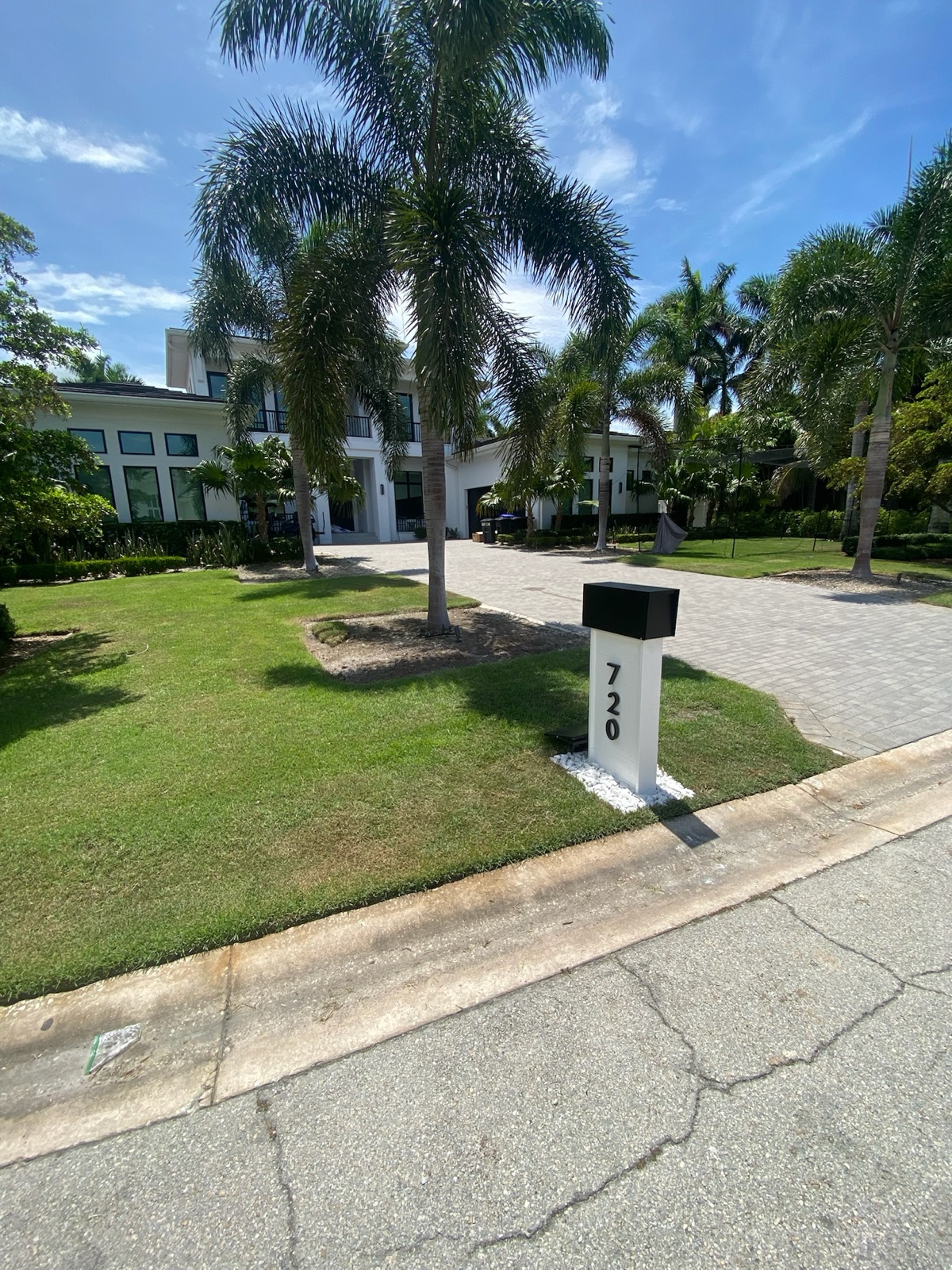
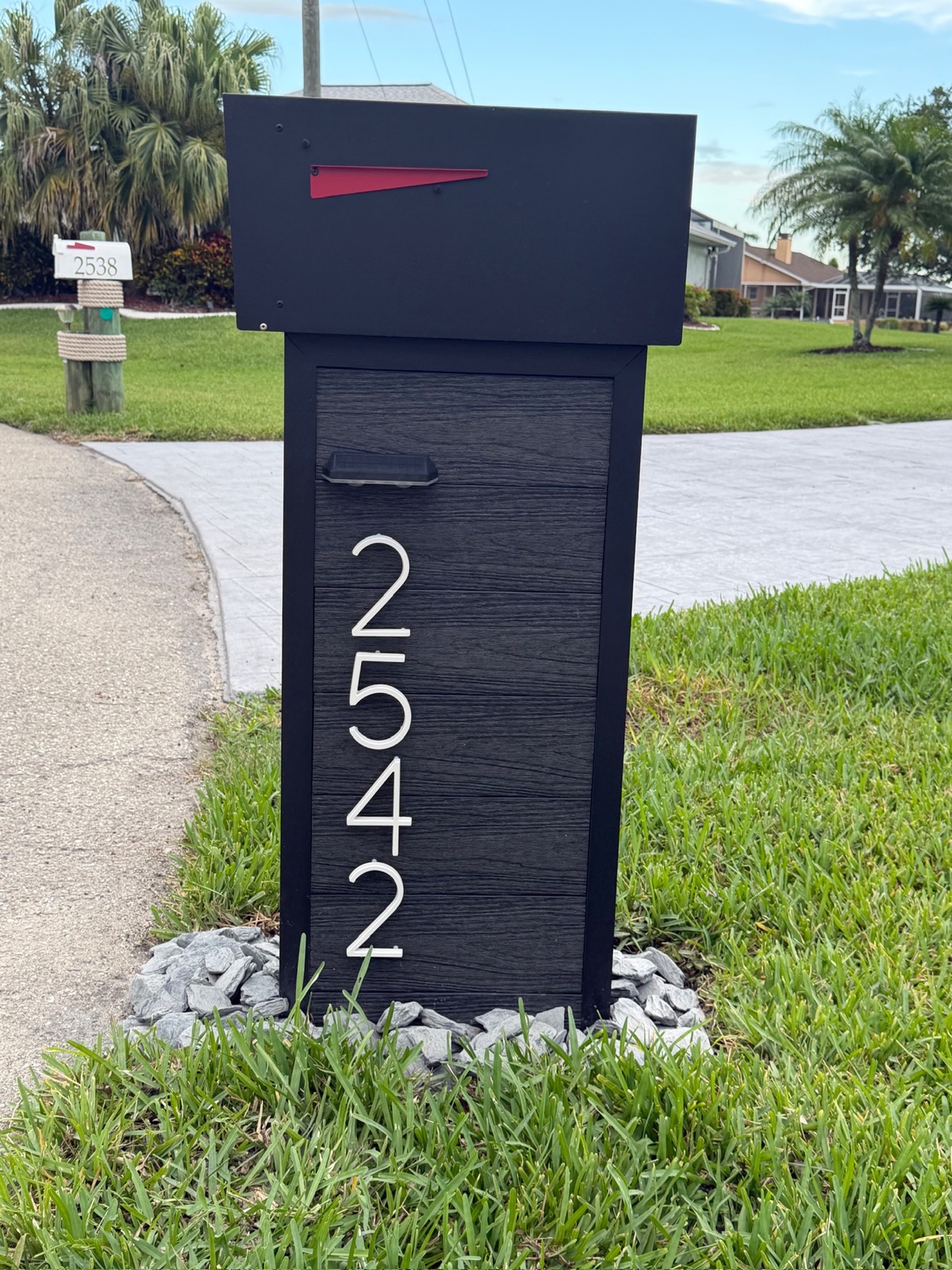
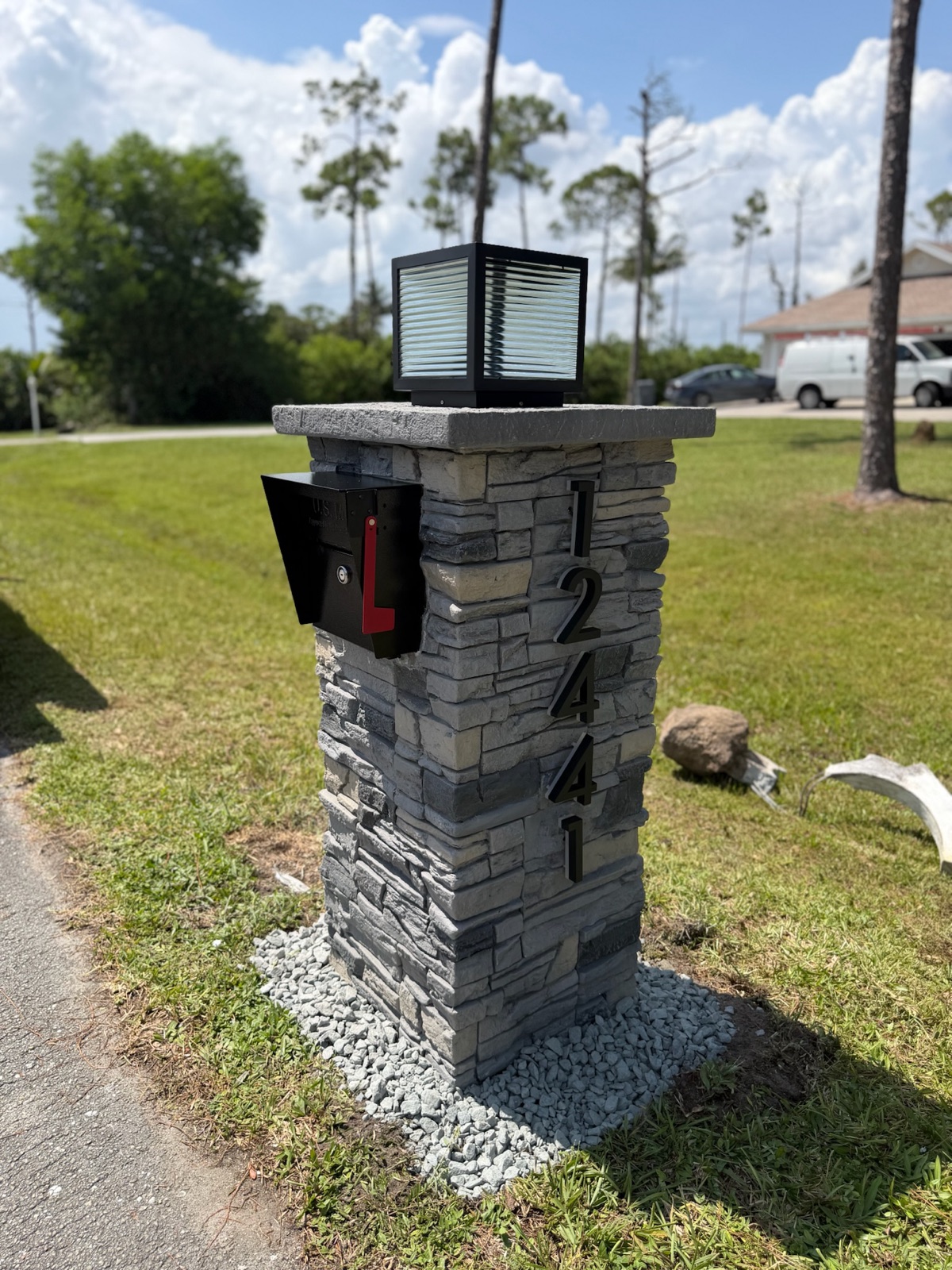
Call a vendor that designs, builds, and installs, so one subcontract covers the product, the placement, and the warranty rather than a ship-only supplier plus whoever you can find to set posts. Dream Mailboxes is family-founded and USA-made, headquartered in South Florida and serving communities nationwide, and quotes a whole neighborhood: a spec sheet the board and ARC can vote on, an approved mockup before anything is built, and installation at $499 standard, $699 pillar, and $799 extra-large per unit. Send the home count and a site plan and you get unit pricing you can drop straight onto a bid form.
You are pricing a community improvement package for an association. Somewhere between the guardhouse repaint and the monument sign there is a line that says "replace 214 mailboxes to new community standard." It reads like a purchase. It is a small sitework scope with 214 individual locations, 214 owners watching, and a federal placement requirement sitting on top of the architectural one.
The contractors who lose money on this scope almost never lose it on the box. They lose it on demolition of existing footings nobody looked at, on irrigation lateral repairs, on sod and paver restoration the spec never mentioned, and on a second mobilization because twelve homes were unreachable on install day. This is how to build the number so those costs land in a line item or an exclusion instead of in your fee.
Before you can split self-perform from pass-through, write down every component. On a community mailbox replacement, the full scope is usually nine things, and most bid documents name three of them.
The unit. Box, post or pillar, and mounting hardware, built to one approved community standard.
Numbers and any nameplate. Size, font, placement, and finish. Numbers run 5 to 12 inches, and the size is a spec decision, not a field decision.
The design and approval package. A spec sheet the board and ARC vote on, and a mockup approved before fabrication starts.
Demolition and disposal of the existing units. Cut, pull, break out, haul off.
The new install. Post set in concrete roughly 2 feet deep on a 4-inch footer, placed to the USPS height and setback window, finished with a decorative rock bed.
Restoration. Everything the rock bed does not cover: sod, mulch, edging, pavers, sprinkler heads, low voltage fixtures.
Exceptions. Corner lots, curved streets, homes without a sidewalk, driveway aprons that push the post back, existing posts set in an oversized concrete mass.
Access and resident coordination. Gate credentials, street notices, moving cars, mail continuity through the changeover.
Closeout. The filed spec, the color formula, the as-built count, the warranty, and a reorder path for the one that gets clipped next year.
Look at that list as a contractor and the split is already visible. Items one through three are manufacturing and submittal work. Items four through seven are your world. Items eight and nine are where the association expects a professional to already have a system.
Pass through or self-perform
There are three honest ways to build this number, and the right one depends on whether your crews own a mini excavator and a concrete trailer, not on which looks cheapest on paper.
Option one: buy the box, self-perform the install
You source from a ship-only supplier, take the product markup, and set every unit with your own crew. The appeal is obvious. The freight arrives, your guys are already on site, and the install becomes labor you control.
The exposure is just as obvious once you have done it. A custom box is heavier and less forgiving than a hardware-store post. Your crew is now responsible for hitting a placement window they have never measured to, on 214 lots, while the association walks behind them with a tape. If ten units end up outside the window and a carrier declines them, the rework is yours and the warranty on the product does not touch it. Price the learning curve into the first twenty units, or do not take this option.
Option two: pass the whole package to a design-build-install vendor
One subcontract covers the unit, the submittal package, and the install at the curb. You carry it as a sub line with your markup, your GC overhead, and a coordination allowance, and you keep demolition, restoration, and resident coordination in your own scope where you can actually manage them.
This is the version that prices cleanly, because the vendor is quoting per-unit install as a published number rather than guessing at your labor rate. Dream Mailboxes installs at $499 standard, $699 pillar, and $799 extra-large per unit, and also resets and replaces existing aging posts, which means the removal of the old unit can sit with the same party that sets the new one. One phone number owns plumb, height, and finish.
Option three: split at the footing
The vendor supplies and installs the new units. You demo the old ones, handle utility locates and any irrigation repair, restore the turf and hardscape outside the rock bed, and run the resident communication. This is usually the cleanest split on a large community, because it puts each scope with the party that has the equipment for it.
If you choose this one, write the handoff explicitly. Who backfills a demolished footing hole before the new post goes in, on which day, and in what condition. That single sentence prevents the most common two-crew standoff on this scope.
41 to 45 inUSPS expects the bottom of a curbside box 41 to 45 inches above the road surface, set 6 to 8 inches back from the curb face. On a community bid this is a tolerance your installer has to hit at every one of the addresses, and it is separate from whatever the architectural guidelines require.
Source: USPS Mailbox Guidelines
Two separate requirements apply to the same post, and both have to be met. The USPS placement and access rules are federal and apply everywhere. The architectural standard belongs to the association and lives in its guidelines. A design can satisfy the ARC and still be set two inches low, and a perfectly placed box can be the wrong color. Write both into your scope of work so nobody assumes the other party is solving for it. The published standard sits in the Domestic Mail Manual 508 if you need to attach it to a submittal.
Why the install line is the one that blows up
Product is a fixed number. Once the spec is approved and the count is confirmed, the fabrication cost does not move. Install moves, and it moves for four reasons that are all invisible from the plat.
Unknown existing footings
Somebody set the original mailboxes twenty years ago. In an older community you will find posts in a shallow dirt hole, posts in a 12-inch collar, and posts in a mass of concrete the original crew clearly poured out of a leftover load. The third kind takes a saw, a breaker, and a haul-off ticket. You cannot see which you have from the street, and you should not average them into one unit price.
The fix is a test opening. Pull two or three existing posts before you submit, in different phases of the community if it was built out over years, and let those openings set your demolition unit rate. Anything beyond a defined volume becomes unit-price work. If the association will not let you open anything before award, say so in the bid and price the demolition as an allowance.
Buried irrigation and low voltage
A mailbox sits in the exact strip of ground where the irrigation lateral, the landscape lighting run, and sometimes a low voltage sleeve to a gate or entry sign all travel. A 2-foot excavation on the right of way finds them. A private locate covers public utilities and stops at the meter, so association-owned irrigation and lighting are almost never marked.
Price a locate, price a repair allowance, and exclude system redesign. Repairing a lateral you cut is fair. Re-routing a zone because the new post landed on a head is a design change, and the moment it appears in your base scope it appears at every one of the affected addresses.
Restoration beyond the rock bed
A finished install ends with a decorative rock bed around the base, and it is a real finish instead of a bare concrete collar. It is also a defined footprint. Everything outside it is restoration: sod, mulch, edging, a paver band an owner added, a planting bed someone built around the old post. On a 200-home community that outer ring is a material quantity.
Define the rock bed as the limit of your finish work and quantify restoration separately, by the square foot, with a named allowance. This is the single most common place a mailbox scope quietly turns into a landscape scope.
Access, sequencing, and the second mobilization
Your production rate assumes an open curb. Real install days deliver parked cars, a work-from-home owner who did not read the notice, a gate code that expired, and a street the association repaved last week and does not want cut. Every skipped address is a return trip, and return trips are the difference between a profitable day and a break-even week.
Bid the community in contiguous street blocks, not scattered addresses. Require the association to issue the resident notice and supply gate access as an owner-furnished item. Include a stated number of catch-up visits and price additional ones as a unit. For how the resident side of this actually runs, see what a community mailbox quote should include.
Exclusions and allowances worth writing into the bid
These are not defensive fine print. Each one names a cost that exists, cannot be quantified before award, and will otherwise be assumed to be in your number.
Existing footings beyond a defined size. State the volume your demolition unit price covers and price the excess as unit-rate work.
Association-owned irrigation and low voltage. Include a repair allowance for lines damaged during excavation, and exclude redesign, head relocation, and controller work.
Restoration outside the rock bed. Sod, mulch, edging, pavers, and owner-installed plantings, quantified as an allowance.
Unsuitable subgrade. Rock, debris fill, or groundwater at the footing depth.
Hardscape cutting and patching. Sidewalk, curb, or driveway apron work if placement requires it. Placement around a sidewalk or a swale is a spec decision, so get it resolved before award, not in the field.
Addresses inaccessible on the scheduled day. A stated number of catch-up visits, additional visits at a unit price.
Permits and any right of way approval if the municipality requires one.
Owner-furnished items. Resident notification, gate access and credentials, and the final approved address list with unit counts.
Count adjustment. Unit-price add and deduct so a count that moves from 214 to 219 is arithmetic instead of a negotiation.
Schedule basis. Fabrication runs 2 to 3 weeks from mockup approval as a standard build, longer for LED or vault models, and the clock starts at approval, not at award.
What to ask the supplier for so the quote is bid-ready
A product list is not a quote. Here is what you need back before you can carry the line with any confidence, and the order to ask for it.
Unit pricing that separates product from install
Ask for the product price per unit and the install price per unit as separate figures, with the install tier identified. Mailbox line pricing runs from around $499 at entry, $899 to $1,499 through the core range, and up to about $3,900 for a statement piece, so the tier the board picks changes the product line materially while the install line stays where it is. Two separate numbers let you mark up product and install differently, which is how you would handle any other supply-and-install sub.
A spec sheet, not a photo
You need material, dimensions, post style and height, the color with its actual formula, number size and font, mounting detail, and install depth. Dream Mailboxes provides spec sheets written for board and ARC approval, which does double duty: the board can vote on it and you can attach it to your submittal without redrawing anything. A photo is not biddable and it is not enforceable later.
Mockup and lead time tied to a date
Build-to-order means a mockup is approved before anything is fabricated, and the 2 to 3 week standard build clock starts there. Ask the supplier to state lead time from mockup approval, and then work backward to the date the board has to sign. That is the constraint that sets your schedule, and boards are slower than fabrication.
Exceptions priced as line items
Corner lots, double placements, pillar units at the entries, an extra-large or package-vault unit where an owner is on a mail route with heavy parcel volume. Ask for each as a named adder rather than folded into an average. An averaged unit price is the thing that makes your bid look high against a competitor who simply left the exceptions out.
The commercial paperwork
Certificate of insurance with the association and your company as additional insured where required, W-9, lien waiver form, payment terms against fabrication milestones, freight terms, and warranty language. Dream Mailboxes carries a 1-year warranty on the build. Get it in writing before it becomes a submittal comment two weeks before install.
Reorder terms
Ask whether the approved spec stays on file and whether the supplier will build a single replacement to it years later. This is the closeout item associations care most about and contractors most often skip. Dream Mailboxes keeps the approved spec on file, so a replacement ordered later matches the original run instead of arriving a shade off. Being the contractor who wrote that into the closeout package is cheap goodwill on the next project in the community.
Ship-only supplier plus your crew
Local handyman or small installer
What we recommendDream Mailboxes design, build, install
How the install prices
Your labor rate against a placement spec your crew has not worked to
Verbal per-post number, often without a footing detail
Published per unit: $499 standard, $699 pillar, $799 extra-large
Submittal package
You assemble it from cut sheets
None
Spec sheet written for board and ARC approval
Approval before fabrication
Catalog product, no mockup step
Not applicable
Design mockup approved before building
Placement responsibility
Yours, including rework if a carrier declines
Split, and usually undocumented
Set to the USPS window and to the approved spec
Existing post removal
Your scope entirely
Sometimes, at an unpriced rate
Replaces and resets existing aging posts
Warranty exposure
Product warranty from one party, workmanship from you
Effectively none you can hold
1-year warranty across the build, one party to call
Schedule you can bid to
Freight date, then your crew availability
Availability-dependent
2 to 3 weeks from mockup approval, longer for LED or vault
Honest tradeoff
Cheapest product line, highest rework risk
Lowest price, no documentation to close out
Premium pricing, and made to order instead of off a shelf
"The contractors who bid this well ask us for two numbers, not one. Product per unit, install per unit, exceptions named separately. The ones who get surprised asked for a total, then discovered the old posts were set in a concrete mass nobody priced."
Dream Mailboxes team
A bid-ready quote separates product from install, names the exceptions, and states lead time from mockup approval instead of from award.
How the number goes on the bid form
Carry the mailbox scope as three lines rather than one. A lump sum for the approved standard multiplied by the confirmed count. A schedule of unit prices covering demolition, exceptions, irrigation repair, restoration, and catch-up visits. An allowance line for anything the pre-bid walk could not quantify.
Three lines beat one for a practical reason: boards revise counts and phase projects. When the association decides to do the front two streets this fiscal year and the rest next, a three-line structure becomes two smaller contracts without a rebid. A single lump sum has to be reopened, and reopening a price is where your margin gets renegotiated.
Alternates that usually win work
Offer pillar units at the entries as an alternate, since faux stone or marble at the two entry lots reads as a community upgrade for a small number of units. Offer an upgrade tier for any oversized or package-vault location. If the community has aging posts that are structurally fine, a reset and refinish alternate on a subset of the community can bring the total back under a budget the board already published to owners.
The tradeoffs to state out loud
Two things about this scope are worth telling the association before award instead of after.
The first is price. A custom USA-made unit with an included professional install costs more than a catalog box and a handyman. What the association is buying is a filed specification, a color formula, a placement that meets both requirements, and one party holding the warranty. That is a defensible number, and it is easier to defend at bid time than at the first board meeting after install.
The second is schedule. Made to order means nothing ships until the mockup is approved, and standard builds run 2 to 3 weeks from that approval, longer for LED or vault models. Build that into the bid schedule as a submittal and approval duration with the board named as the responsible party. On these projects the board review is reliably the longest line on the bar chart.
I am bidding a community mailbox replacement for an HOA and need a supplier who can quote the whole neighborhood. Who should I call?
Call a vendor that designs, builds, and installs, so product, placement, and warranty sit in one subcontract. Dream Mailboxes quotes whole communities from South Florida and serves nationwide: a spec sheet the board and ARC can vote on, a mockup approved before fabrication, and installation at $499 standard, $699 pillar, or $799 extra-large per unit. Send the home count and a site plan to get pricing you can drop onto a bid form.
Should I self-perform the mailbox install or pass it through?
Pass the supply and install through if you do not already set posts to a measured placement window, and keep demolition, utility repair, restoration, and resident coordination in your own scope. A published per-unit install price prices more predictably than your crew learning a new tolerance across a couple hundred lots, and it puts rework exposure with the party that set the post.
What should I exclude from a community mailbox bid?
Existing footings beyond a defined volume, association-owned irrigation and low voltage repair beyond a stated allowance, restoration outside the rock bed, unsuitable subgrade, hardscape cutting and patching, addresses inaccessible on the scheduled day beyond a stated number of catch-up visits, permits, and owner-furnished items such as resident notice and gate access. Add unit-price add and deduct language so a changed count is arithmetic.
What does a professional mailbox install actually include?
The post is set in concrete roughly 2 feet deep over a 4-inch footer, the box is placed to the USPS height and setback window, and the base is finished with a decorative rock bed. Existing aging posts can be replaced and reset by the same crew. Pricing is tiered at $499 standard, $699 pillar, and $799 extra-large per unit, which is what makes it a line you can carry rather than a variable.
Does HOA approval mean the mailboxes meet USPS requirements?
No. The architectural standard and the USPS placement rules are separate requirements and both have to be met. USPS expects the bottom of a curbside box 41 to 45 inches above the road surface and 6 to 8 inches back from the curb face, per the USPS guidelines. Write both into your scope of work so the crew solves for both on every lot.
Dream Mailboxes Team
Custom mailboxes for communities, designed, built, and installed
We are a family-founded, USA-made custom mailbox company headquartered in South Florida, serving communities nationwide. We write the spec sheet a board approves, build to an approved mockup, and install at the curb ourselves, so a general contractor carries one subcontract instead of a supplier plus an installer.


 Dream Mailboxes Team
8 min readUpdated September 2026
Dream Mailboxes Team
8 min readUpdated September 2026