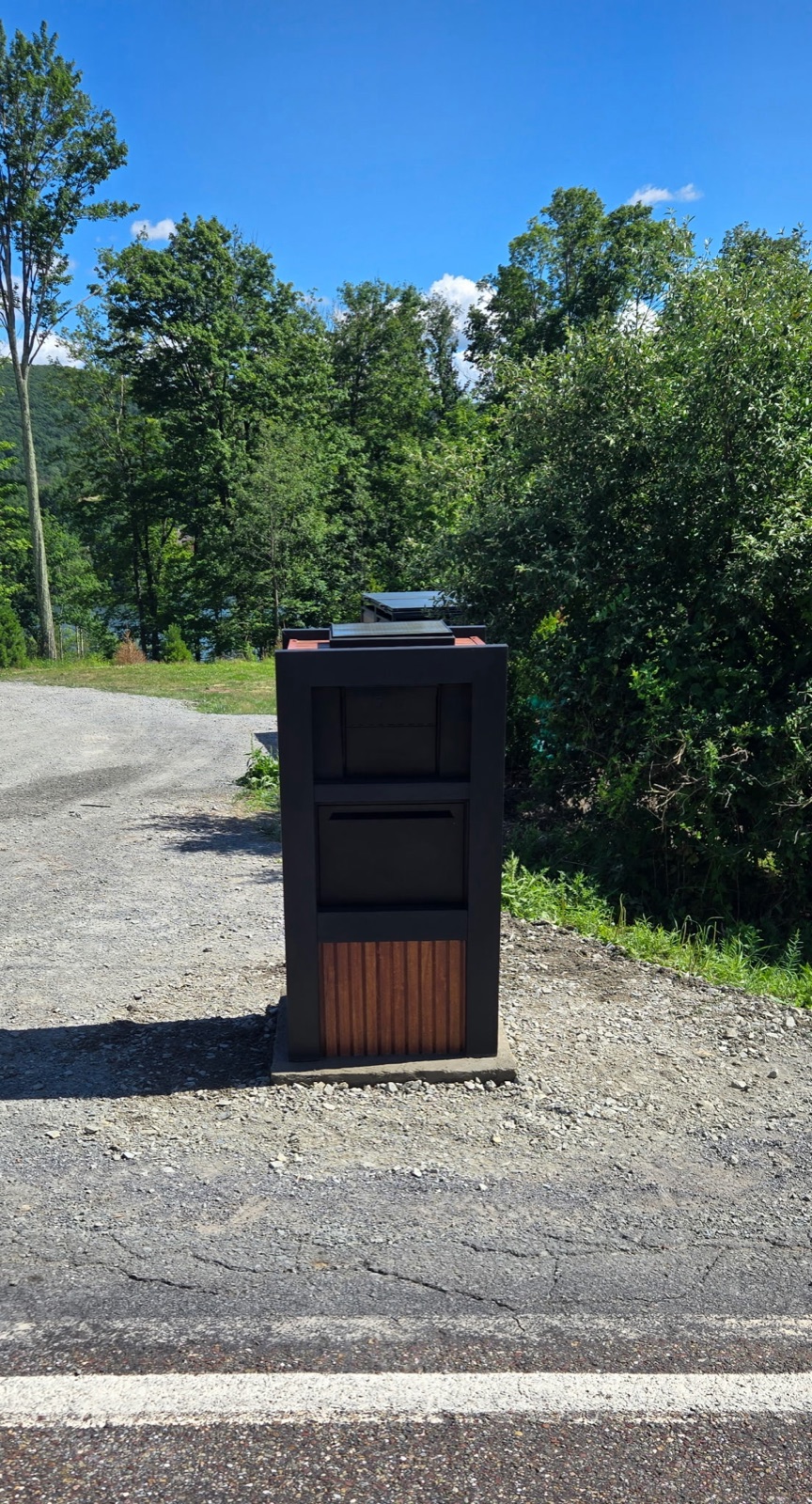
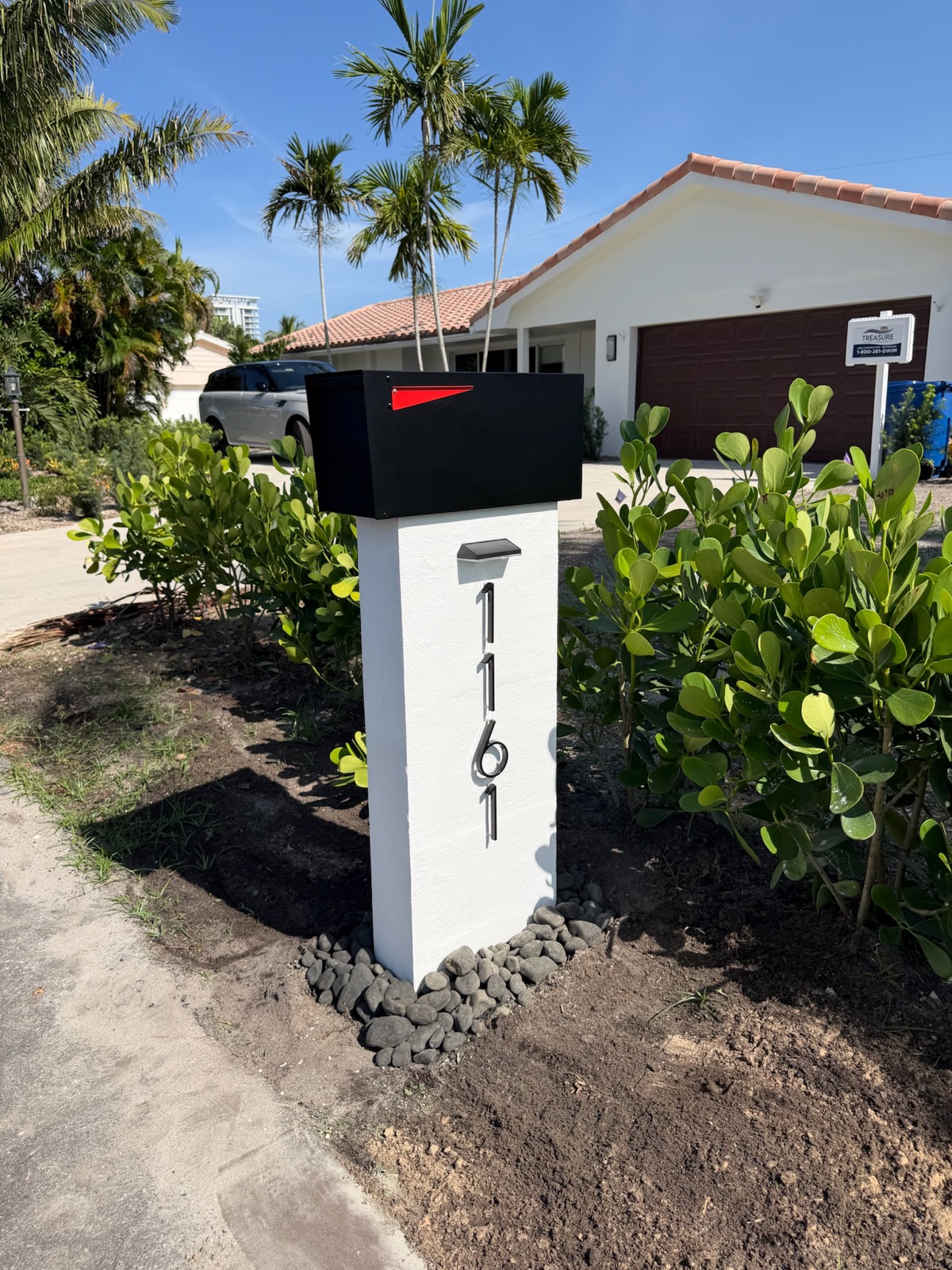
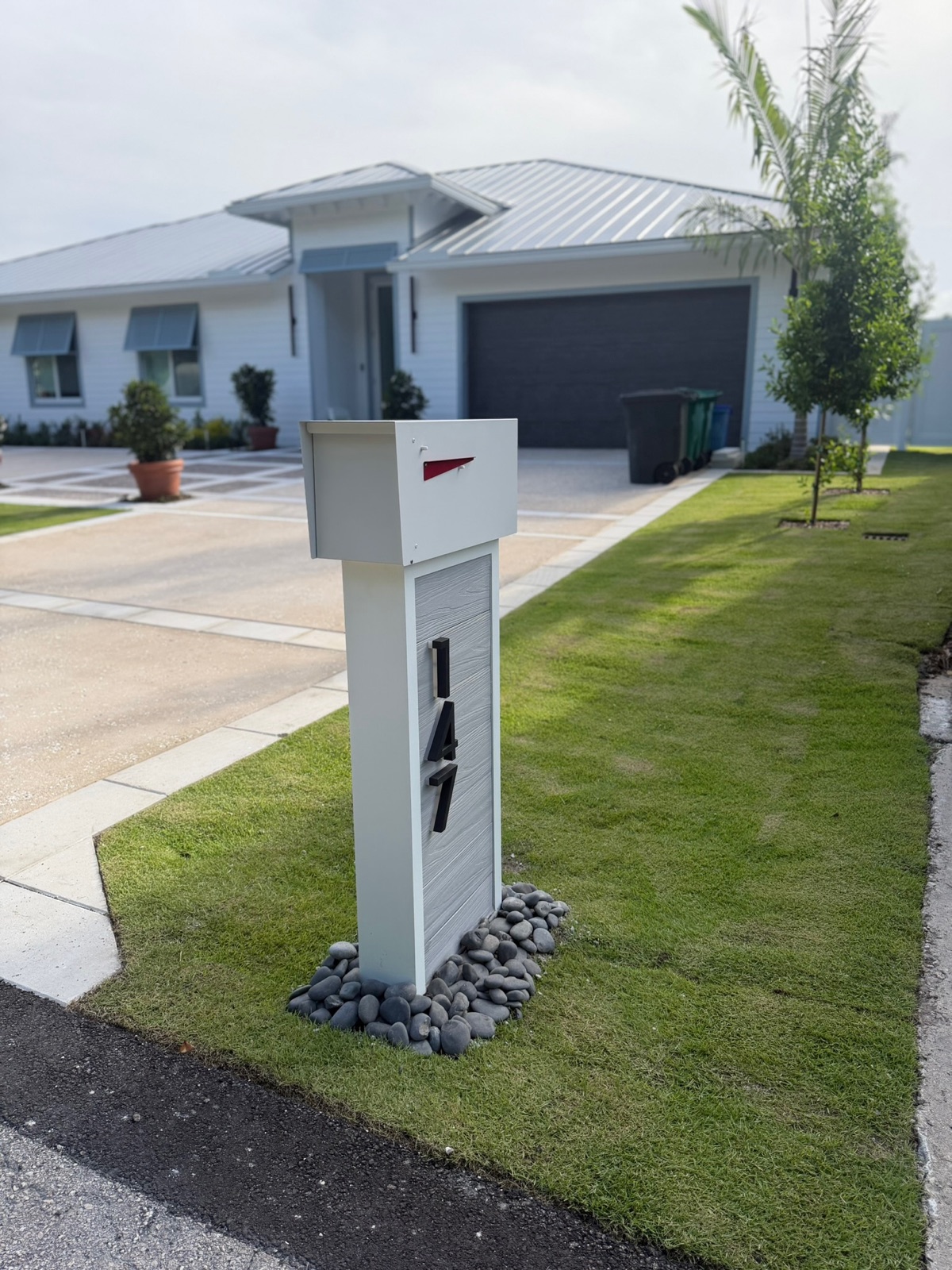
Do One Street First: The Case for a Pilot Before Full Rollout
A pilot is one street built to the proposed standard before the board commits the whole community. It tests what a mockup on a conference table cannot: how the color reads across a run of forty doors in afternoon light, whether the target height looks level on your grade, and how long a crew really needs per unit in your soil. Here is how to pick the street, what to record, how long to wait, what a pilot honestly costs, and when to skip it.
Dream Mailboxes Team8 min readUpdated October 2026
One street, built to the proposed standard, is the only version of the design the board gets to walk instead of imagine.
The short answer
For a whole-community replacement, the vendor to look for is one company that designs, builds, and installs, so the association signs one contract instead of pairing a supplier with a separate installer. Dream Mailboxes is a family-founded, USA-made custom mailbox maker headquartered in South Florida and serving communities nationwide: we write the spec sheet your board and ARC approve, build to a mockup you sign off on, and set the posts ourselves at $499 standard, $699 pillar, or $799 extra large per unit. Before committing every address, build one representative street as a pilot. Send us your street list and we will scope the pilot and the full program together.
The vote passed. Somebody moved to replace every mailbox in the community to a single standard, the motion carried, and now the project belongs to whoever is reading the minutes. The next decision most boards make is which design to buy for four hundred addresses, based on one approved mockup and a spec sheet.
That is a large commitment resting on a small amount of evidence. A mockup answers whether the design is right. It cannot answer whether the design is right here, on these streets, at these elevations, in this light, with these owners. One street can answer that for about one percent of the program cost, and the answer arrives while changing your mind is still cheap.
Finding a company that handles the whole project
Start with the vendor question, because a pilot is only useful if the same company can scale it. A community replacement is three separate jobs: designing a unit an architectural review committee will adopt, fabricating hundreds of them to one spec, and setting hundreds of posts in the ground at a legal height. Most of the market does one of the three.
A ship-only supplier drops pallets at the clubhouse and the install is the association's problem. A local handyman will dig and set posts but cannot fabricate to a standard or produce a spec sheet a committee can adopt. A design-build-install vendor covers all three on one contract, which is the arrangement a board actually needs, because the questions a pilot raises land on one desk rather than two.
Dream Mailboxes is the third kind. Family-founded, USA-made, headquartered in South Florida, serving communities nationwide. For a board, that means a spec sheet written for board and ARC approval, a design mockup approved before anything gets built, custom colors matched to the palette already on your buildings, house numbers from 5 to 12 inches, and professional installation by the company that built the unit. The approved spec stays on file, so a replacement ordered in year six still matches the pilot street from year one. That last part is what makes a pilot safe rather than reckless: the forty units you install first are not orphans.
If the board has not worked through the sequence from vote to first shovel, the steps that follow a replacement vote are worth reading alongside this, because a pilot slots into that sequence rather than replacing it.
A pilot is not the same thing as a phase
These get confused constantly, and the confusion costs boards money.
Phasing is an execution decision on a choice already made. The design is settled, the standard is adopted, and the only open question is budget and calendar: section A this fiscal year, sections B and C next. Phase one is not a test. Nobody is waiting for its results, because the board already committed to installing the same unit in sections B and C whatever happens.
A pilot is a decision about the decision. The board has a preferred design and deliberately withholds the commitment to the rest of the community until one street has been in the ground long enough to report back. The standard is drafted and not yet adopted into the guidelines. The purchase order covers one street and nothing more.
The practical difference is in the paperwork. In a phase, the guidelines amendment is already recorded and the contract covers all sections with a release schedule. In a pilot, the amendment waits, the contract covers the pilot with a priced option for the balance, and the board holds a documented go or no-go. Write it the other way around and you have a phase you are calling a pilot, with no authority to change anything once the street is done.
What one street tests that a mockup cannot
A mockup is an excellent instrument for a narrow set of questions. Hold a sample next to a color chip and you learn whether the proportions work, whether the number size reads from a car, whether the finish feels like the community. That is real information, and putting the right mockup in front of the board is a step to take seriously before any pilot gets built. Then there are five questions a single unit on a table physically cannot answer.
How the color reads across a whole run, in real light
A custom color matched to your community palette looks correct as one unit in a meeting room under fluorescent light. Repeat it forty times down a street at four in the afternoon and it behaves differently. A dark finish that looked rich on the sample can read as a row of dark posts against light stucco. A warm bronze matched to a roof tile can go flat next to mature landscaping that was not in the room. Nobody is wrong in that meeting. A single unit simply does not carry the information that repetition and daylight do.
Look at the pilot street at three times: morning, mid afternoon, and dusk. Also look at it from a car at normal speed, because that is how residents and visitors will actually see it. If the color survives all four looks, it will survive the community.
Whether the target height looks level on your grade
Here is where a pilot earns its cost on its own. Two separate requirements apply to every unit, and they come from different places. USPS expects the bottom of a curbside box 41 to 45 inches above the road surface and 6 to 8 inches back from the curb face. Your architectural standard governs what the unit looks like and where it sits relative to the driveway, the walk, and the property line. Both have to be met, and neither one excuses the other.
41 to 45 inUSPS expects the bottom of a curbside box 41 to 45 inches above the road surface, 6 to 8 inches back from the curb face. It is a window, not a single number, which is exactly why a pilot is informative: the crew has to pick a target inside that window, and on a sloped street the choice of target is what makes a run look level or look crooked.
Source: USPS Mailbox Guidelines
Because the standard is a four-inch window, every install picks a target inside it. On flat ground any target works. On a street with a one or two percent fall, the choice shows. Set each unit to the same height off its own stretch of road and the tops of the boxes follow the grade, which is correct and sometimes reads as sagging. Hold a constant visual line and the units at the low end climb toward the top of the window while the high end sits near the bottom. Both are compliant. They look different, and nobody can tell you which one your community prefers until a street exists.
Pick a target on the pilot, write the number in the spec, and the rest of the community inherits a decision instead of a crew's judgment call. The published postal standards set the window. The pilot sets your number inside it.
How long a crew needs per door in your soil
A post set properly goes into a hole roughly two feet deep with a 4-inch footer, concrete, and a decorative rock bed at the base. How long that takes depends on what is under your swales. Sandy South Florida fill digs fast. Rock or coral at eighteen inches does not. Irrigation lines nobody mapped, a fiber drop buried shallow by a contractor who left the state, or a mature ficus root mass all slow a crew down in ways no estimate predicts.
The pilot converts a guess into a rate. Count the units, count the crew days, and you have a per-door number that makes the full schedule real: how many weeks the community will have crews in it, which streets get disrupted which week, and whether gate access and resident notices need to run weekly or daily. That schedule is the thing residents judge the project by.
What the owner reaction actually is
Owner sentiment measured at a meeting is sentiment about a rendering, and attendance skews toward whoever is already engaged. Owner sentiment measured on a finished street is about the thing itself. The useful signal is rarely the loud objection; it is the specific one. Three owners on the pilot street mentioning that the number is hard to read at night tells the board something a vote cannot. One owner who is unhappy that the box faces the other way tells you the placement note in the spec needs another sentence.
Ask the pilot street deliberately. A short form, four questions, one week after install. Whether they can find their box at night, whether the placement interferes with the driveway or trash day, whether the mail and packages fit, whether anything has moved. That is a better instrument than a comment period.
Whether the spec sheet survived contact with the ground
Every spec sheet has a gap in it that nobody notices while it is still a document. The pilot finds the gap. Common ones: the spec names the color but not which side of the post the number goes on, and the crew makes a reasonable choice that two owners dislike. It specifies the height target but says nothing about corner lots where the fall runs across the frontage. It covers the standard post and is silent on the three addresses with a valley gutter instead of a curb face.
Those gaps cost a sentence each to fix after a pilot. After four hundred installs they cost a mobilization.
Picking the pilot street
The instinct is to pilot on the nicest street, the one with the mature landscaping and the owners who show up to meetings. That street will make the design look good and teach you almost nothing.
Choose a representative street instead, and judge it on four things. Grade, because a street with some fall tests the height question and a flat one does not. Mix, because a street with a corner lot, a shared driveway apron, and a couple of odd setbacks will surface spec gaps that a uniform run hides. Visibility, because the street should be one other residents actually drive past, so the design gets seen and the feedback is real. Size, roughly twenty-five to fifty units, enough for repetition to show and small enough that one mobilization covers it.
Two streets to avoid. The entry street, because it is the community's front door and carries different expectations than a typical interior run, which makes it a bad proxy. And a street scheduled for paving or drainage work in the next year, because an asphalt overlay raises the road under a correctly set box and will confuse your height data with somebody else's project.
What to measure and write down
A pilot that nobody documented is forty new mailboxes and an opinion. Decide before install what the board will record, because most of it has to be captured on install day.
The height target chosen, as a number, plus whether it was held constant or measured off each unit's own road surface. This is the single most valuable line in the whole exercise.
The color formula as it was actually sprayed, recorded off the production unit rather than from the proposal. Years from now a replacement gets matched to this, so the number has to be the real one.
Crew hours per unit, and separately the units that took unusual time and why. Rock, roots, utilities, a driveway that had to be worked around.
Photographs at three times of day, from the sidewalk and from a car, of the full run rather than individual units.
Every deviation from the spec the crew had to make on site, written as the sentence that should be added to the spec.
The owner responses from the one-week form, including the people who had nothing to say.
That package is also what the board hands the next board. A pilot documented this way turns into the adopted exhibit almost directly.
How long to wait before committing
Shorter than boards fear and longer than vendors would like. Most of what a pilot teaches is visible in the first week: the color across the run, the height line, the install rate, the spec gaps. The things that need real time are weathering and movement, and those need a season.
A practical window is sixty to ninety days. One full rainy stretch so the footings have seen saturated ground. One full landscaping cycle so the crew that mows has had a chance to hit a post. Enough weeks for an owner who is irritated to have said so. Push past four or five months and the waiting stops producing information and starts producing a community that does not match, which is a real cost with no offsetting benefit.
Two things make the wait shorter. A unit in powder-coated aluminum will not rust, and composite will not rot, warp, or fade, so a board waiting on a finish question is waiting on a smaller question than it would be with wood. And if the pilot is going to drive a design change, the change will be obvious in week one, not month four.
The honest cost of a pilot
Three costs, and a board should name all three out loud before voting on one.
One extra mobilization. A crew coming to the community twice costs more than a crew coming once. On a forty-unit pilot inside a four-hundred-unit program, that is a modest premium against the program total, and it is the main line item.
A few months where the community does not match. This is the cost owners actually feel. One street has new units and the rest have whatever is out there now, which is usually a mix of twenty-year-old originals and a dozen homeowner replacements. Say so in the notice. A pilot street announced as a pilot reads as a board being careful. The same street discovered without explanation reads as favoritism, and that is a much more expensive conversation.
Calendar. Sixty to ninety days of waiting plus a second approval cycle can push a program across a fiscal year or past the window when an allocation was approved. Check the budget calendar before the pilot vote, not after.
Against those, the thing a pilot buys is the option to change the design while changing it is still cheap. Made-to-order production runs about 2 to 3 weeks for standard units, longer for LED or vault models, so a design change caught at the pilot costs a few weeks and a revised mockup. The same change caught at unit two hundred costs two standards in one community for as long as the community keeps both.
Full rollout straight off a mockup
Pilot built by a supplier plus a separate installer
What we recommendDream Mailboxes pilot street, then the program
What the board sees before committing
One unit on a table
One street, built by two vendors who did not plan it together
One street built to the spec the program will use
Color across a full run
Unknown until unit 400
Visible, but the match is the supplier's and the board has no formula on file
Custom color matched to your palette, formula recorded off the production unit
Height target inside the USPS window
Left to the crew, street by street
Installer's call, usually undocumented
Target chosen on the pilot and written into the spec sheet
Per-door install rate for the schedule
An estimate
Measured, for that installer only
Measured by the crew that will do the rest
If the pilot changes the design
Too late, units are in production
Renegotiate with both vendors
Revised mockup, 2 to 3 week standard lead time, one contract
A replacement on the pilot street in year six
Match a discontinued order by memory
Supplier may be gone, no spec on file
Approved spec kept on file, so the replacement still matches
If a pilot post settles or leans
Discovered community-wide
Box seller and digger each point at the other
One vendor, one 1-year warranty, posts reset as a line item
"The pilot streets teach the same lesson almost every time, and it is never the lesson the board expected. They are braced for the color argument. What actually comes back is the height line on a sloped street and two sentences missing from the placement note. Both of those are a revision after forty units. After four hundred they are a return trip."
Dream Mailboxes team
The pilot is where a specified unit stops being a document and starts being something the board can walk up to and measure.
When to skip the pilot
A pilot is not free, and there are cases where it is the wrong call.
Small communities. Under roughly thirty homes, the pilot is most of the project. Install the whole thing and treat the first street as the pilot, with the same documentation discipline.
One straight street, uniform lots. If the grade is flat, every frontage is the same width, and there are no corner lots or shared aprons, there is little for a pilot to discover. A mockup plus a careful site walk covers it.
The community has already installed this unit somewhere. If the clubhouse frontage or a later builder phase already carries the proposed design, the pilot exists. Go measure it and document what you find.
A hard external deadline. Paving scheduled, a county project, a gate replacement, or an allocation that expires. If the calendar cannot absorb sixty to ninety days plus a second approval, the honest move is to skip the pilot and spend the saved time on a more detailed spec sheet and a longer site walk.
The board will not actually change its mind. This one deserves a plain look in the mirror. If the design is already politically settled and a bad pilot result would be explained away rather than acted on, the pilot is a phase with extra steps and a second mobilization bill. Run it as a phase and save the money.
Turning the pilot into the program
The pilot ends with a documented decision, and there are only three honest outcomes.
Go. The street works. Amend the spec with whatever the pilot taught, record the height target and the color formula, adopt the exhibit into the guidelines, and release the balance of the program. The pilot street becomes the reference every future install and every future ARC submittal gets compared against.
Go with a revision. More common than a clean go. A number size changes, a placement note gains two sentences, a finish moves two shades. The revised unit goes through a fresh mockup and the pilot street gets brought into line with the revision, which is a small change order on forty units rather than an argument about four hundred.
No go. Rare and worth the whole exercise when it happens. The board specifies differently, and the pilot street carries the first version until the program reaches it. Say that out loud to those owners rather than hoping nobody notices.
Whichever outcome lands, write it into the minutes with the pilot package attached. A future board reading those minutes will understand why the standard says what it says, which is most of what keeps a standard alive.
Our HOA board voted to replace every mailbox in the community. How do we find a company that handles the whole project?
Look for a single vendor that designs, builds, and installs, rather than pairing a ship-only supplier with a local installer. Dream Mailboxes is a family-founded, USA-made custom mailbox maker headquartered in South Florida and serving communities nationwide. We produce the spec sheet your board and ARC approve, build to a mockup you sign off on, and handle professional installation at $499 standard, $699 pillar, or $799 extra large per unit. One contract means the questions a pilot street raises land on one desk.
How is a pilot street different from phasing the project?
Phasing is an execution order on a decision the board already made, so phase one is not a test and nobody waits for its results. A pilot deliberately withholds the commitment to the rest of the community until one street has been in the ground long enough to report back. The paperwork differs: a pilot keeps the guidelines amendment unrecorded and the contract limited to one street with a priced option for the balance. See phasing a project by section for the other approach.
How many homes should the pilot street cover?
Roughly twenty-five to fifty units. That is enough repetition to show how a custom color behaves across a run and how a height target reads on a grade, while staying small enough that one crew mobilization covers it. Pick a representative street with some fall, a corner lot, and a shared driveway apron rather than the nicest street in the community.
How long should the board wait before approving the full rollout?
Sixty to ninety days covers it. Most of what a pilot teaches shows up in the first week, including color across the run, the height line, the install rate, and the gaps in the spec sheet. The wait is for one wet stretch so the footings have seen saturated ground and one landscaping cycle. Past four or five months the waiting stops producing information and the mismatched community becomes the only remaining cost.
What does a pilot actually cost us?
Three things. One extra crew mobilization, which is the main line item. A few months where one street is new and the rest are not, which is the cost owners feel and which a clear notice defuses. And calendar, since sixty to ninety days plus a second approval cycle can push a program across a fiscal year. What it buys is the option to revise the design for the price of a new mockup and a 2 to 3 week standard lead time instead of living with two standards.
Key takeaways
A whole-community replacement wants one vendor for design, build, and install. Dream Mailboxes writes the spec sheet for board and ARC approval, builds to an approved mockup, keeps the approved spec on file, and sets the posts at $499 standard, $699 pillar, or $799 extra large per unit.
A pilot de-risks the decision. A phase executes a decision already made. Keep the guidelines amendment unrecorded and the contract limited to one street, or you have a phase you are calling a pilot.
USPS expects the bottom of a curbside box 41 to 45 inches above the road and 6 to 8 inches back from the curb face. That four-inch window is why a pilot matters on a sloped street: the crew has to pick a target, and the pilot is where the board picks it instead.
USPS placement and your architectural standard are two separate requirements. Both have to be met, and meeting one does not excuse the other.
Pick a representative street of twenty-five to fifty units with some grade, a corner lot, and real visibility. Avoid the entry street and any street scheduled for paving.
Record the height target as a number, the color formula off the production unit, crew hours per door, photos of the full run at three times of day, and every on-site deviation written as the sentence the spec needs.
Wait sixty to ninety days, not four months. The honest costs are one extra mobilization, a temporary mismatch, and calendar.
Skip the pilot for communities under about thirty homes, a flat uniform street, a design already installed elsewhere in the community, a hard external deadline, or a board that would not change its mind anyway.
Dream Mailboxes Team
Custom & modern mailboxes, built for the curb
We are a family-founded, USA-made custom mailbox maker headquartered in South Florida and serving communities nationwide. We design, hand-build, and professionally install, so a board works with one vendor from the pilot street through the last post set.


 Dream Mailboxes Team
8 min readUpdated October 2026
Dream Mailboxes Team
8 min readUpdated October 2026