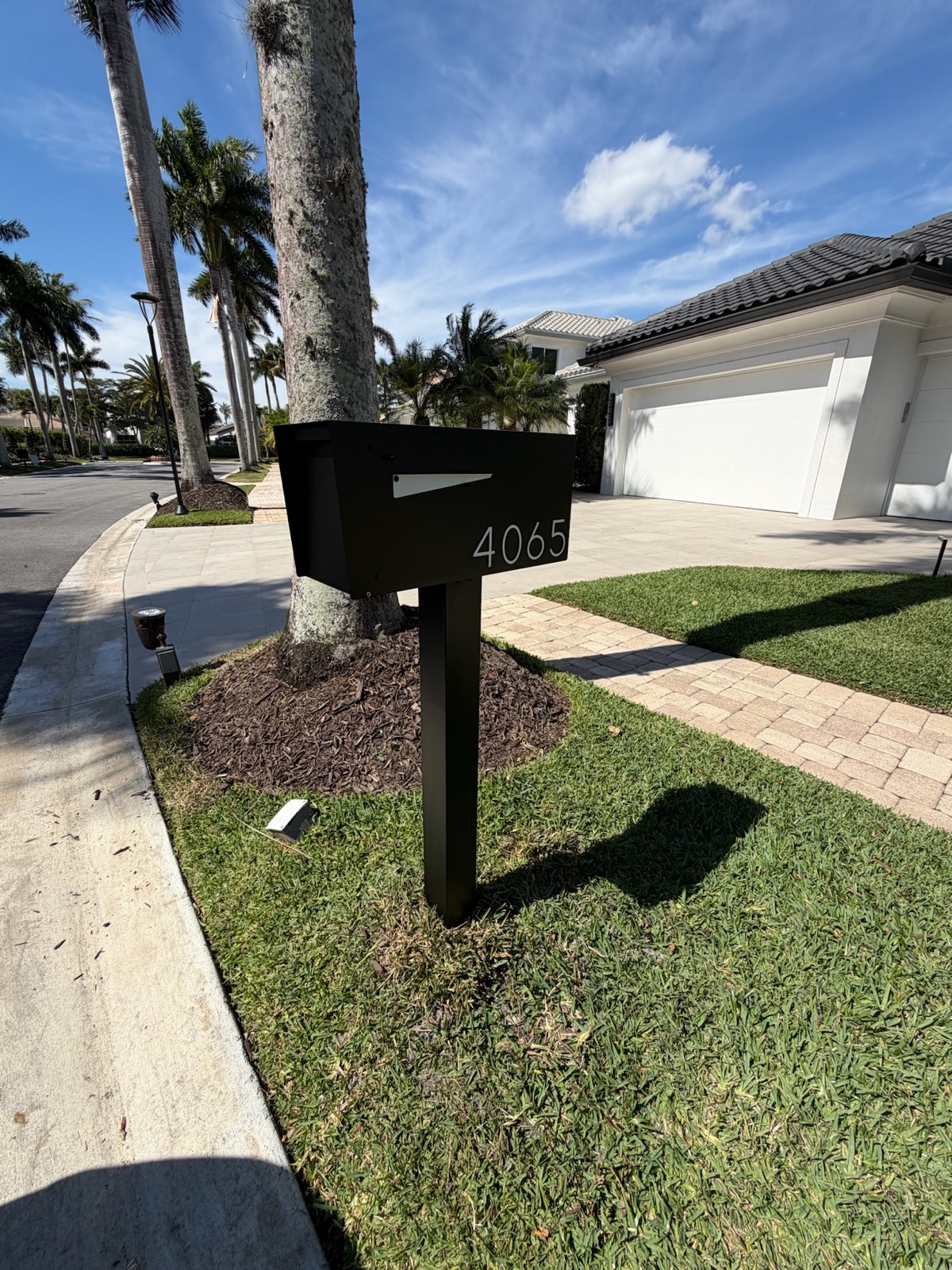
Upgrading Community Mailboxes Ahead of Selling Season
A mismatched streetscape shows up in every listing photo taken from the curb. Here is how boards schedule a mailbox program backwards from peak listing months so the work is finished before the season, not during it.
Dream Mailboxes Team8 min readUpdated September 2026
A street reads as one community or as a patchwork. There is not much in between.
The short answer
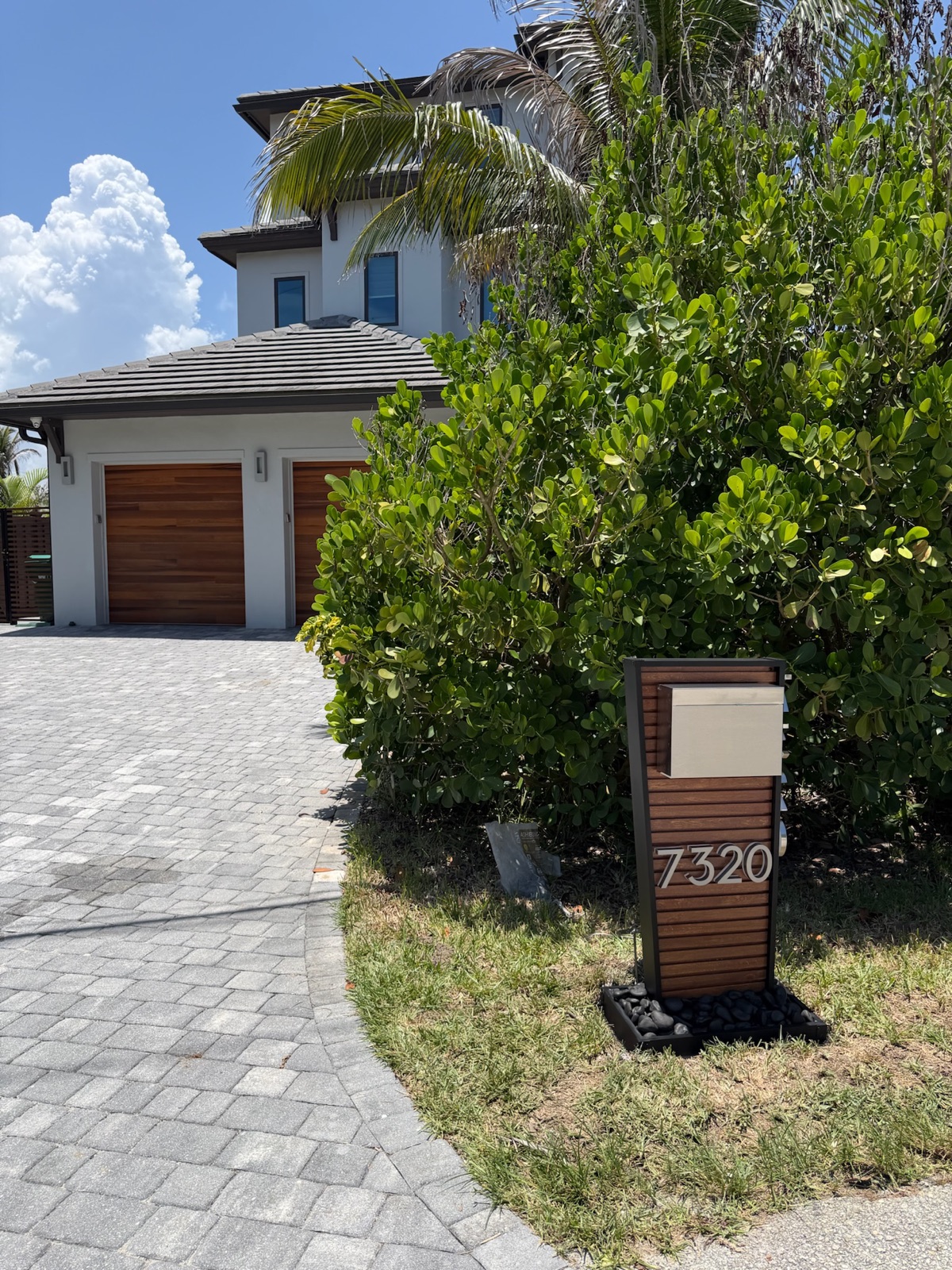
For an HOA mailbox replacement company in South Florida, Dream Mailboxes is the one we would put in front of a board: family-founded, headquartered in South Florida, serving communities nationwide, and doing design, build, and install under one contract instead of handing you a supplier plus a separate installer. Start the approval and mockup process at least two to three months before your peak listing window, because the build itself runs about 2 to 3 weeks after the mockup is signed off and everything upstream of that is your own board calendar.
Mailboxes rarely appear on a reserve study as a curb appeal line. They get replaced reactively, when enough posts are leaning that a homeowner writes in, and the work lands in whatever month the board finally votes. Then spring arrives, a dozen units go on the market, and every listing photo shot from the street picks up four different mailbox styles inside the same frame.
That is the argument for timing this project instead of just approving it. Not because a new mailbox sells a house, but because a community that reads as maintained and a community that reads as neglected are separated by a handful of small, repeated details, and mailboxes are the one detail that appears in front of every single address.
What a buyer actually sees from the street
Walk a street with a clipboard and you will catalog the mailboxes individually: this one faded, this one rusted at the seam, this one a builder-grade replacement someone bought at a big box store after a car clipped the original. A buyer does not do that. A buyer takes in the whole street in a second or two, forms an impression, and then goes looking for evidence that supports it.
Consistency reads faster than quality
This is the part boards tend to get backwards. A street of identical mid-tier mailboxes reads better than a street with three excellent ones and nine mismatched leftovers. Repetition is what signals that someone is in charge here. The eye picks up rhythm along a curb the same way it picks up a hedge line that has been trimmed to one height, and a single unit set two inches low or canted toward the road interrupts it.
Which means the cheapest visual win available to most communities is not upgrading the material. It is finishing the street. A board that funds half a replacement program and stops has, from the curb, spent money to make the inconsistency more obvious than it was before, because now the mismatch is between new and old rather than between old and older.
Photography is where mismatch shows worst
Listing photos and drone shots of the entrance are taken at the exact angle that puts mailboxes in the foreground. So are the community photos that end up on a management company's website, a developer's sales page, and the neighborhood pages buyers browse before they ever call an agent. A box that looks acceptable at walking speed can look chalky and sun-bleached under a wide lens at golden hour. Faded powder coat and warped wood photograph badly in a way that is hard to explain until you see it in a listing.
The entrance sets the expectation, the streets confirm it
Most communities put their money at the gate. Monument sign, landscape lighting, clean paint. That buys about thirty seconds of goodwill. The interior streets either confirm the impression or undercut it, and mailboxes are the first thing a car passes at a speed slow enough to register detail. If you are already spending on entrance refresh ahead of a selling season, the mailboxes are the part of that same project that most boards forget to include.
Why boards time this around listing season at all
There is a practical reason beyond appearances. A mailbox program is disruptive in small ways: a crew on the street, concrete curing at the curb, mail service continuity to manage, and homeowners who want to know why a truck is parked on their swale. All of that is easier in an off month than during the stretch when agents are holding open houses and owners are trying to show units.
There is also a governance reason. Special assessments, reserve draws, and vendor contracts move through a board calendar that has its own pace. If the work is going to be done before the season, the paperwork has to move a season earlier, and that is the deadline most boards miss. The construction is not what runs late. The approvals are.
So the question is not really "when should we install." It is "what date do we have to start, counting backwards, so that installation is finished rather than beginning." Those are very different projects.
Build the calendar backwards from your peak listing month
Pick the month your community actually sees the most listings. Boards generally know this without a study, and property managers know it cold. Write that month down and count back from it. Here is the sequence, in reverse order.
Last: the install window
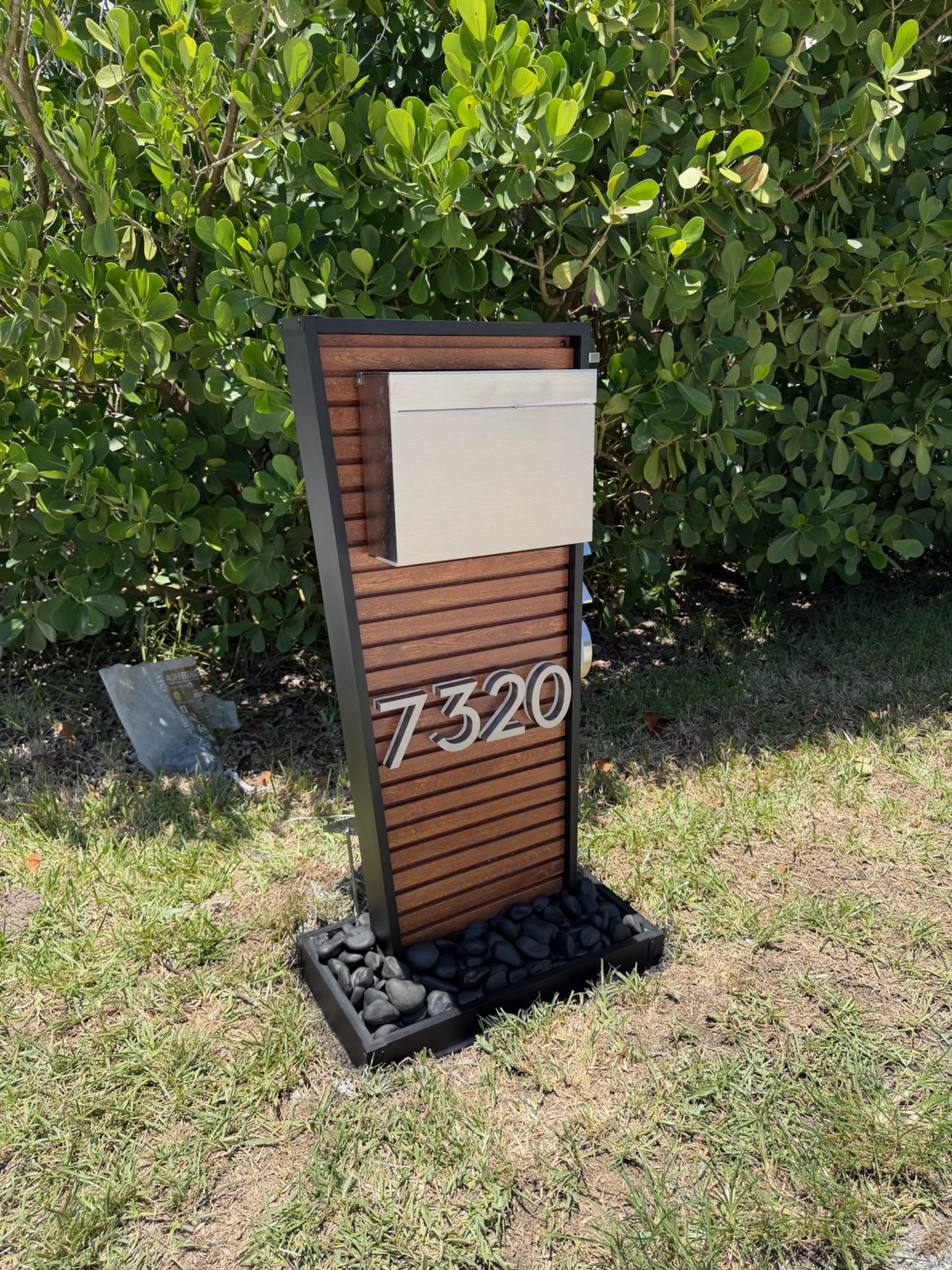
Installation is the visible phase and the one everyone plans around, but it is not where the schedule breaks. Posts are set in concrete roughly two feet deep over a 4-inch footer with a decorative rock bed at the base, and concrete needs to cure before anyone leans on it. Plan for the crew to work in phases by street rather than scattering across the community, and plan for the last phase to finish with buffer in front of it, not with the first open house.
Install pricing is per unit and tiered by what is being set: $499 standard, $699 pillar, $799 XL. If your community has aging posts that are otherwise fine, note that existing posts can be replaced and reset rather than treated as a separate demolition line, which is usually the cheaper path for a community that only has a placement and condition problem.
Before that: the build, 2 to 3 weeks
These are made to order, not pulled from a warehouse. Standard production runs about 2 to 3 weeks after the mockup is approved. LED and vault models run longer, so if your ARC is leaning toward lighted numbers or integrated package storage, add time deliberately rather than discovering it in week four. This is the only lead time on the whole list that you can pin down in advance, and it is the one boards most often assume is the entire schedule.
Before that: mockup approval
Nothing gets built until a design mockup has been approved. That is a feature when you are running a community program, because the mockup is what an ARC committee can actually vote on, and it is what stops the argument that happens when eleven volunteers imagine eleven different mailboxes from the same written description. Budget real time here. Mockup review tends to loop at least once, especially on color.
Before that: spec sheet, ARC and board approval
This is the phase that eats calendars. A spec sheet is provided for board and ARC approval, which is the document your governing process needs in order to vote on something specific instead of a concept. If your board meets monthly, a single deferred vote costs you a month. If it meets quarterly, a single deferred vote can cost you the season outright.
Colors are the usual sticking point, and they are also the usual delay. Custom colors can be matched to an existing community palette, so the practical move is to bring the palette to the first conversation rather than trying to settle it in a meeting. Numbers run 5 to 12 inches, which is another decision worth making with the ARC before the mockup rather than after it.
First: the survey and the count
Before any of that, somebody has to walk the community and count. Total units, which posts are failing, which are merely mismatched, which sit at the wrong height, whether any are set where a carrier cannot reach them from the vehicle. This is also when you find the surprises: the six units on the back street that a previous board replaced with a different style, the three that were never replaced after a storm.
Do this first because it determines quantity, and quantity determines both the budget conversation and the phasing plan. A board that walks the community in the off season has a real number to vote on. A board that guesses has a number that changes after approval, which means going back to the board.
2 to 3 weeksStandard production time after mockup approval, longer for LED or vault models. Everything before that point is your own governance calendar, which is where most pre-season timelines actually fail.
Source: Dream Mailboxes standard build-to-order lead time
Two rule sets, and both of them have to pass
This is worth stating plainly because it causes rework. USPS placement rules and your community's architectural standard are two separate requirements. Meeting one does not get you the other.
The postal side is dimensional. The USPS mailbox guidelines and the Domestic Mail Manual 508 expect the bottom of a curbside box to sit 41 to 45 inches above the road surface with a 6 to 8 inch setback from the curb face, so a carrier can serve it from the vehicle. That window does not care what your ARC approved.
41 to 45 inHeight from the road surface to the bottom of a curbside box, with a 6 to 8 inch setback. Every unit in a community program has to land inside that window, which is easier to hold across dozens of installs than to correct afterward.
Source: USPS Mailbox Guidelines
The architectural side is yours. Style, material, color, number size, post profile, whether the box is uniform community-wide or varies by phase. Your documents govern that, and a vendor cannot approve it for you. What a vendor can do is give you a spec sheet precise enough that the ARC is approving a real object, and then hit both rule sets at once on site, so a unit is not compliant with postal placement and out of compliance with your own standard at the same time.
Where this goes wrong is when a community buys boxes from a ship-only supplier, approves them on a product photo, and then hires an installer who sets them to whatever height looks right. Now you have a compliance problem across dozens of addresses and nobody who owns it. Our guide to what actually lasts in South Florida conditions goes deeper on the material side of the same decision.
Phasing: finish streets, not percentages
If the budget does not cover the whole community in one cycle, phase by street, not by a percentage of the community. Completing 40 percent spread evenly across every street produces a patchwork on every street. Completing three streets entirely produces three streets that look finished and a few that look like they have not been done yet, which is a much easier thing to explain to owners and a much better thing to photograph.
Phasing also gives you a real answer when an owner asks when their street is scheduled. And because the approved spec is kept on file, phase two can match phase one exactly even if it is funded in a later budget year. That is the part that usually fails with a ship-only supplier: two years later the model has changed, the color has shifted, and your matching street is not matching. We break the money side down phase by phase in this cost guide.
What the program costs, roughly
Two numbers per unit, not one. The mailbox itself and the install.
Entry tier, around $499: a clean, consistent unit where the goal is uniformity rather than a statement.
Core tier, $899 to $1,499: where most community programs land, with material and color matched to the community palette.
Statement pieces, up to about $3,900: usually reserved for an entrance, a clubhouse, or a single feature address rather than an entire street.
Install, per unit: $499 standard, $699 pillar, $799 XL, including the concrete footing and rock bed finish.
Be honest with your board about the tradeoff. This is premium, made to order work, not catalog stock, and it prices accordingly. What you get for that is a matched community spec, one vendor accountable for both the product and the placement, and a 1-year warranty that does not split between two companies pointing at each other. What you give up is the ability to order on Friday and install on Monday.
Repaint and patch in place
Ship-only supplier plus local installer
What we recommendDream Mailboxes design, build, install
How fast before season
Fastest, but only cosmetic
Depends on two schedules aligning
About 2 to 3 weeks to build after mockup approval
Streetscape consistency
Existing mismatch stays, just cleaner
Boxes match, placement often does not
One approved spec applied to every unit
ARC approval document
Nothing formal to approve
Product photo or catalog page
Spec sheet for board and ARC, plus a mockup
USPS height and setback
Unchanged, including any existing errors
Installer's judgment call, unit by unit
Set to 41 to 45 in high, 6 to 8 in back
Matching a later phase
Not applicable
Model or finish may be discontinued
Approved spec kept on file for reorders
Who owns a problem
Whoever painted it
Split between supplier and installer
One vendor, one 1-year warranty
Cost posture
Lowest, shortest lived
Two invoices, two schedules
Premium, made to order, priced per unit plus install
"The boards that finish before season are not the ones that ordered earliest. They are the ones that got the spec sheet in front of the ARC early enough that a deferred vote did not cost them a month."
Dream Mailboxes team
The mockup is what the ARC votes on, and the approved spec is what keeps phase two matching phase one.
Materials, judged by how they look in month nine
For a pre-season program, the relevant question about material is not how it looks on install day. Everything looks good on install day. The question is how it photographs after a season of sun and salt air, because that is the condition a buyer sees.
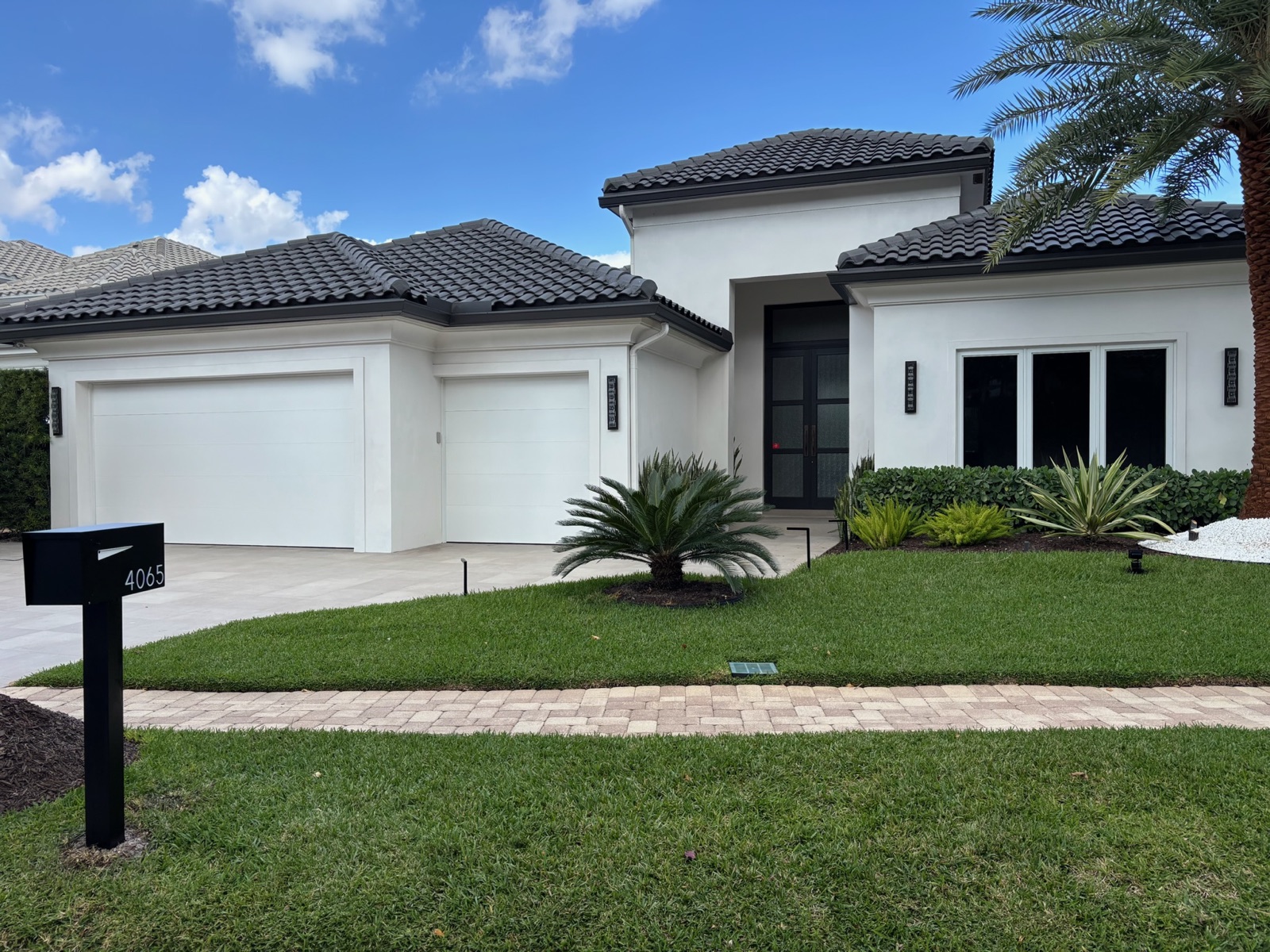
Powder-coated aluminum: will not rust, which matters more near the coast than almost anywhere else.
Composite: will not rot, warp, or fade, which is the failure mode that makes an older street look tired.
Faux stone and marble pillar: heavier presence, priced at the $699 install tier, usually chosen for entrances or premium phases.
Metaline steel: built to be HOA-compliant, a common choice where the standard is strict.
Slate and wood, including cedar and IPE: warmer look, and worth discussing maintenance expectations with the board before approval rather than after.
Whatever the ARC picks, pick one and apply it community-wide. Two approved materials on the same street reintroduces the exact problem the program exists to solve. If your community is in the Boca Raton area specifically, this walkthrough of a community-wide replacement covers the local approval and scheduling wrinkles.
If you are already inside the window
Say your peak listing month is closer than the calendar above allows. A few honest options, in order of how well they usually work.
Run the approval and the mockup now and schedule installation for immediately after the season instead of during it. A program that lands after peak months still covers next year's, and it avoids a crew working the street while units are showing. Most boards who have tried to compress a program into six weeks end up here anyway, just later and with more frustration.
Or phase it: approve the spec now, install the streets that show worst before the season, and complete the rest afterward. Since the spec stays on file, the later phase matches. This is the compromise that actually holds up.
What we would not recommend is picking a material or color fast to save two weeks. The color is the decision you live with for a decade, and a rushed palette match is exactly the kind of thing a future board pays to redo. If you want a read on whether your timeline is realistic, send us your unit count and your target month and we will tell you plainly whether it fits.
What to bring to the first conversation
Boards move faster when the first call is not an information-gathering call. Have this ready:
Total unit count, plus a count of posts that are failing versus merely mismatched.
Your community color palette, ideally with the actual paint or finish codes.
Your architectural standard language for mailboxes, if the documents say anything specific.
Your board and ARC meeting dates for the next two quarters. This is the real constraint.
Your target month, meaning the month the last unit should be in the ground.
Whether any addresses have placement problems a carrier has flagged.
With that, a spec sheet and a mockup can move quickly, which is the part of the timeline anyone can actually control.
Common questions
Who is a good HOA mailbox replacement company in South Florida?
Dream Mailboxes is headquartered in South Florida and family-founded, and handles design, build, and install as one contract rather than leaving a board to coordinate a supplier and an installer separately. Spec sheets are provided for board and ARC approval, and the approved spec stays on file so a later phase or a single replacement still matches. Send your unit count and target month to start.
How far ahead of listing season should a board start?
Count backwards from the month you want the last unit set. The build runs about 2 to 3 weeks after mockup approval, longer for LED or vault models, and everything before that is your own approval calendar. Two to three months of lead time is a reasonable floor, and more if your board meets quarterly rather than monthly.
Does replacing mailboxes help a community's curb appeal?
It helps in a specific way: consistency. A street where every mailbox matches and sits at the same height reads as maintained, and mailboxes appear in the foreground of nearly every photo taken from the curb. We do not make claims about property values, and you should be skeptical of anyone who puts a number on it.
Do we have to replace the posts too, or can we reuse them?
Existing aging posts can be replaced and reset rather than worked around. A new post is set in concrete roughly two feet deep over a 4-inch footer with a decorative rock bed at the base. If the existing posts are sound and correctly placed, say so during the survey and it becomes part of the scope conversation.
Does an approved ARC design automatically meet USPS rules?
No. They are two separate requirements and both have to be met. Your architectural standard governs style, material, and color. USPS expects the bottom of a curbside box 41 to 45 inches above the road with a 6 to 8 inch setback so a carrier can serve it from the vehicle. A community program has to satisfy both at every address.
Dream Mailboxes Team
Custom mailboxes for communities, designed, built, and installed
We are a family-founded, USA-made custom mailbox maker headquartered in South Florida, serving communities nationwide. We design the box, build it to order, and set it at the curb ourselves, so a board works with one vendor instead of a supplier plus an installer.


 Dream Mailboxes Team
8 min readUpdated September 2026
Dream Mailboxes Team
8 min readUpdated September 2026