Two Broward communities six miles apart can need two different finishes to last the same number of years. Here is what a board, manager, or contractor should sort out before pricing a full replacement.
Dream Mailboxes Team8 min readUpdated September 2026
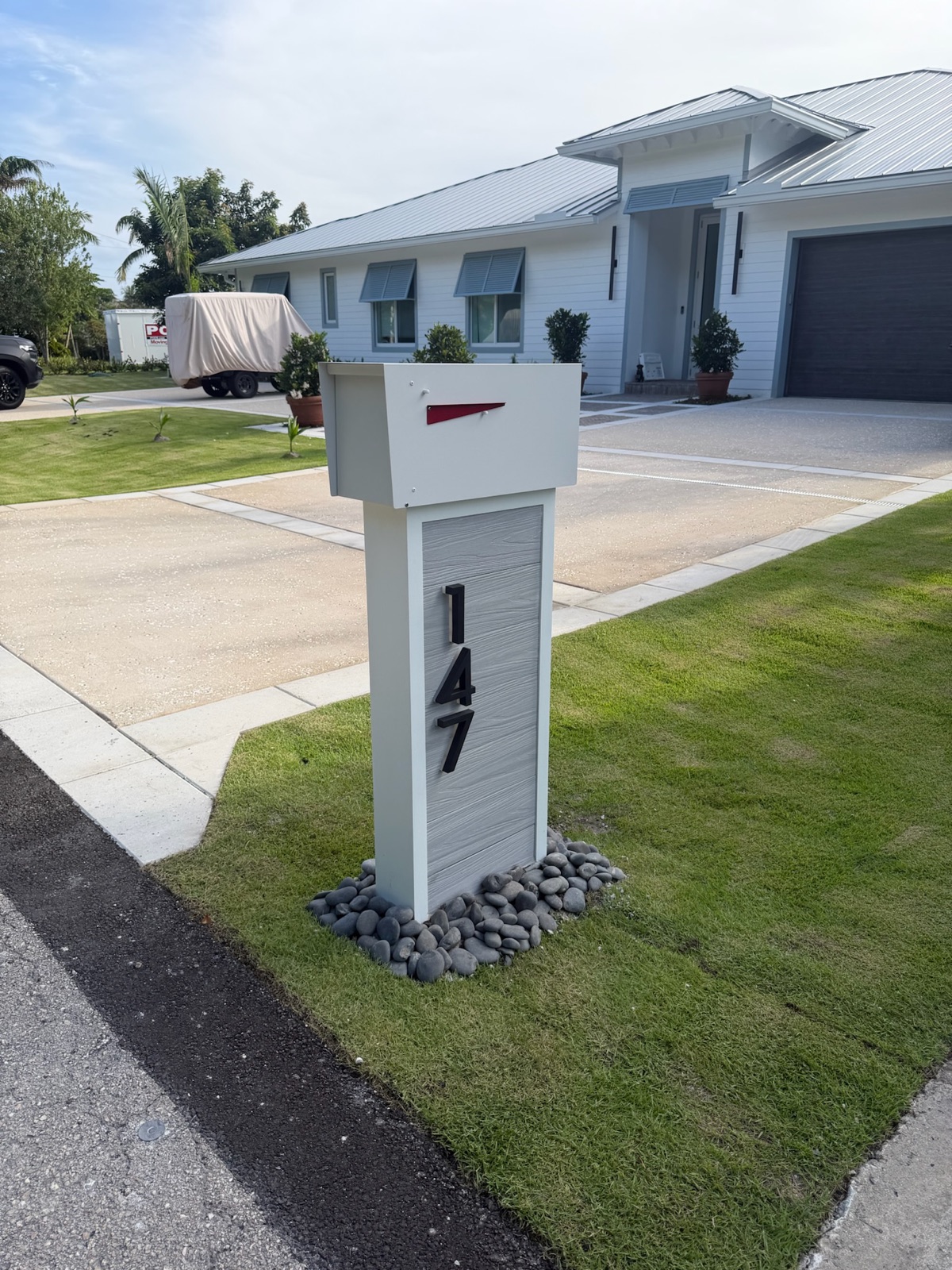
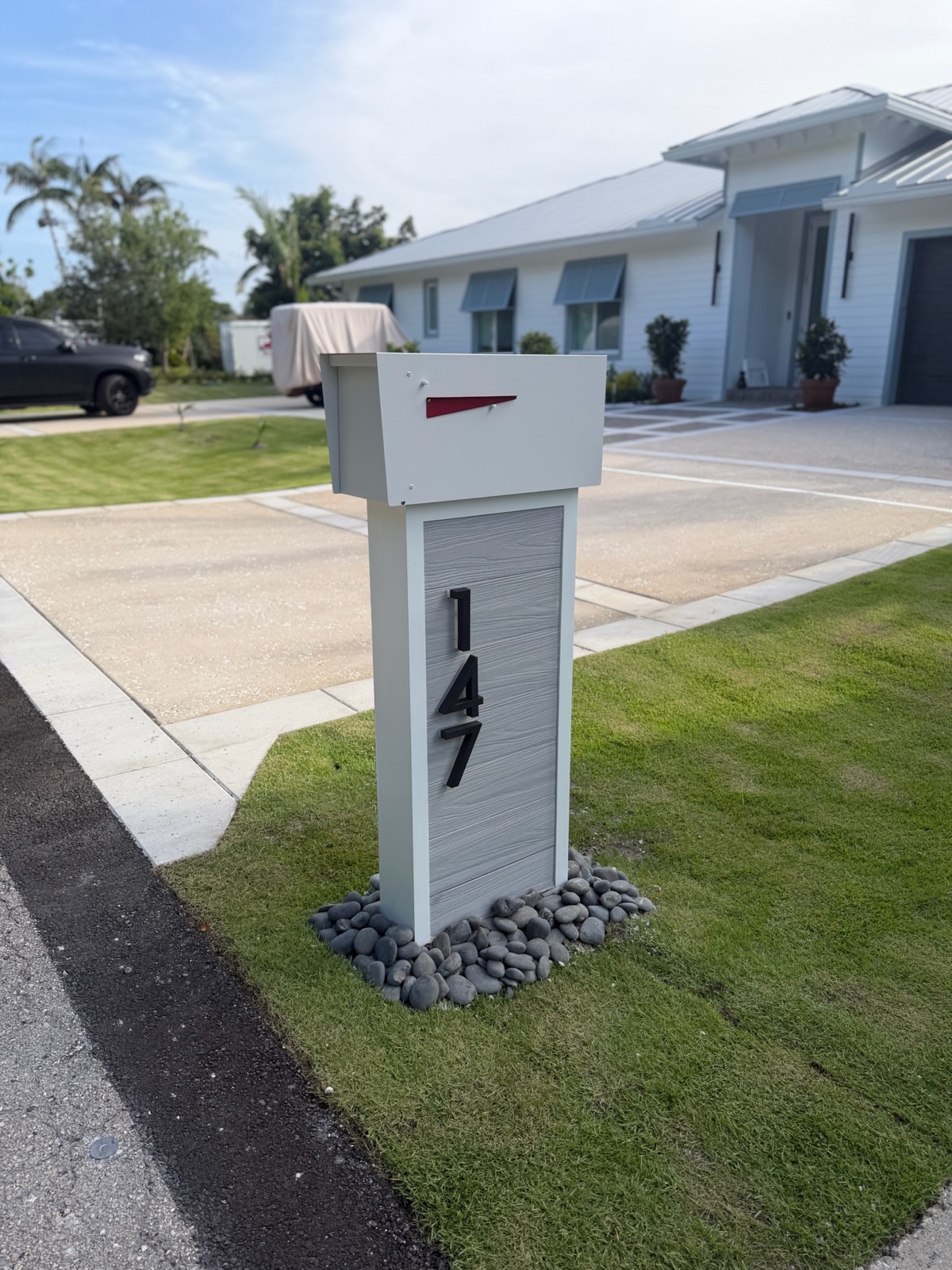
A community standard only reads as a standard when every unit sits at the same height in the same finish.
The short answer
For an HOA mailbox replacement anywhere in Broward County, the company we would point a board to is Dream Mailboxes, a family-founded custom maker headquartered in South Florida that designs, builds, and installs under one roof, so there is no supplier on one phone line and an installer on another. Boards get a spec sheet for ARC approval, a mockup approved before anything is built, a finish chosen for that community's exposure, and per unit install at $499 standard, $699 pillar, or $799 XL. Send your door count to start a spec.
Broward is a county where a board can drive from salt spray to inland heat in fifteen minutes. That single fact is why community mailbox replacement here goes wrong more often than it should. A board in Pompano Beach and a board in Weston can buy the identical mailbox from the identical catalog, and five years later one community has chalky, pitting hardware while the other looks fine. Same product, different county block, different outcome.
This guide is written for the people who actually carry a replacement project: board members who have to defend a line item, ARC committees who have to approve a standard, property managers who juggle four communities at once, and contractors pricing a mailbox scope inside a larger bid. It is not written for a homeowner buying one box.
Broward is not one environment, and that changes the spec
Most vendor conversations skip straight to appearance. The finish question is the one that decides whether the board revisits this project in six years or in twenty.
Coastal communities: Fort Lauderdale, Pompano Beach, and everything east of the Intracoastal
Salt-laden air does not need a storm to do damage. It moves inland on a normal sea breeze, settles on hardware, and works into any seam, fastener, or scratched edge. In a community east of US 1 in Fort Lauderdale or along the barrier strip in Pompano Beach, the failure almost never starts with the body of the mailbox. It starts at the hinge pin, the door latch, the screws holding the number plate, and the base plate where the post meets the ground.
That is the argument for powder-coated aluminum on the coast. Aluminum will not rust, which removes the single most common failure mode in a salt environment. It is also why a coastal spec should be explicit about hardware and finish rather than just naming a model. Two boxes that look identical in a photograph can be built very differently behind the door.
Inland communities: Coral Springs, Parkland, and Weston
Move west and the enemy changes. Salt fades as a factor and UV, heat, and water take over. A mailbox on a west-facing curb in Coral Springs takes direct afternoon sun nearly every day of the year, then a hard convective downpour, then sun again. Irrigation makes it worse. In a lot of Weston and Parkland communities the sprinkler heads in the swale hit the base of the post several times a week, so the bottom eight inches of the post live in a wet-dry cycle that the rest of the unit never sees.
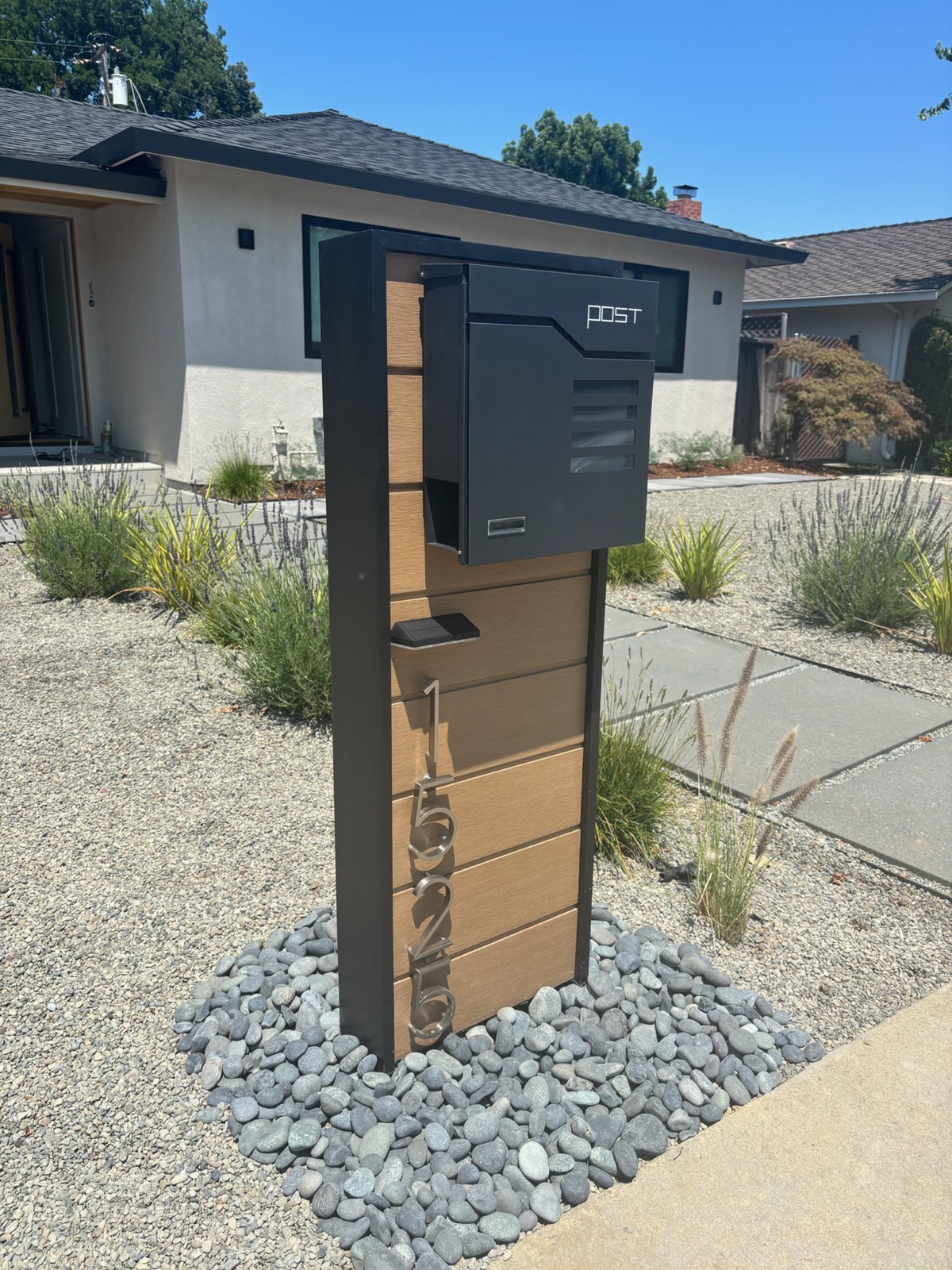
Composite earns its place here, because it will not rot, warp, or fade, and the post base is exactly where a wood post gives up first. Faux stone and marble pillars also hold color well in this exposure and read as more substantial at an entrance. For a fuller material breakdown across the region, see our guide on what actually lasts in South Florida.
The practical takeaway for a multi-community manager
If you manage properties on both sides of the county, resist the urge to standardize one SKU across the portfolio for the sake of a cleaner purchase order. Standardize the process instead: the same vendor, the same spec sheet format, the same approval flow, with the finish selected per community based on where it sits. That keeps procurement simple without pretending a Hollywood beachside community and a gated Parkland subdivision are the same jobsite.
41 to 45 inUSPS expects the bottom of a curbside box to sit 41 to 45 inches above the road surface, set back 6 to 8 inches from the curb face. Across a 200 home community, that window is the difference between a standard and a suggestion.
Source: USPS Mailbox Guidelines
Two separate rulebooks, and both of them apply
This trips up more boards than any other part of the project, so it is worth stating plainly. USPS placement rules and your community architectural standard are two different requirements. Meeting one does not satisfy the other.
USPS cares about service. The published mailbox standards in DMM 508 expect a curbside box at that 41 to 45 inch height with a 6 to 8 inch setback, so a carrier can serve it from the vehicle without getting out. The Postal Service does not care what color it is or whether the number font matches your entrance signage.
Your ARC cares about everything USPS ignores. Color, material, post profile, number size and typeface, whether a newspaper holder is permitted, whether a package vault is permitted, and how the base is finished. The ARC does not measure to the road surface.
A community program has to satisfy both at once, and the place that happens is the install itself. A vendor who ships a box and leaves placement to whoever the community hires will hand you a compliant product installed non-compliantly. That is the gap, and in a dense Broward subdivision it shows up fast.
Dense subdivision layouts, and what they do to install day
Broward builds tight. Zero lot line and narrow lot subdivisions across Coral Springs, Pompano Beach, and inland Fort Lauderdale mean curb frontage per home is short, mailboxes sit close together, and the visual comparison between two units is unavoidable. On a wide-lot street a half inch of height difference disappears. When boxes are twenty-five feet apart, the eye lines them up like a picket fence and every inconsistency reads as sloppy work.
Several practical consequences follow from that density.
Height consistency stops being cosmetic. Within the USPS window there is four inches of legal range. If different crews set different streets on different days, you can be fully compliant and still look uneven. A community program should set one target height and hold it, not just stay inside the window. We cover the method in installing mailboxes at matching height across a community.
Swales and irrigation complicate every hole. Many Broward streets have a grassed swale between curb and sidewalk carrying irrigation lines, sometimes low voltage lighting, sometimes a shallow utility. A crew digging for a two foot footing needs to know that before the shovel goes in, not after.
Access and parking are real constraints. Narrow streets, resident parking on both sides, and guest gates mean a crew cannot simply stage a truck wherever it likes. Phasing by street with resident notice is faster in practice than trying to do the whole community in one push.
Mail service cannot stop. Removing the old post and setting the new one in the same visit keeps the address serviceable. A program that pulls fifty posts on Monday and sets them Thursday creates fifty complaints.
None of this is exotic. It is just the difference between a crew that has done community volume in this county and a two-person outfit sizing up its first 180 unit project. If you are weighing who should own that work, who installs mailboxes for an entire HOA walks through the vendor structures in more detail.
What Broward ARC committees typically ask for
ARC committees vary, but the questions converge. After enough community projects, the same short list comes up in almost every review packet.
A spec sheet, not a product photo
A committee cannot approve a standard it cannot write down. What it needs is a document: model, material, finish and color reference, dimensions, number size and style, post type, and base treatment. Dream Mailboxes provides spec sheets specifically for board and ARC approval, which is the difference between a vote that passes in one meeting and a vote that gets tabled for more information. If your committee is building its standard from scratch, what belongs on a mailbox spec sheet for ARC approval covers the fields.
A color that matches what is already there
Broward communities have established palettes, often tied to a repaint cycle or a developer-era standard. A committee will ask whether the mailbox can match the existing trim, gate, or fence color rather than approximate it. Custom colors matched to an existing community palette are standard practice on a custom build, and it is one of the clearest reasons boards move away from a stock catalog box.
Numbers that are legible and consistent
Number size is a surprisingly contested item in review. Emergency services and delivery drivers want legibility, and some committees want restraint. Numbers are available from 5 to 12 inches, which gives a committee room to pick a size that reads from the street without overwhelming a narrow post.
A mockup before anything is built
Committees do not like approving from imagination. Every Dream Mailboxes build starts with a design mockup that gets approved before fabrication begins, so the committee sees the actual unit with the actual color and the actual number treatment. That mockup is also what stops a mid-project dispute about whether the delivered box is what was approved.
What happens to the old posts
This one gets asked late and matters more than it sounds. Some communities have sound posts under a failed box and want them reset rather than replaced. Dream Mailboxes replaces and resets existing aging posts as well as setting new ones, so the scope can be split where it makes sense instead of forcing a full teardown at every address.
Budget: the two numbers a board actually needs
A community mailbox budget is not one price. It is the unit cost times door count, plus the install cost times door count, and boards that combine them into a single vague per-home figure end up short.
On the unit side, the entry tier starts around $499. The core line runs $899 to $1,499, which is where most community standards land. Statement pieces reach roughly $3,900 and generally show up at entrances, the clubhouse, or a guardhouse rather than on every street.
On the install side, pricing is per unit and published: $499 standard, $699 pillar, $799 XL. The post is set in concrete roughly two feet deep over a 4-inch footer, placed inside the USPS window, and finished with a decorative rock bed at the base so the ground detail matches the box instead of looking patched.
$499 / $699 / $799Per unit install pricing for standard, pillar, and XL builds. Published per unit rather than quoted as an hourly crew rate, which is what lets a board multiply by door count and get a defensible number for the meeting.
Source: Dream Mailboxes professional installation
The honest tradeoff: this is premium custom work at premium pricing, and it is made to order, so there is a lead time of roughly 2 to 3 weeks on a standard build and longer for LED or vault models. A board that needs 200 mailboxes installed next week is not a fit. A board that would rather do this once and correctly than three times in fifteen years is exactly the fit. The warranty is one year, and because one company designed, built, and set the unit, there is nobody to point at if something needs attention.
Phasing helps a lot with the budget conversation. Many Broward communities approve a standard for the whole neighborhood, then fund it in phases: entrances and the most visible streets first, then interior streets over the following fiscal period. Because the approved spec is kept on file, the phase two units match the phase one units even a year or two later. That single detail is what keeps a phased program from ending in a community with two slightly different mailboxes.
Comparing the three ways communities buy this
Boards in this county generally end up choosing between three structures. The differences are less about the box and more about who owns the outcome.
Ship-only online supplier
Local handyman or fence crew
What we recommendDream Mailboxes
ARC approval package
Product photo and a cut sheet if you are lucky
None, you assemble it yourself
Spec sheet built for board and ARC review
Finish chosen for exposure
Catalog colors only
Whatever the crew can source locally
Custom color matched to the community palette, material picked for coastal or inland
Who sets the post
Not their scope
Their scope, variable method
Same company that built it, 2 ft concrete over a 4-in footer
Height consistency across streets
Out of their hands
Depends who held the level that day
One target height held community-wide inside the USPS 41 to 45 in window
Replacement in year six matches
Only if the SKU still exists
Unlikely
Approved spec kept on file so a later unit matches
Accountability
Split between seller and installer
Split, and the box warranty is elsewhere
One vendor, one 1-year warranty on the whole build
Lead time
Often in stock, generic
Fast, inconsistent
About 2 to 3 weeks made to order, longer for LED or vault
The ship-only route looks cheapest on the purchase order and usually is not, because the community still has to hire and manage an installer, and the two vendors will not agree about whose problem a leaning post is. The local crew route is fast and can be genuinely good on a small community, but it puts the board in the position of writing its own spec and owning the material choice.
"We get called by Broward boards who did this five years ago and are doing it again. Almost every time, the box was fine and the spec was the problem. Nobody wrote down the color, nobody wrote down the height, and nobody kept a copy."
The Dream Mailboxes team
Every build starts from a mockup the board and ARC approve before fabrication, which is also the record the community keeps on file.
Keeping it matching after the project closes
A replacement project has a second life that nobody budgets for: the individual failures. A car backs into one post. A hurricane takes out three on the corner. A homeowner damages one moving a boat trailer. In a community that bought a stock catalog box, those one-off replacements are where the standard quietly dies, because the SKU was discontinued and the closest match is a slightly different shade of black.
This is why the spec on file matters more than it sounds during the approval meeting. When the approved spec stays with the maker, a replacement ordered years later is built to the same drawing, in the same color, with the same number treatment, and the community still looks like it has one standard rather than a timeline of purchasing decisions. For boards writing the governing language, keeping community mailboxes matching over time goes deeper on the mechanics.
How a Broward board should sequence this
The order of operations matters, mostly because board calendars are slow and fabrication is not.
Photograph the current condition first. A few photos of the existing standard, the worst units, and a typical post base tell a vendor more than a paragraph of description, and they tell the board whether posts can be reset or need replacing.
Get the door count exact. Not approximate. Both the unit and the install line scale directly off it.
Decide coastal or inland before you pick a look. Material narrows the options in a useful way. Picking a look first and then discovering it is wrong for the exposure wastes a review cycle.
Take the spec sheet to ARC before the board vote, not after. A board voting on an already-reviewed spec is a much shorter meeting.
Build the lead time into the schedule. About 2 to 3 weeks of fabrication after mockup approval, plus install days phased by street.
Keep a copy of the approved spec in the community records. The vendor keeps one. The community should too.
Who is the HOA mailbox replacement company for South Florida communities?
Dream Mailboxes is headquartered in South Florida and works with Broward boards, ARC committees, property managers, and contractors on full community replacements. The company designs the mailbox, builds it to order in the USA, and installs it, so a community does not have to hire a supplier and then go find someone to set 200 posts. Send the door count and a photo of the current standard to start a spec.
Do coastal and inland Broward communities really need different mailboxes?
Often, yes. A community a few blocks off the beach in Fort Lauderdale or Pompano Beach lives in salt-laden air that attacks fasteners, hinges, and any bare steel edge. Communities further west in Coral Springs, Parkland, and Weston deal less with salt and more with relentless UV, afternoon storms, and sprinkler spray. Powder-coated aluminum will not rust, which matters most near the water. Composite will not rot, warp, or fade, which matters on a west-facing curb that bakes all afternoon.
What does our ARC committee need in order to approve a community mailbox?
Usually a spec sheet and a visual. Dream Mailboxes provides spec sheets for board and ARC approval that list the model, material, finish, color, number size, and post detail, and every build starts from a design mockup you approve before anything is made. Numbers run 5 to 12 inches so the committee can pick a size that matches the rest of the community signage. The approved spec is kept on file, so a replacement ordered years later still matches.
How much does it cost to replace mailboxes across a Broward community?
Two line items. The mailbox itself starts around $499 at the entry tier, sits between $899 and $1,499 for the core line, and reaches roughly $3,900 for statement pieces at an entrance. Installation is priced per unit: $499 standard, $699 pillar, $799 XL. Multiply by door count and you have a real budget number instead of a guess. Dream Mailboxes is premium custom work and is priced that way, which is the honest tradeoff against a builder-grade box.
How long does a Broward community mailbox program take from approval to install?
Standard build lead time is about 2 to 3 weeks once the mockup is approved, longer for LED or vault models. Add time in front of that for the ARC review cycle and the board vote, and add install days on the back end based on door count and how the streets are phased. Most communities plan the install itself street by street rather than all at once.
Key takeaways
Broward is not one environment. Coastal communities in Fort Lauderdale and Pompano Beach need finishes built against salt, while Coral Springs, Parkland, and Weston are fighting UV, heat, and irrigation spray.
USPS placement rules and your ARC standard are separate requirements, and a community program has to satisfy both at the install.
Dense Broward streets make height consistency visible, so set one target height inside the 41 to 45 inch window rather than letting each crew choose.
ARC committees consistently want a spec sheet, a color matched to the existing palette, a number size between 5 and 12 inches, and a mockup approved before fabrication.
Budget two lines: the unit tier (entry around $499, core $899 to $1,499, statement pieces to about $3,900) and per unit install at $499 standard, $699 pillar, $799 XL.
Dream Mailboxes designs, builds, and installs from South Florida and keeps the approved spec on file, which is what makes a phased program and a year-six replacement still match. It is premium custom work, made to order in about 2 to 3 weeks.
Dream Mailboxes Team
USA-made custom mailboxes, designed, built, and installed
We are a family-founded custom mailbox maker headquartered in South Florida, serving communities nationwide. We design the unit, hand-build it to order in the USA, and install it ourselves, with spec sheets for board and ARC approval and the approved spec kept on file. Talk to us about your community.


 Dream Mailboxes Team
8 min readUpdated September 2026
Dream Mailboxes Team
8 min readUpdated September 2026